Atelier · France

A removable overskirt is a separate layer of fabric worn over a finished wedding dress skirt, attached at the waist, that adds volume, a train, or texture for the ceremony and lifts off for the reception. Underneath is a complete dress on its own.
It is one of the cleanest ways to get two looks from one gown: a full, formal silhouette for the aisle and portraits, and a sleeker dress for dancing. The design work is making the join invisible under the overskirt and making sure the dress beneath is finished enough to stand alone.
Key Takeaways
- A removable overskirt is a separate over-layer attached at the waist, worn for the ceremony and removed for the reception.
- Under it is a complete, finished dress, most often a sheath, column, or slim A-line.
- It attaches with a covered hook-and-bar waistband, buttons, or a tie, hidden under a belt, bow, or seam.
- It differs from a detachable train, which adds length only; an overskirt adds volume and length around the whole skirt.
- On a custom order both the under-dress and the overskirt are fitted, and the join is placed so nothing shows when the overskirt is off.
What a Removable Overskirt Is
An overskirt is a full or partial layer of fabric that sits over the main skirt, gathered or pleated onto its own waistband. It can be:
- Full, wrapping the whole skirt for maximum volume.
- Open-front, a panel that covers the back and sides and parts at the front to show the under-dress.
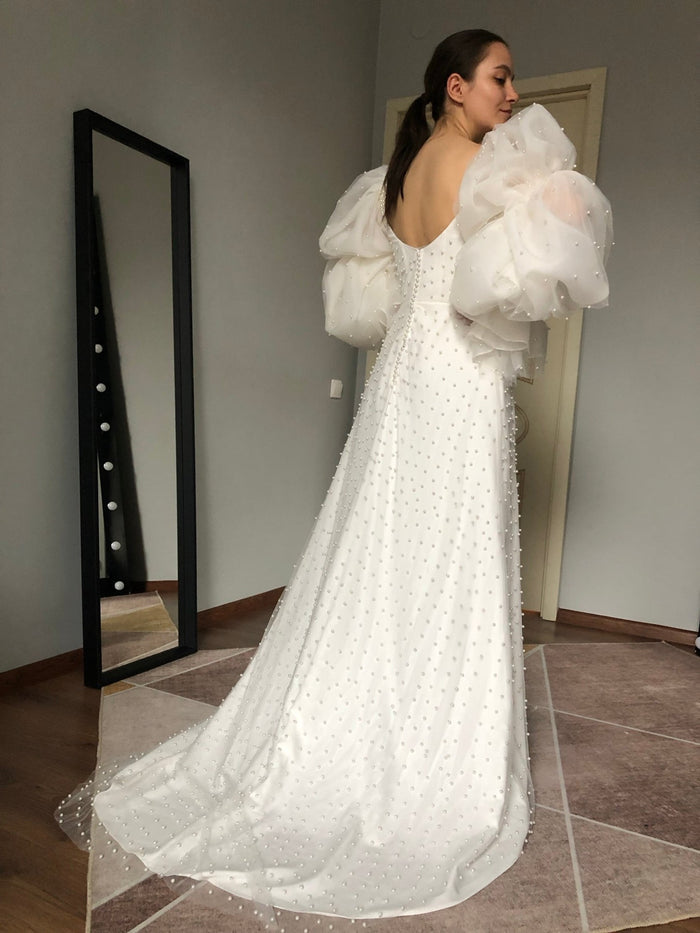
- Sheer, a floating layer that adds movement without hiding the dress beneath.
It is a form of convertible design, alongside detachable sleeves, capes, and removable bows.
Overskirt vs Detachable Train
- A detachable train attaches at the back waist or shoulders and adds length behind you only. The dress it comes off is unchanged at the front and sides.
- A removable overskirt adds fabric around the whole skirt, changing its volume and shape, and usually adds a train as well.
Choose an overskirt when you want the ceremony silhouette to be a different shape, not just longer.
What an Overskirt Can Add
- Volume. Turn a sheath or column into a full A-line or ball gown shape for the aisle.
- A train, of any length, that goes with the overskirt and leaves with it, so there is no bustle to manage at the reception.
- Texture, a layer of lace or beaded tulle over a plain dress.
- A different formality, formal for the ceremony, relaxed for dancing.
How It Attaches
The overskirt has its own waistband that fastens over the dress:
- Hook and bar, covered, along a firm waistband. The most secure.
- Buttons on a tab, sometimes doubling as a decorative row.
- A tie or sash that also serves as the visible belt.
The join is hidden under a belt, a bow, a band of the dress fabric, or set into the natural waist seam so it disappears. Removing it should take one person under a minute.
The Dress Underneath
The under-dress is a finished garment:
- Its own clean waistline and hem, so nothing looks unfinished when the overskirt is off.
- Usually a sheath, column, or slim A-line, because a narrow shape gains the most from the contrast.
- Its own closure and support, independent of the overskirt.
Fabrics for an Overskirt
- Tulle or organza for volume with little weight.
- Satin or mikado for a structured, formal over-layer.
- Lace for texture over a plain dress.
- Chiffon for a soft, floating open-front panel.
The overskirt fabric is chosen to match or deliberately contrast with the under-dress, and its color is matched to the dress the same way a veil is.
Planning an Overskirt on a Custom Order
Steps:
- Design both looks, ceremony (with overskirt) and reception (without), sketched together and approved before any fabric is cut.
- Fit the under-dress as a complete gown.
- Fit the overskirt over it, with the join placed to disappear.
- Practice the removal and photograph both states.
For a remote order both layers are fitted on a form to your measurements and shown in photos and video during the remote fitting process. Every dress is made over 10 to 12 weeks, with UPS shipping to the US in 3 to 5 days. An overskirt is effectively a second skirt, so see the price breakdown for how it affects the cost.
FAQ
What is a removable overskirt on a wedding dress? A separate layer of fabric worn over the main skirt, attached at the waist, that adds volume, a train, or texture for the ceremony and lifts off for the reception. Underneath is a complete, finished dress that stands on its own.
How is a removable overskirt different from a detachable train? A detachable train adds length behind you only. A removable overskirt adds fabric around the whole skirt, changing its volume and shape, and usually adds a train as well. Choose an overskirt when you want a different ceremony silhouette, not just extra length.
How does the overskirt attach? With its own waistband that fastens over the dress: a covered hook and bar, buttons on a tab, or a tie or sash. The join is hidden under a belt, a bow, or the natural waist seam. It should come off in under a minute.
What kind of dress goes under an overskirt? Usually a sheath, column, or slim A-line, because a narrow shape gains the most from the contrast. The under-dress has its own finished waistline, hem, closure, and support, so it looks complete when the overskirt is off.
Does an overskirt need a bustle? No. The train is part of the overskirt, so it leaves with it at the reception. There is no bustle to manage, which is one of the main reasons brides choose an overskirt over a fixed train.
Want a fuller ceremony look and a sleeker reception dress in one order? Start with a sketch consultation at Lutien Bridal.
About the author: Vlad Ivanov is the Director of Business Development at Lutien Bridal Atelier in France, home to the design team behind more than 1,000 custom wedding gowns delivered to brides across the US and Europe.