Atelier · France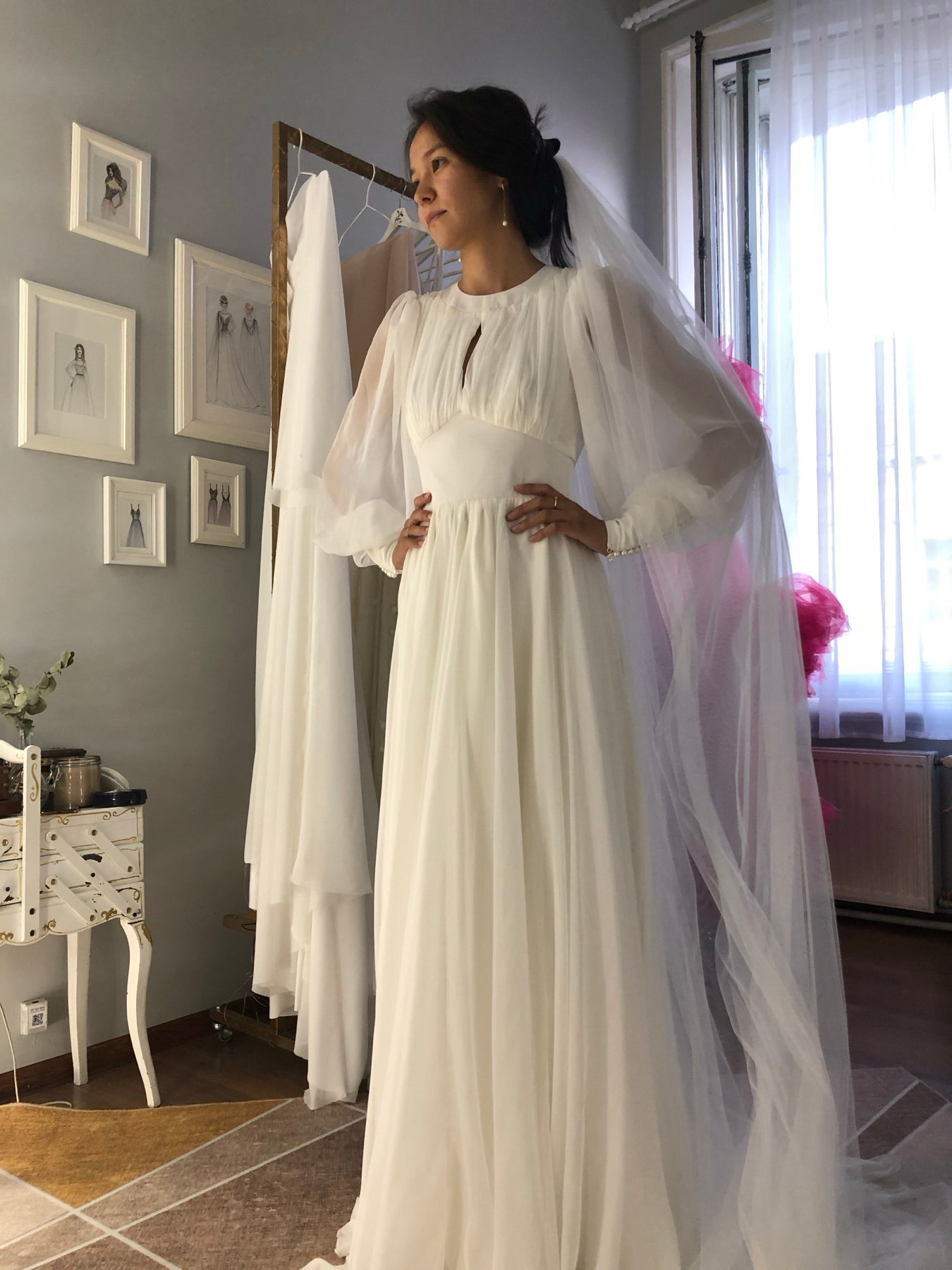

A bridal veil is a length of net or tulle attached to a comb, clip, or headband, worn from the ceremony and often removed for the reception. Length is the main decision: it runs from a shoulder-grazing blusher to a cathedral veil that extends past the train.
A veil is the one accessory that changes the whole silhouette from behind. The right length is set against your height, your dress, and your train, and on a custom order the veil is made from the same tulle as the dress so the color matches exactly.
Key Takeaways
- Veil length runs from birdcage and blusher (face or shoulder) through fingertip and waltz to chapel and cathedral (floor or past the train).
- A short veil reads modern and informal; a cathedral veil reads formal and dramatic and needs a matching train.
- A single-tier veil is one smooth layer; a two-tier veil adds a blusher that folds over the face for the processional.
- The veil edge (raw, corded, satin-bound, lace-trimmed, scattered beading) sets how much it stands out.
- On a custom order the veil is cut from the dress tulle so the white or ivory matches, and its length is fitted to your height and train.
Do You Need a Veil
No. A veil is optional. Reasons to have one:
- It marks the ceremony as distinct from the reception.
- It frames a plain back or completes a backless design.
- It photographs beautifully in movement and in still portraits.
Reasons to skip it: a second wedding or vow renewal where you want something less traditional, an outdoor garden or beach ceremony where wind is a factor, or a design where a cape or capelet does the same job.
Veil Lengths
Measured from where the comb sits, usually the crown:
- Birdcage. A short piece of stiff net across the face or to the chin. Vintage, modern, informal.
- Blusher. To the shoulders or bust, worn over the face for the processional then folded back.
- Elbow. Ends around the elbow. Suits a fuller skirt where a longer veil would disappear into volume.
- Fingertip. Ends at your fingertips with arms down. The most versatile length, works with almost any silhouette.
- Waltz / ballet. Between the knee and the ankle. Soft and romantic without a full sweep.
- Chapel. Ends around the floor, roughly matching a chapel train.
- Cathedral. Extends past the hem and usually past the train, from a few feet to several. The most formal and dramatic.
Taller brides carry a cathedral veil more easily; a very long veil can overwhelm a petite frame, where fingertip or chapel is usually better.
Tiers and the Blusher
- Single-tier. One layer of tulle. Clean, and the length reads as one line. Most modern veils are single-tier.
- Two-tier. A shorter blusher layer over a longer main layer. The blusher folds forward over the face for the walk down the aisle and back for the ceremony. Traditional and useful for the "reveal" moment.
- Three-tier. Rare now; adds volume at the head, more period than contemporary.
Veil Edges and Detail
The edge finish sets how much the veil stands out against the dress:
- Raw / cut edge. No finish. The tulle almost disappears. Best with a detailed dress you do not want to compete with.
- Corded / pencil edge. A fine thread outline. Defines the shape subtly.
- Satin-bound edge. A ribbon border. Traditional, more visible, frames the veil clearly.
- Lace-trimmed edge. Lace applied along the border, often matched to lace on the dress.
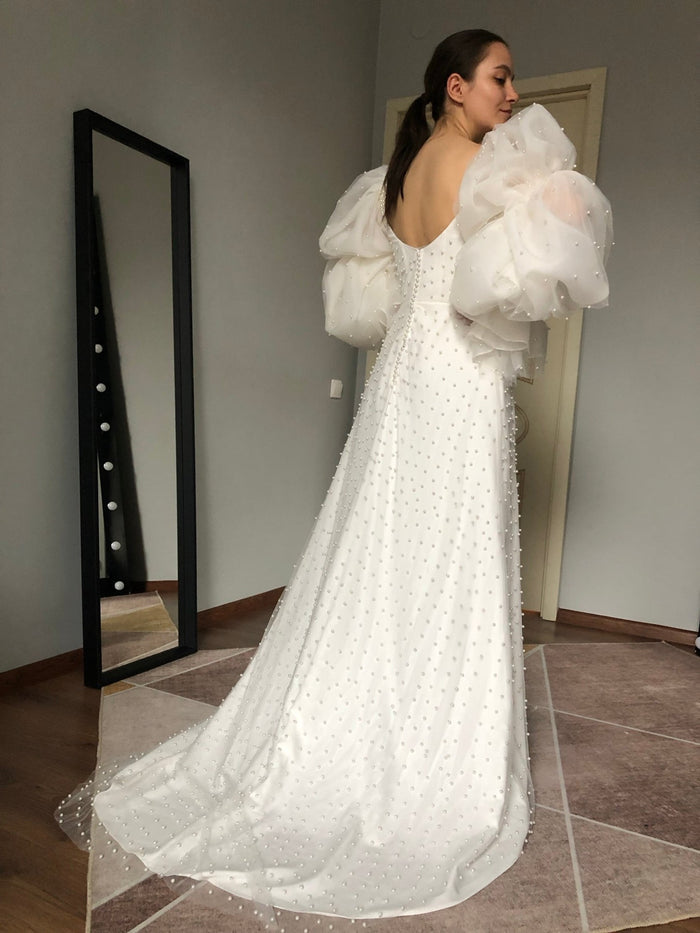
- Scattered detail. Pearls, crystals, or small appliqué spread across the veil, heaviest near the hem.
Matching the Veil to the Dress
- Color. White, ivory, and champagne tulle read differently. A veil one shade off the dress is visible in photos. On a custom order the veil is cut from the same tulle bolt.
- Detail level. A heavily beaded or lace dress usually wants a plain veil. A clean sheath or column can carry a decorated veil as the focal point.
- Train. A cathedral veil needs a train to sit against, or it drags on bare floor. A dress with no train pairs better with fingertip or waltz.
- Back detail. If the dress has a statement bow or an open back you want seen, a sheer raw-edge veil keeps it visible; a dense veil hides it until removed.
Veil vs Cape or Overskirt
A veil is not the only way to add drama from behind:
- A cape or capelet attaches at the shoulders and stays on all day.
- A removable overskirt adds volume and a train for the ceremony, then comes off.
- A convertible design can combine these.
You can also wear a veil for the ceremony and switch to a cape or nothing for the reception.
Ordering a Veil With a Custom Dress
Steps:
- Choose the length against your height, your dress, and your train, tried on at a fitting.
- Single or two-tier, depending on whether you want a blusher.
- Edge and detail, matched to or deliberately contrasted with the dress.
- Cut from the dress tulle so the color matches exactly.
For a remote order the veil length is set from your measurements and the finished dress, and shown on a form in photos and video during the remote fitting process. Every dress is made to your measurements over 10 to 12 weeks, with UPS shipping to the US in 3 to 5 days. A veil is a small addition; see the price breakdown for what affects the cost overall.
FAQ
What veil length should I choose? Fingertip is the most versatile and suits almost any dress. Choose cathedral for a formal wedding with a train and drama from behind, chapel for a softer floor-length sweep, and waltz or elbow if you want a veil without a full sweep. Match the length to your height and your train.
What is the difference between a single-tier and two-tier veil? A single-tier veil is one smooth layer. A two-tier veil adds a shorter blusher layer that folds over the face for the processional and back for the ceremony, giving the traditional reveal moment.
Do I have to wear a veil? No. A veil is optional. It marks the ceremony as separate from the reception and photographs well, but a cape, a capelet, a removable overskirt, or nothing at all are all valid. Some brides wear a veil for the ceremony only.
Will the veil color match my dress? On a custom order, yes, because the veil is cut from the same tulle as the dress. An off-the-shelf veil in a slightly different white or ivory is visible next to the dress in photos.
Which veil suits a heavily beaded dress? A plain veil with a raw or corded edge, so it does not compete with the dress. A detailed veil works better on a clean, minimal gown where it becomes the focal point.
Choosing a veil to go with your dress? Start with a sketch consultation at Lutien Bridal.
About the author: Vlad Ivanov is the Director of Business Development at Lutien Bridal Atelier in France, home to the design team behind more than 1,000 custom wedding gowns delivered to brides across the US and Europe.