Atelier · France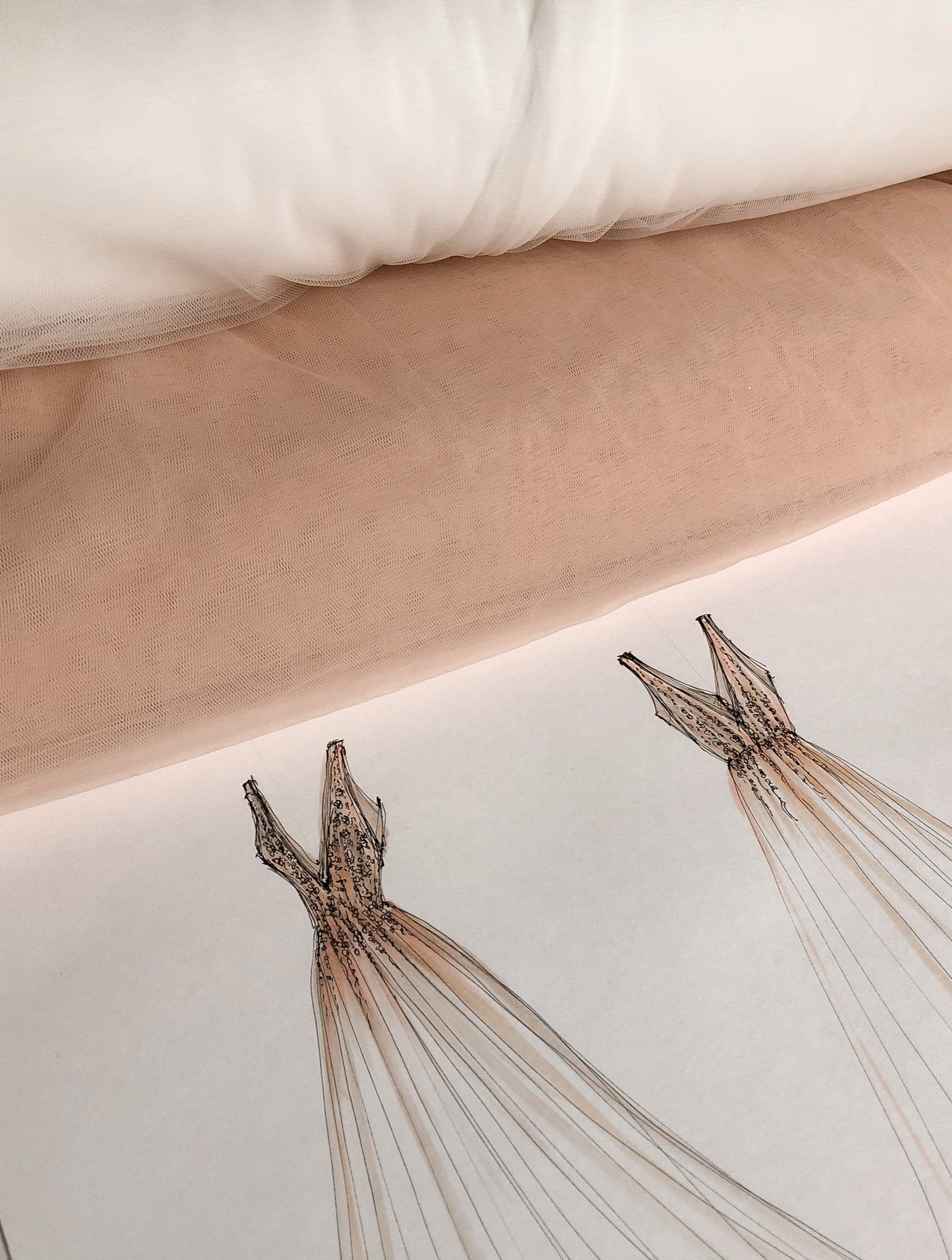

Lace is not one material. The word covers a range of fabrics that differ in weight, transparency, stiffness, edge finish, and how they are applied to a dress. Chantilly, Alençon, guipure, and corded lace all photograph as "lace," but they build very different gowns.
Choosing lace by name alone rarely works, because two laces sold under the same name can vary widely. It is more useful to understand what each type does structurally, then match it to your silhouette, your venue, and the level of detail you want.
Key Takeaways
- Chantilly is light, fine, and fluid, with a soft scalloped edge. It suits close silhouettes and delicate coverage.
- Alençon is defined by a raised outline, often corded, around each motif. It reads as more structured and dimensional.
- Guipure (also called Venetian or Venise lace) has no net ground. The motifs connect directly, so it is heavier, stiffer, and more graphic.
- Corded lace is any lace with a fine cord following the pattern, adding definition and a slight 3D effect.
- Lace cost is driven by how fine the work is, whether it is corded or beaded, and how much hand placement the design needs.
How Lace Is Built
Most bridal lace falls into two structures.
Lace with a net ground. The pattern sits on a fine mesh backing that holds the motifs in place. Chantilly and Alençon are built this way. The net can be trimmed away close to the motifs for an illusion effect, where the pattern appears to sit directly on the skin.
Lace without a ground. The motifs are connected to each other by small bars or bridges, with open space between them and no mesh. Guipure works like this. It is more like a fabric cut into a shape than a pattern floating on net.
This single difference explains most of how a lace behaves. Ground laces are lighter and more fluid. Groundless laces are heavier, stiffer, and hold their own shape.
Chantilly Lace
Chantilly, named for a French lace-making region, is a fine ground lace with delicate floral or botanical motifs and a characteristic soft, eyelash-like scalloped edge.
- Weight and drape. Light and fluid. It moves with the fabric underneath rather than stiffening it.
- Best for. Close silhouettes like a sheath, column, or fitted mermaid, soft sleeves, illusion backs and necklines, and full-coverage overlays that need to stay light.
- Watch for. The fine ground is more fragile. The eyelash edge sheds a few threads and needs gentle handling. It is less suited to heavy embellishment, which drags on the delicate net.
Chantilly is the lace to choose when you want lace to feel like a whisper rather than a statement.
Alençon Lace
Alençon, named for the French town, is a ground lace where each motif is outlined with a raised cord. That outline is the signature. It gives the pattern crisp definition and a subtle raised, dimensional quality.
- Weight and drape. Medium. Heavier than Chantilly because of the corded outlines, but still workable on most silhouettes.
- Best for. Bodices, A-line and ball gown skirts, structured sleeves, and any design where you want the lace pattern to be clearly legible from a distance.
- Watch for. The corded edges make the motifs easy to cut out and place individually, which is beautiful but adds hand-work hours. It is a common base for beaded lace, which adds weight again.
Alençon is the middle ground: recognizably lace, clearly patterned, and dimensional without being rigid.

Guipure Lace
Guipure, also sold as Venise or Venetian lace, has no net ground. Its motifs are joined directly by short bars, with open negative space between them.
- Weight and drape. Heavy and stiff. It holds its own shape and structure.
- Best for. Graphic, modern designs, bold single-motif placements, structured bodices, hems and borders, and dresses where you want a strong, architectural pattern rather than a soft veil of lace.
- Watch for. It does not drape softly, so it fights close, fluid silhouettes. The open structure can snag. Full-coverage guipure reads as a substantial fabric, not a delicate layer.
Guipure is the choice for a bride who wants lace to look deliberate and sculptural.
Corded Lace
Corded lace is a description, not a single named lace. It refers to any lace where a fine cord (sometimes called a soutache or gimp) follows the outline of the pattern.
- Effect. The cord raises and defines the design, adding a slight 3D quality and making the motifs stand away from the ground.
- Where it appears. Alençon is corded by definition. Chantilly and other laces can be produced in corded versions.
- Trade-off. More definition and dimension, slightly more weight and stiffness than the uncorded version of the same lace.
If a lace looks like it has been "drawn on" with a raised line, that line is the cord.
Other Terms You Will Hear
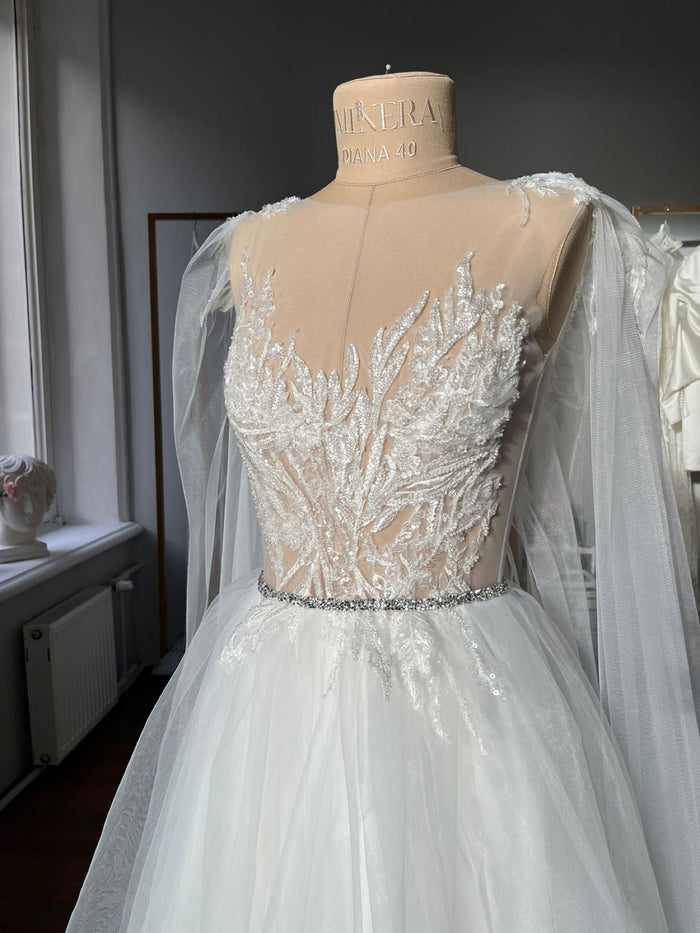
- Illusion lace. Not a lace type. It describes lace applied to sheer tulle so the pattern appears to float on the skin, used on backless designs and sheer necklines.
- Re-embroidered lace. Lace with additional embroidery worked back over the pattern for extra texture and depth.
- Beaded lace. Any lace with pearls, sequins, or beads added along the motifs. Adds significant weight and hand-work. Our guide to hand beading versus machine beading explains the difference.
- Eyelash lace. Refers to the fringed, unfinished edge on Chantilly and similar laces, not a separate lace.
How Lace Is Applied to a Custom Dress
The same lace can be used three ways, and the method changes the effect and the cost.
- Full panels. The lace is used as a fabric, cut to the pattern pieces and sewn. Fastest, most uniform, best for an all-over lace look.
- Appliqué. Individual motifs are cut from the lace and hand-placed on the dress, often across seams so the pattern flows unbroken. Slower, and it is what makes a lace gown look designed rather than assembled.
- Placement and mirroring. Motifs are arranged to frame the neckline, trail down a train, or mirror left to right. The most hand-intensive, and the most bespoke.
We plan the application method at the sketch stage, because it affects the fabric quantity, the timeline, and the price. Our article on how a custom wedding dress is made shows this work in the atelier.
What Drives Lace Cost
Lace pricing on a custom gown comes down to a few factors:
- Fineness of the lace itself. A finely worked Chantilly or corded Alençon costs more per meter than a coarse machine lace.
- Corded or beaded. Both add material and hand-work.
- Application method. Full panels are efficient. Hand appliqué and mirrored placement add hours.
- Coverage. An all-over lace gown uses several meters. A lace bodice on a plain skirt uses far less.
Our price breakdown and our article on what hand embroidery costs cover how detail work is priced. During a consultation we can show which lace and which application method fit your budget, and where a change in method keeps the look while lowering the cost.
FAQ
What is the most popular lace for wedding dresses? Corded Alençon and Chantilly are the two most requested. Alençon reads as more structured and patterned. Chantilly is lighter and softer. The right one depends on your silhouette and how bold you want the lace to look.
What is the difference between Chantilly and Alençon lace? Both are ground laces on a fine net. Chantilly is lighter, more fluid, and has a soft eyelash edge. Alençon has a raised cord outlining every motif, which makes it heavier, more defined, and slightly dimensional.
Is guipure lace good for a wedding dress? It is, for the right design. Guipure is heavy and holds its shape, so it suits structured bodices, borders, and graphic modern gowns. It does not drape softly, so it is a poor match for close, fluid silhouettes.
Why is some wedding dress lace so expensive? Cost tracks the fineness of the lace, whether it is corded or beaded, and how it is applied. Hand-cut appliqué and mirrored motif placement add many hours of work compared with sewing full lace panels.
Can lace be added only to part of the dress? Yes. Lace is often used on the bodice, sleeves, back, or hem of an otherwise plain gown. This uses less lace and less hand-work than an all-over design, and it keeps the cost down while still giving a lace look.
Want help matching a lace to your silhouette and your budget? Start with a free sketch consultation at Lutien Bridal.
About the author: Vlad Ivanov is the Director of Business Development at Lutien Bridal Atelier in France, home to the design team behind more than 1,000 custom wedding gowns delivered to brides across the US and Europe.