Atelier · France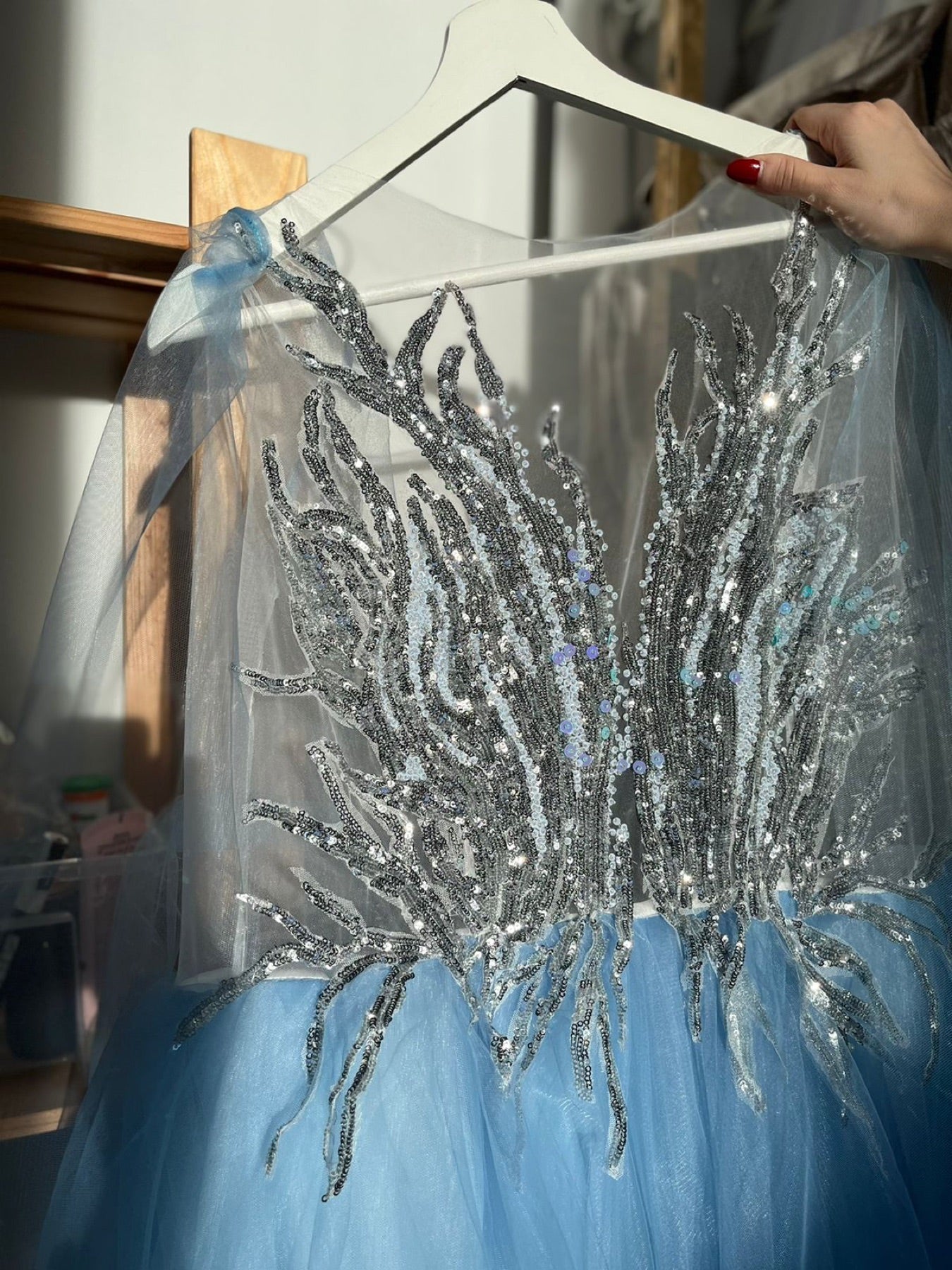

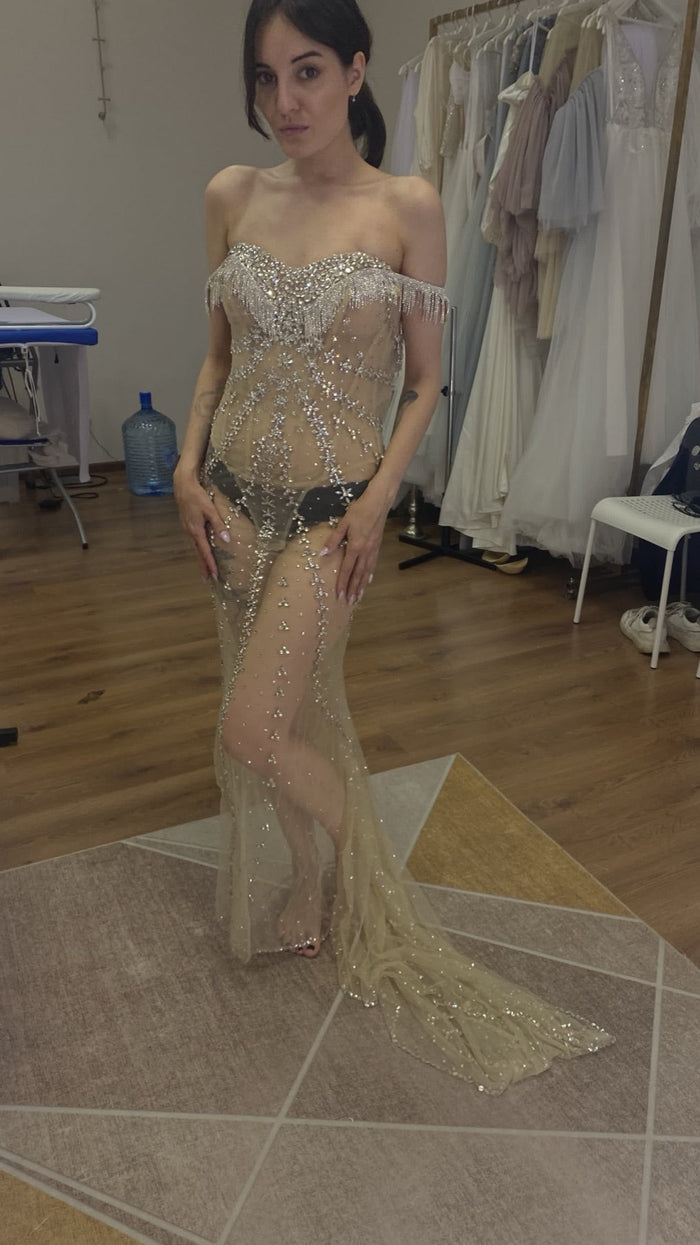
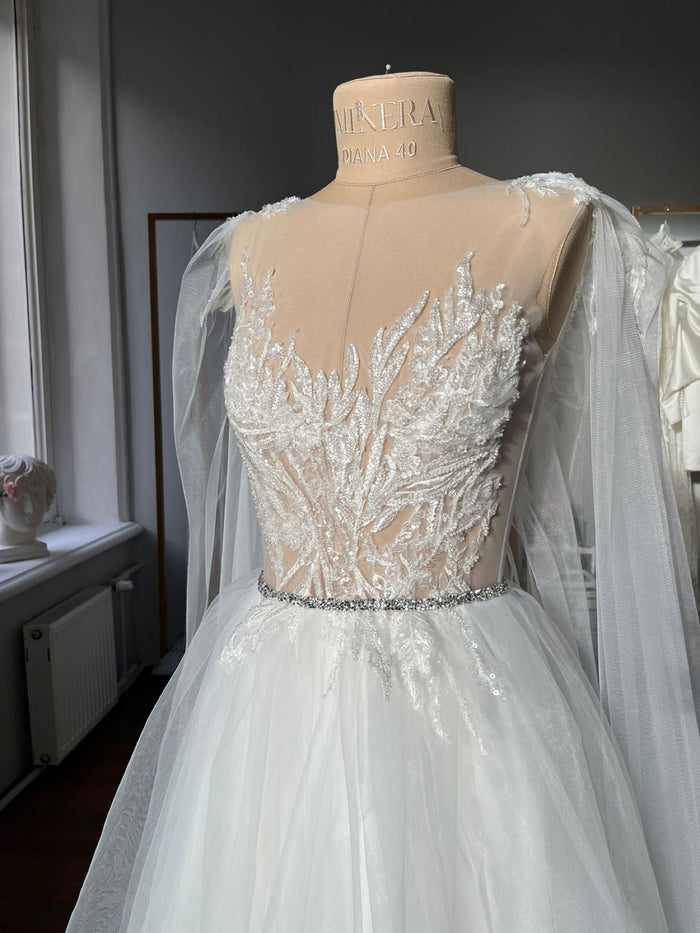
A sequin wedding dress uses small flat or cupped discs, sewn or bonded to the fabric, to reflect light. It ranges from a fully sequinned gown that reads as solid shimmer to a fine scatter of matte sequins that only sparkles when the light hits. The look depends far more on the sequin type and density than on the color.
The practical decisions are the sequin size and finish, the coverage, and the lining, because sequins add weight, can be scratchy against the skin, and behave very differently in daylight versus flash.
Key Takeaways
- Sequins range from tiny matte micro-sequins (a soft glitter) to large mirror paillettes (a bold, disco shine).
- All-over sequin fabric is heavier and needs a smooth lining so it does not catch on the skin.
- Scattered sequins over tulle or lace give sparkle with almost no weight.
- Sequins photograph brighter under flash than in daylight; matte and antique finishes read softer.
- On a custom order the sequin sample is chosen in the light you will actually wear it in, and the seams are planned so the sequins run cleanly.
Sequin Types and Sizes
- Micro-sequins. Under 3mm, often matte. Read as a fine, soft glitter rather than distinct discs.
- Standard sequins. 3 to 5mm, the most common. A clear shimmer with visible discs up close.
- Paillettes. Large discs, 10mm and up, attached at one point so they move and flash. Bold, disco, high-shine.
- Cupped vs flat. Cupped sequins throw light in more directions; flat sequins give a smoother, more even shine.
Finishes: Shiny, Matte, Iridescent
- Bright / metallic. Maximum shine. Reads glamorous, can look harsh under flash.
- Matte. A soft, powdery sparkle. The most bridal, close to a glitter tulle effect.
- Iridescent / opal. Shifts color with the light. Subtle and modern.
- Antique / vintage. A slightly tarnished, warm finish. Softer than bright metallic.
All-Over vs Scattered
- All-over sequin fabric. Sequins on a mesh base, covering the whole dress. Solid shimmer, heaviest, most dramatic. Best on a sheath or column where the fabric does the work.
- Graduated. Dense at the hem or bodice, thinning out, so the sparkle fades across the dress.
- Scattered. Individual sequins spaced over tulle or lace, catching light in points. Lightest, and it keeps the base fabric visible.
Weight, Lining, and Comfort
- All-over sequins add real weight; the bodice and skirt support has to carry it, similar to heavy beading.
- Sequin edges can be scratchy, so the dress is fully lined with a smooth lining, and the neckline, armholes, and any slit edge are bound so no sequin edge touches the skin.
- Sequins can snag each other when you sit; a lined slip underneath and a smooth lining reduce it.
How Sparkle Reads in Photos
- Sequins reflect much more under a camera flash than to the naked eye, so a dress that looks subtly shimmery in the room can look very bright in flash photos.
- In daylight, matte and antique finishes read as soft texture; bright metallic still sparkles.
- Video shows the movement of paillettes beautifully.
- Ask to see the sample photographed with and without flash before choosing, the same way you would for a colored dress.
Sequins vs Beads vs Crystals
- Sequins: flat discs, broad shine, lightest per unit of coverage, cover area fast.
- Beads: small dimensional pieces, subtle texture and light, add pattern.
- Crystals: faceted, the most concentrated sparkle, the heaviest, used as accents.
The full comparison is in the bridal embellishment types guide.
Planning a Sequin Dress Custom
Steps:
- Choose the sequin sample by size and finish, viewed in daylight and under flash.
- Decide the coverage, all-over, graduated, or scattered.
- Plan the seams so the sequin rows run cleanly and match across panels.
- Line and bind every edge, and check comfort seated on a mockup.
For a remote order the sequin sample is sent to you and the finished dress is shown in photos and video, with and without flash, during the remote fitting process. Every dress is made over 10 to 12 weeks, with UPS shipping to the US in 3 to 5 days. See the price breakdown; hand-applied and repaired sequins add hours.
FAQ
What kinds of sequins are used on wedding dresses? Micro-sequins under 3mm for a soft glitter, standard 3 to 5mm sequins for a clear shimmer, and large paillettes 10mm and up for a bold, moving flash. Finishes range from bright metallic to matte, iridescent, and antique.
Are sequin wedding dresses heavy? All-over sequin fabric adds real weight, similar to heavy beading, and the bodice and skirt support have to carry it. Scattered sequins over tulle or lace are very light. The weight depends on the coverage, not the sparkle.
Do sequins scratch the skin? Sequin edges can be scratchy, so a sequin dress is fully lined with a smooth lining and the neckline, armholes, and any slit edge are bound so no sequin edge touches the skin.
Why do sequins look brighter in photos? Sequins reflect much more under a camera flash than to the naked eye. A dress that looks subtly shimmery in the room can look very bright in flash photos. Ask to see the sample photographed with and without flash before choosing.
What is the difference between sequins and beads? Sequins are flat discs that give a broad shine and cover area quickly with little weight. Beads are small dimensional pieces that add subtle texture and pattern. Crystals are faceted, the most sparkly, and the heaviest, used as accents.
Want sparkle chosen for the light you will actually wear it in? Start with a sketch consultation at Lutien Bridal.
About the author: Vlad Ivanov is the Director of Business Development at Lutien Bridal Atelier in France, home to the design team behind more than 1,000 custom wedding gowns delivered to brides across the US and Europe.