Atelier · France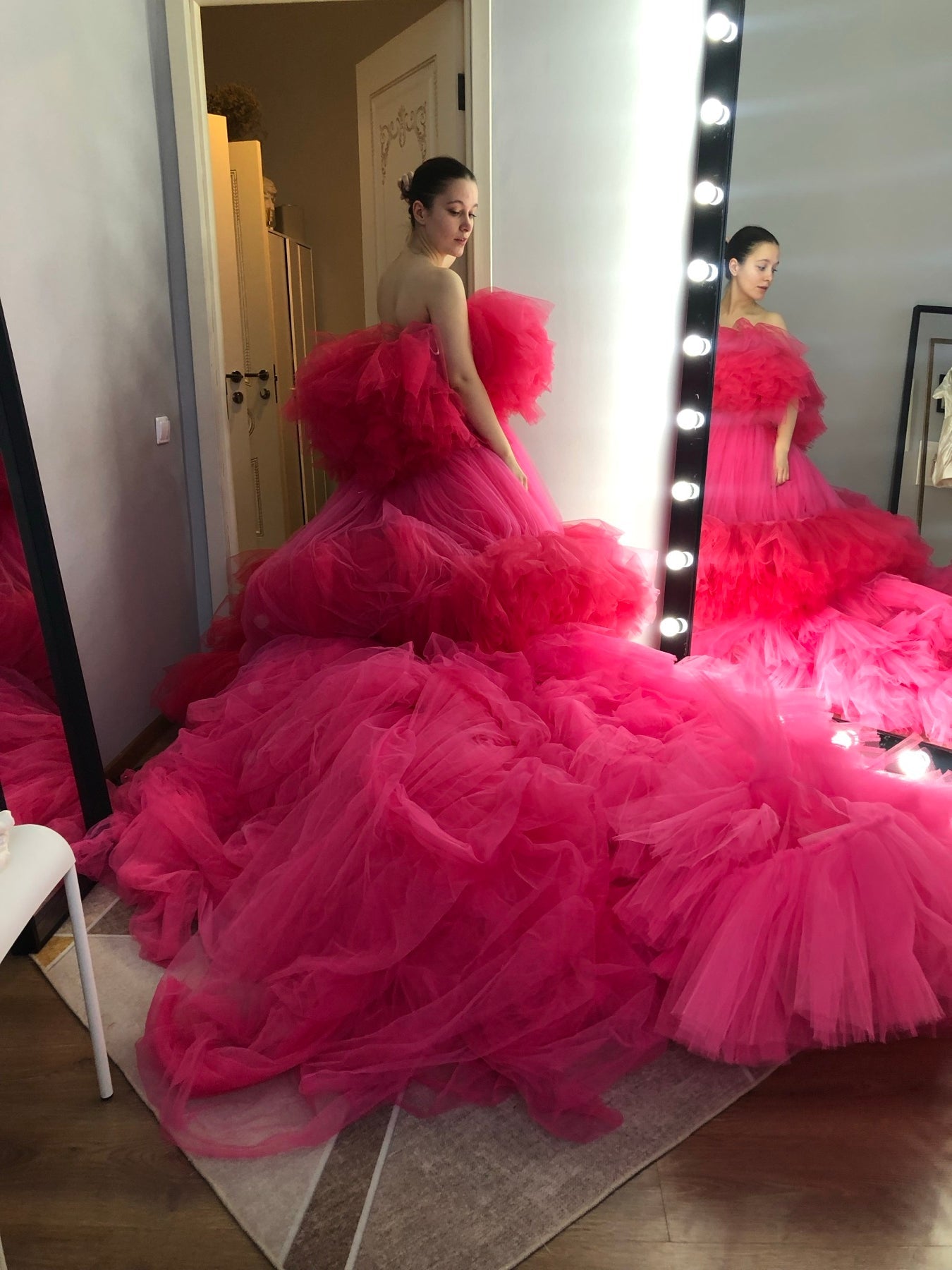

A colored wedding dress is a bridal gown made in a deliberate non-white shade: soft blush or pale blue, a deep jewel tone, or full black. It is a design choice, not a compromise, and it is straightforward on a made-to-measure order because the fabric is chosen and often dyed for your dress specifically.
The main things to plan are how the color photographs, how it sits against your skin, and whether the fabric you want holds an even, deep dye. Those are answered before anything is cut, with real swatches.
If you are choosing between white, ivory, and champagne rather than a true color, the wedding dress color guide covers those near-white shades in detail. This guide is about going further from white.
Key Takeaways
- A colored wedding dress is an intentional non-white gown: pastel, jewel tone, or black. On a custom order the fabric is dyed or chosen for that shade.
- Color reads darker in low light and photographs cooler under overcast sky, warmer under string lights. Test swatches in your venue's light if you can.
- Natural silk takes dye deeply and evenly. Some synthetics resist deep or true black and can look patchy.
- Pale colors show seam shadows and construction less forgivingly than white. Dark colors hide construction but show lint, dust, and thread.
- Order early. A dyed-to-order fabric needs lead time on top of the 10 to 12 week build.
Why Choose a Colored Dress
Common reasons:
- A color suits your complexion better than white.
- It fits the wedding's palette, season, or theme, similar to planning a themed dress brief.
- It is a second wedding or vow renewal and you want something different.
- You want a dress you would wear again, which color makes easier.
How Color Behaves in Photos and Light
Color is not fixed. It shifts with the light:
- Overcast daylight cools every color. Blush can read gray, blue can go steely.
- Golden hour and string lights warm everything. White photographs cream; a pale color deepens.
- Indoor tungsten adds yellow, which mutes cool tones and enriches warm ones.
- Low light makes any color read a shade or two darker than it looks in the shop.
Get swatches and photograph them on your phone in daylight, in shade, and in warm indoor light before you commit.
Pastels vs Jewel Tones vs Black
- Pastels (blush, champagne-pink, powder blue, sage, lavender). Soft and close to traditional. The most forgiving to wear. Show construction shadows more than a deep color, so seams and darts must be clean.
- Jewel tones (emerald, sapphire, burgundy, plum). Rich and formal. Hide construction well. Best in fabrics with some sheen, like satin or mikado, so the color has depth.
- Black. Modern and dramatic. Hides seams entirely but shows dust, lint, and any thread that is not a perfect match. Needs a truly matched black lining and thread throughout.
Fabrics and Dye
- Natural silk takes dye deeply and evenly, and the color has life to it. See natural silk and synthetic fabrics.
- Silk crepe and crepe dye well and give a matte, saturated finish.
- Some synthetics resist deep shades and true black, and can dye unevenly or look flat. We test a dye sample first.
- Lace and lining are dyed to match the face fabric, or chosen from stock in the closest shade, so nothing peeks through in the wrong color.
A dyed-to-order fabric adds lead time. Tell us early.
What Color Changes About Construction
- Pale colors are less forgiving than white. Seam allowances, boning channels, and darts can cast visible shadows, so pressing and finishing have to be exact.
- Dark colors hide construction but demand perfectly matched thread, zip tape, hooks, and lining. A slightly-off black notion stands out.
- Embellishment is chosen in tone: crystals and pearls read differently on color than on white, and are selected against the actual fabric.
Care and Wearing
- Dark dresses attract lint and dust; keep a matching lint roller on the day.
- Pale colors mark like white does; the afterlife and durability guide on cleaning and storage applies the same way.
- Colorfastness is confirmed on your fabric before delivery, but keep a colored dress out of prolonged direct sun in storage.
Ordering a Colored Dress Custom
Steps:
- Choose the shade from dyed swatches, viewed in several lights and against your skin.
- Dye test on your chosen fabric, checked for evenness and depth.
- Match lining, lace, thread, and notions to the final color.
- Standard build, made to your measurements over 10 to 12 weeks, plus the dye lead time.
- Fittings as normal; see how many fittings a custom dress needs.
For a remote order the dyed swatches are sent to you, and the finished color is shown in photos and video under different lighting during the remote fitting process. UPS ships to the US in 3 to 5 days. See the price breakdown; a dyed-to-order fabric can add to the cost.
FAQ
Can I get a wedding dress in any color? On a made-to-measure order, largely yes. Natural silk and silk crepe dye deeply and evenly across pastels, jewel tones, and black. Some synthetics resist deep shades or true black, so we run a dye test on your chosen fabric first.
Does a colored wedding dress photograph well? Yes, but color shifts with light. Overcast daylight cools every shade, warm indoor light and golden hour deepen and warm it, and low light reads a shade darker. Test swatches in daylight, shade, and warm light before choosing.
Is a blush or pastel dress harder to make than white? Slightly. Pale colors show seam shadows, boning channels, and darts less forgivingly than white, so pressing and finishing must be exact. The construction is the same; the finishing standard is higher.
What should I know about a black wedding dress? Black hides all construction but shows lint, dust, and any thread or notion that is not a perfect match. It needs matched black lining, zip tape, hooks, and thread throughout, and a lint roller on the day.
Does a dyed-to-order fabric take longer? Yes. Dyeing adds lead time on top of the standard 10 to 12 week build, so order early and confirm the shade with swatches as soon as possible.
Thinking about a colored gown? Start with a sketch consultation at Lutien Bridal.
About the author: Vlad Ivanov is the Director of Business Development at Lutien Bridal Atelier in France, home to the design team behind more than 1,000 custom wedding gowns delivered to brides across the US and Europe.