Atelier · France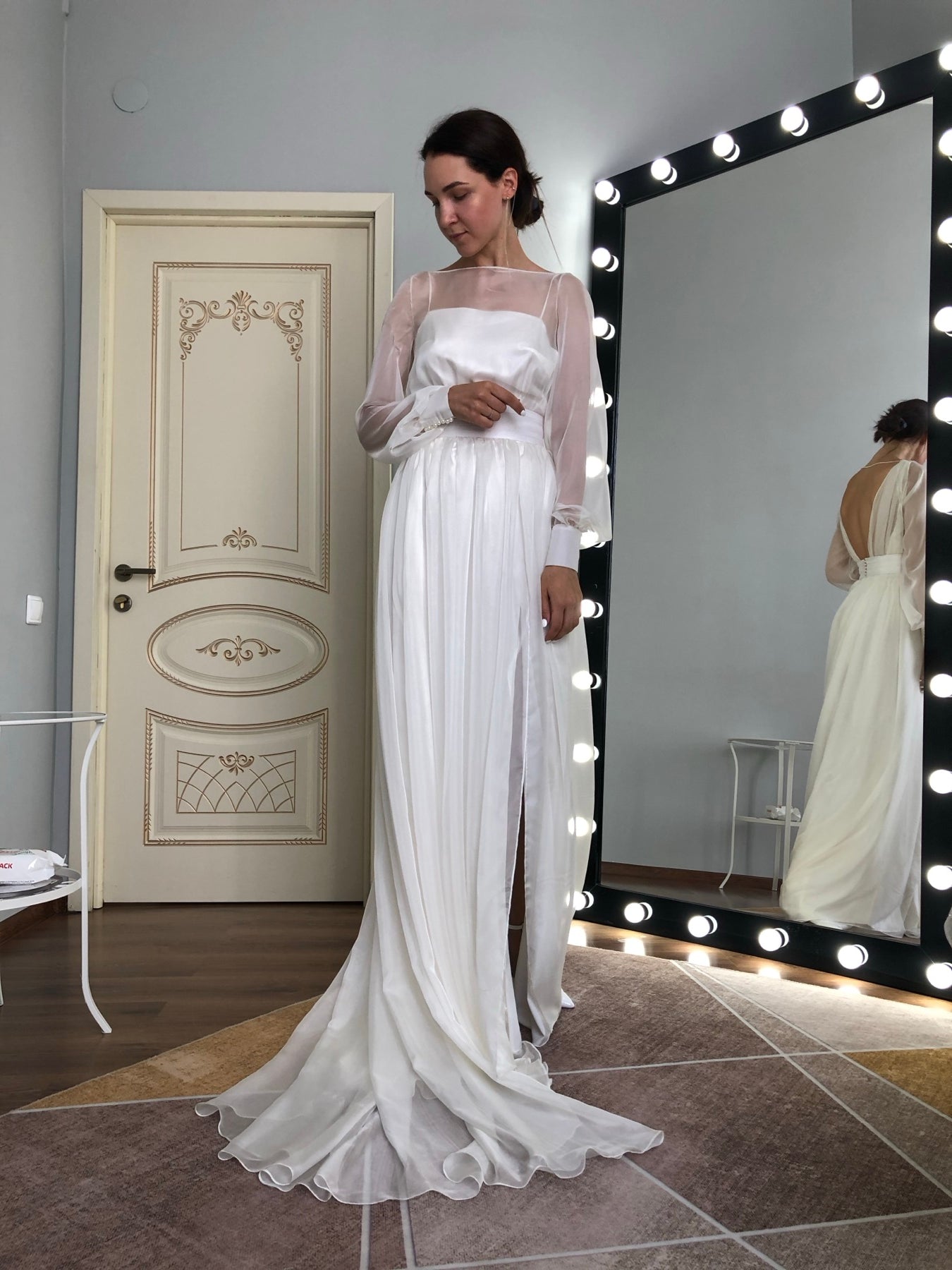

Crepe is a fabric with a matte surface, a fine pebbled texture, and a heavy, fluid drape. It falls close to the body in a clean vertical line without shine. It is the fabric behind most modern minimal wedding dresses, the ones that read as tailored rather than romantic.
Crepe rewards precise construction and punishes a poor fit. Because it has no shine to distract the eye and no pattern to hide behind, every seam and every contour is visible. That is exactly why it suits custom work.
Key Takeaways
- Crepe is matte, dense, and fluid, with a subtle grainy texture and no shine.
- It falls straight and close, which makes it ideal for sheath, column, and clean A-line gowns.
- Because it hides nothing, the fit and the seaming carry the whole look.
- It resists a hard crease better than satin but can hold a soft sitting wrinkle.
- Crepe comes in silk, viscose, and polyester versions, each with a different hand and price.
What Crepe Actually Is
Crepe is defined by its weave and finish, not its fibre. The yarns are tightly twisted before weaving, which gives the finished fabric a slightly crinkled, pebbled surface and a matte look. Different crepes vary in weight and in how pronounced the texture is:
- Crepe de chine. Lighter, softer, with a faint sheen. Fluid.
- Heavy crepe (crepe-back satin, double crepe). Dense and substantial. Falls in weighty folds. The common bridal choice for a structured minimal gown.
- Crepe georgette. Sheer and light, more drift than fall.
When brides say "a crepe wedding dress," they usually mean a heavy crepe.
How Crepe Drapes
Crepe is heavy for its thickness, so gravity does most of the work. It falls straight down, close to the body, in long unbroken lines. It does not stand away from the body, hold volume, or spring back into shape. Pleats and gathers in crepe sit soft and deep rather than crisp.
This weight is why crepe photographs as expensive. It moves slowly and deliberately, and it does not flutter.
Silhouettes That Suit Crepe
Crepe is at its best on clean, close shapes:
- Sheath and column. The natural home for crepe. The straight fall and the matte surface are the entire design.
- Fitted mermaid or trumpet. Crepe holds the body line and gives a soft, heavy flare. A stretch crepe adds movement room.
- Clean A-line. A soft, weighty flare rather than a structured one.
- Cowl neck and draped designs. Crepe's weight makes a cowl drape hang beautifully.
It is a weaker choice for a ball gown, where the fabric would need heavy internal support to hold volume it does not want to hold.
Where Crepe Struggles
- Sitting wrinkles. Crepe resists a sharp permanent crease better than satin, but it can hold a soft wrinkle across the lap after a long time seated. It usually relaxes out; a light steam finishes it.
- Snags. The tight twist makes crepe fairly durable, but a rough surface or jewellery can pull a thread.
- Warmth. Heavy crepe holds some warmth, which is a plus in winter and a minus for a hot outdoor day. Fibre choice changes this.
- Volume. Crepe cannot do a full, standing skirt without fighting its own drape.
Silk, Viscose, or Polyester Crepe
The weave is the same; the fibre changes the hand and the price. This is covered fully in our guide to natural silk and synthetic fabrics. In short:
| Fibre | Hand | Notes |
|---|---|---|
| Silk crepe | Soft, cool, with a faint natural glow | The most expensive. Feels lightest to wear at a given weight. |
| Viscose crepe | Very close to silk, fluid and soft | A strong value option. Creases a little more. |
| Polyester crepe | Slightly firmer, more uniform | Most durable and wrinkle-resistant. Can feel warmer. |
Crepe vs. Satin
The two are often the final choice for a clean gown. Our satin guide covers satin in depth. The contrast:
- Satin is glossy, reflects light in a bright highlight, and holds a crisper edge. It reads as formal and luminous.
- Crepe is matte, absorbs light, and falls softer. It reads as modern and understated.
On the same silhouette, satin makes it look polished and ceremonial; crepe makes it look tailored and quiet.
Planning a Crepe Dress as a Custom Order
The decisions:
- Weight. Light crepe de chine for fluid movement, or heavy crepe for a structured fall.
- Fibre. Silk, viscose, or polyester, tested against your drape and budget.
- Stretch. A small elastane content for a fitted silhouette you can move in.
- Seaming. Panel lines that shape the fit and add subtle vertical interest, since there is no pattern or shine.
- Any contrast detail: a lace or beaded accent, kept minimal so it reads against the matte ground.
We start with a conversation about the effect you want, then translate it into a sketch you approve before any fabric is cut. Our design process walks through each stage. Every dress is made to your measurements over 10 to 12 weeks, with UPS shipping to the US in 3 to 5 days, from a starting price of 1,490 euros. Our price breakdown explains what changes the cost.
FAQ
Is crepe a good fabric for a wedding dress? Yes, for a clean, modern gown. Crepe is matte, heavy, and fluid, so it falls in a straight vertical line and photographs as expensive. It is the standard fabric for a minimal sheath or column. It is a poor choice for a full, structured ball gown.
Does a crepe wedding dress wrinkle? It resists a sharp permanent crease better than satin, but it can hold a soft wrinkle across the lap after a long time seated. This usually relaxes out on its own, and a light steam removes it.
What is the difference between crepe and satin? Satin is glossy and reflects light; crepe is matte and absorbs it. Satin holds a crisper edge and reads as formal and luminous. Crepe falls softer and reads as modern and understated.
Is crepe warm to wear? Heavy crepe holds some warmth, which suits a winter wedding and can feel warm on a hot outdoor day. Silk and viscose crepe feel cooler than polyester crepe.
Which crepe should I choose: silk, viscose, or polyester? Silk crepe has the best hand and the highest price. Viscose crepe feels very close to silk for less. Polyester crepe is the most wrinkle-resistant and durable. We test the drape of each against your body before deciding.
Considering a matte, tailored gown? Start with a sketch consultation at Lutien Bridal.
About the author: Vlad Ivanov is the Director of Business Development at Lutien Bridal Atelier in France, home to the design team behind more than 1,000 custom wedding gowns delivered to brides across the US and Europe.