Atelier · France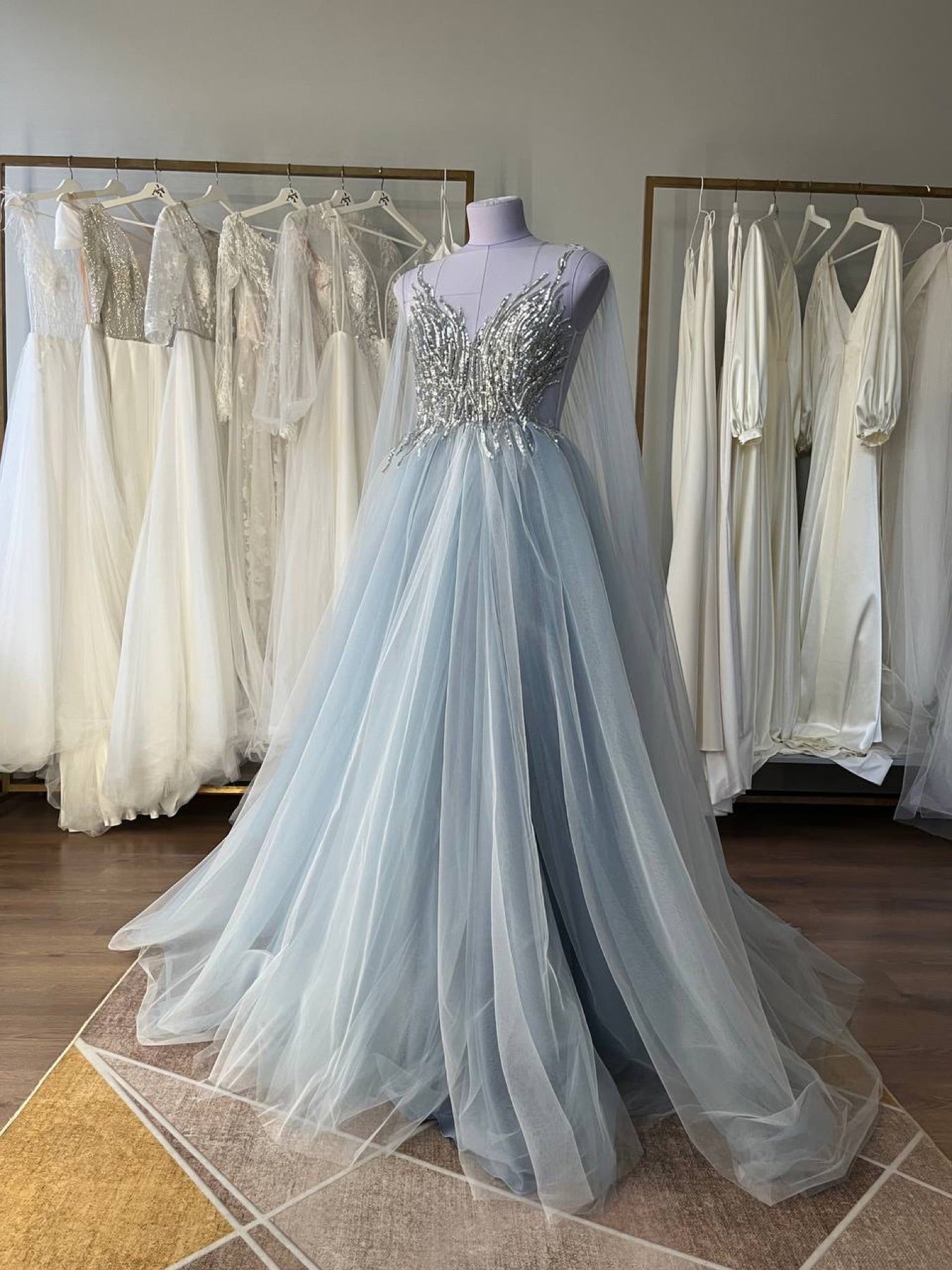

A ball gown wedding dress has a fitted bodice and a skirt that expands sharply from the waist into a wide, full shape. The look reads as formal and traditional. The engineering behind it is what most brides do not see.
The volume does not come from fabric alone. It comes from an internal support layer, a bodice built to carry weight, and a hemline cut wide enough to hold its shape while you move. This guide explains how a ball gown is put together, what it feels like to wear, and how to plan one as a custom piece.
Key Takeaways
- A ball gown skirt gets its shape from an internal structure, usually a horsehair-hemmed underskirt, boned petticoat, or hoop, plus layers of net or tulle.
- The bodice does structural work. It needs boning and a firm waist stay so the skirt hangs from a stable point.
- A full ball gown can weigh several pounds. The weight sits on the hips and waist, not the shoulders, when it is built correctly.
- Ball gowns suit brides who want a clear waist definition and a formal effect, and they balance a fuller upper body or midsection well.
- As a custom order, you control the skirt volume, the support type, and how the weight is distributed, so the dress fits your venue and your comfort.
What Makes a Ball Gown a Ball Gown
A ball gown is defined by the contrast between a close bodice and a wide skirt that breaks away from the body at the natural waist. The break is deliberate and structural. It is not a gradual flare.
This sets it apart from an A-line silhouette, where the skirt widens gently in a straight diagonal from the waist to the hem. An A-line skims. A ball gown stands away from you. If you compared the two skirts laid flat, the ball gown would be close to a full circle or wider, while the A-line would be a narrower cone.
The full range of shapes, including where the ball gown sits among them, is covered in our wedding dress silhouettes guide. The short version is that the ball gown is the most voluminous of the traditional silhouettes, and that volume has to be supported from the inside.
How the Skirt Gets Its Volume
The skirt shape is built in layers. Each layer has a job.
The support layer sits closest to the underskirt. This is the piece that creates the actual projection. Options include a petticoat stiffened with boning or a light hoop, a net underskirt with a horsehair braid sewn into the hem, or several graduated layers of crin and tulle. A hoop gives the widest, most architectural shape. Layered net gives a softer, rounded shape that moves more.
The volume layers are the tulle, net, or organza that fill out the space between the support and the outer fabric. More layers mean a denser, more sculptural skirt. Fewer layers mean a softer, more collapsible one.
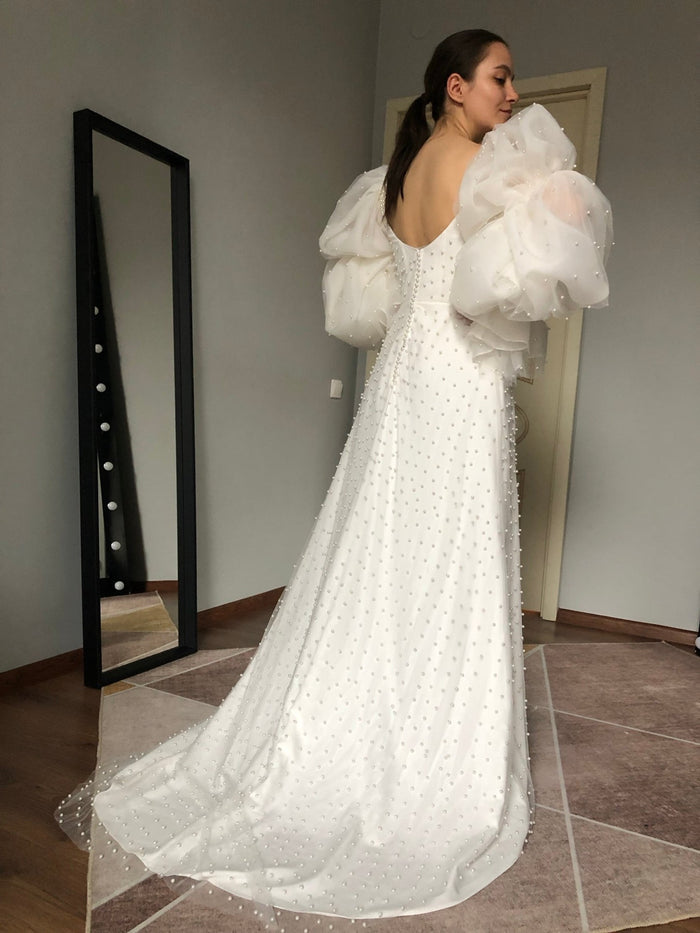
The outer skirt is the fabric you see. On a densely embellished gown, the outer layer may be heavy on its own, which changes how much internal support the skirt needs to hold its line.
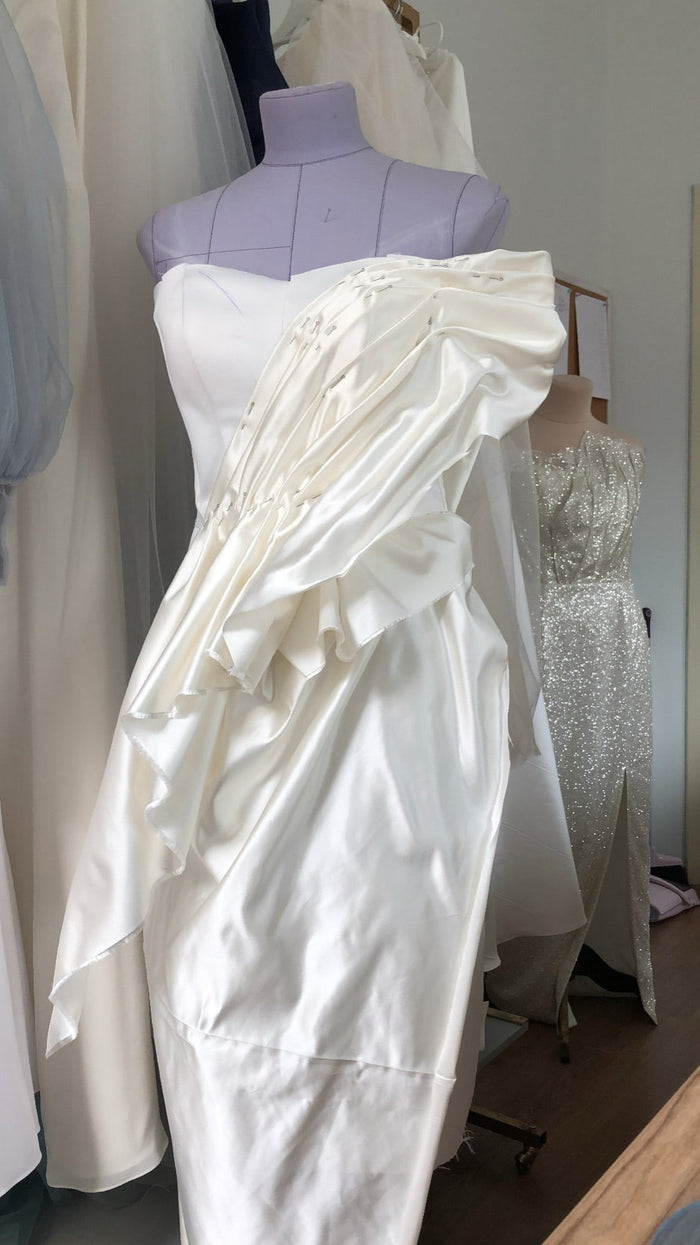
The number of layers is a design decision, not a fixed rule. We build the support to match the volume you want and the fabric you choose, then check it on a dress form before anything is finished.

Why the Bodice Does the Structural Work
The skirt hangs from the bodice, so the bodice has to be stable. If it shifts or collapses at the waist, the whole skirt moves with it.
A ball gown bodice is usually boned. The bones keep the bodice vertical and stop it from folding when you sit or bend. A firm waist stay, an inner band of grosgrain or petersham that sits at your natural waist and closes independently, anchors the dress at the narrowest point of your torso. The skirt weight pulls down on this band rather than dragging the whole bodice down.
This is the same construction logic covered in our guide to corset construction and fit. A structured bodice is what lets a strapless or lightly strapped ball gown stay up without constant adjustment. It is doing more than shaping your waist. It is the mounting point for several pounds of skirt.
How Much Does a Ball Gown Weigh?
A full ball gown with multiple support and volume layers, an embellished bodice, and a long train commonly weighs several pounds. A lighter ball gown with a single soft petticoat and an unembellished skirt can weigh noticeably less.
Weight itself is not the problem. Weight in the wrong place is. Built correctly, a ball gown carries its load on your waist and hips through the waist stay, which your body supports easily for a long day. Built poorly, the weight hangs off the shoulders or the upper bodice, which becomes tiring within hours.
When we plan a heavier ball gown, we discuss the wedding timeline with you. If you are standing for a long ceremony, walking on grass, or dancing late, we can reduce the support weight, use a lighter hoop, or design a detachable overskirt or train so the dress changes for the reception.
Who a Ball Gown Suits
A ball gown works well if you want:
- A defined waist. The silhouette creates one visually even if your natural waist is soft or high.
- A formal effect. Ball gowns read as ceremonial and photograph as a strong shape from a distance.
- Visual balance for a fuller bust, broad shoulders, or a rounder midsection. The wide skirt balances the upper body and draws the eye to the smallest part of the torso.
- To feel the dress. Some brides want the presence of a large skirt. That is a valid reason on its own.
A ball gown is harder to manage in tight venues, on uneven outdoor ground, and in cars. None of these rule it out. They are planning points. For a garden or outdoor ceremony, our garden wedding dress guide covers how skirt volume and ground conditions interact.
If you are unsure whether you want this much skirt, a lightly structured A-line or a sheath silhouette gives a very different result with far less to carry.
Fabric Choices and How They Change the Shape
The outer fabric changes the character of a ball gown significantly.
| Fabric | Effect on a ball gown |
|---|---|
| Tulle | Soft, romantic, rounded. Layers well. Reads light even at large volumes. |
| Organza | Crisp and structured. Holds a sharper edge and a more architectural shape. |
| Satin | Smooth and formal. Heavier. Creates deep folds and a sculptural, glossy skirt. |
| Mikado | A heavy blend that holds a very structured, almost sculptural shape with fewer layers. |
| Lace over tulle | Adds surface texture and pattern without adding much structural weight. |
Our fabric guide for custom gowns explains how each of these behaves in more detail. For a ball gown specifically, the key question is how much structure you want the fabric itself to provide versus how much comes from the internal support.
Planning a Ball Gown as a Custom Order
When you order a ball gown as a custom piece, the parts you get to decide are the ones that affect how it looks and how it wears:
- Skirt volume. From a soft, single-petticoat fullness to a wide, structured hoop shape.
- Support type. Hoop, boned petticoat, or layered net, chosen for your venue and comfort.
- Waist position and bodice length. Natural waist, slightly dropped, or basque, each of which changes your proportions.
- Weight distribution. How the load sits, and whether parts of the skirt or train detach for the reception.
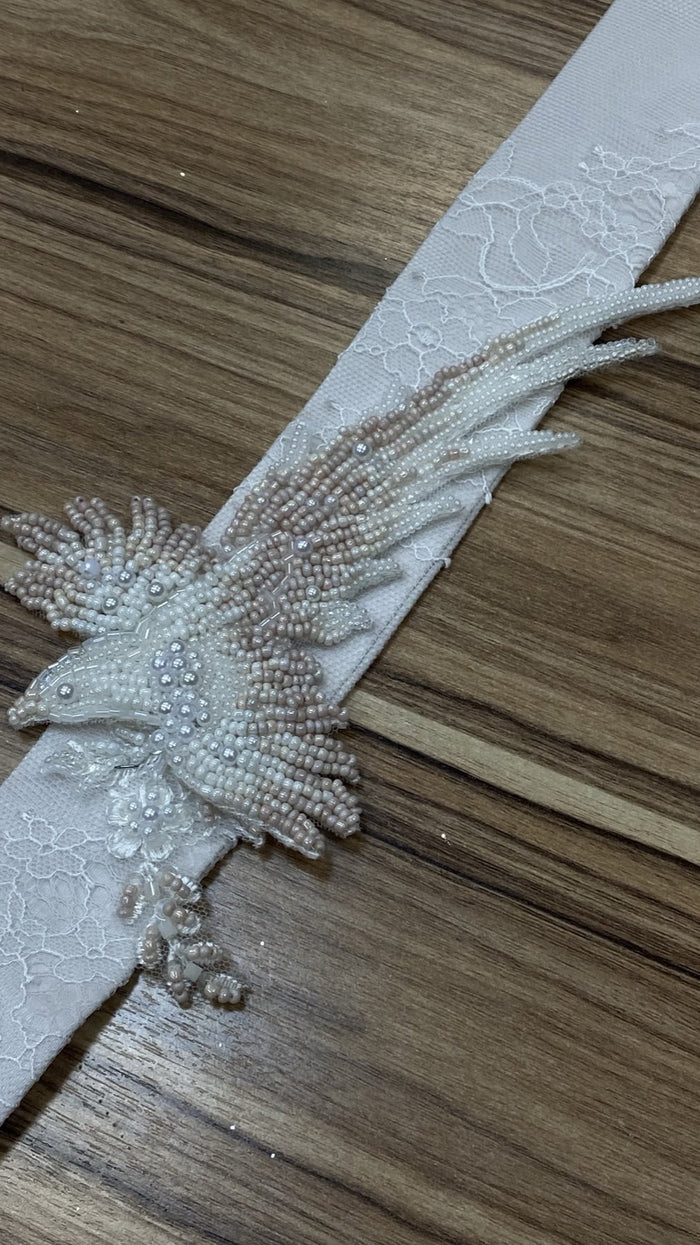
- Surface treatment. Plain, lace-covered, or embellished, which affects both look and weight.
We start with a conversation about the effect you want and the day you are dressing for, then translate that into a sketch. You approve the sketch before we cut fabric. The support structure is built and checked on a form during production, and adjusted based on your fittings. Our design process walks through each of these stages.
Every custom dress at Lutien Bridal is made to your measurements over a production period of 10 to 12 weeks, with shipping to the US in 3 to 5 days by UPS. Pricing starts at 1,490 euros, and what drives the cost of a more complex ball gown is explained in our price breakdown.
FAQ
Is a ball gown wedding dress uncomfortable? Not inherently. A well-built ball gown carries its weight on the waist and hips, which your body supports comfortably. Discomfort usually comes from a bodice that is not structured enough, or a support layer that is heavier than the venue requires.
Can a ball gown skirt be made less full? Yes. Skirt volume is a design choice. As a custom order, you can specify anything from a soft, lightly supported fullness to a wide, structured shape. We build the internal support to match.
How do you sit down in a ball gown? You gather the front of the skirt slightly and sit toward the front of the chair. A boned bodice stays vertical when you sit. The support layer compresses and springs back. We check this during fittings.
Can a ball gown work for an outdoor wedding? Yes, with planning. Soft support layers handle grass and uneven ground better than a rigid hoop. A shorter or detachable train reduces what drags. Fabric choice matters too, since lighter fabrics recover better from being handled.
What is the difference between a ball gown and an A-line? An A-line skirt widens gradually in a straight line from the waist, and skims the body. A ball gown skirt breaks away sharply from a fitted waist into a wide, supported shape. The A-line needs little or no internal structure. The ball gown depends on it.
Ready to plan a ball gown that fits your venue and your comfort? Start with a free sketch consultation at Lutien Bridal.
About the author: Vlad Ivanov is the Director of Business Development at Lutien Bridal Atelier in France, home to the design team behind more than 1,000 custom wedding gowns delivered to brides across the US and Europe.