Atelier · France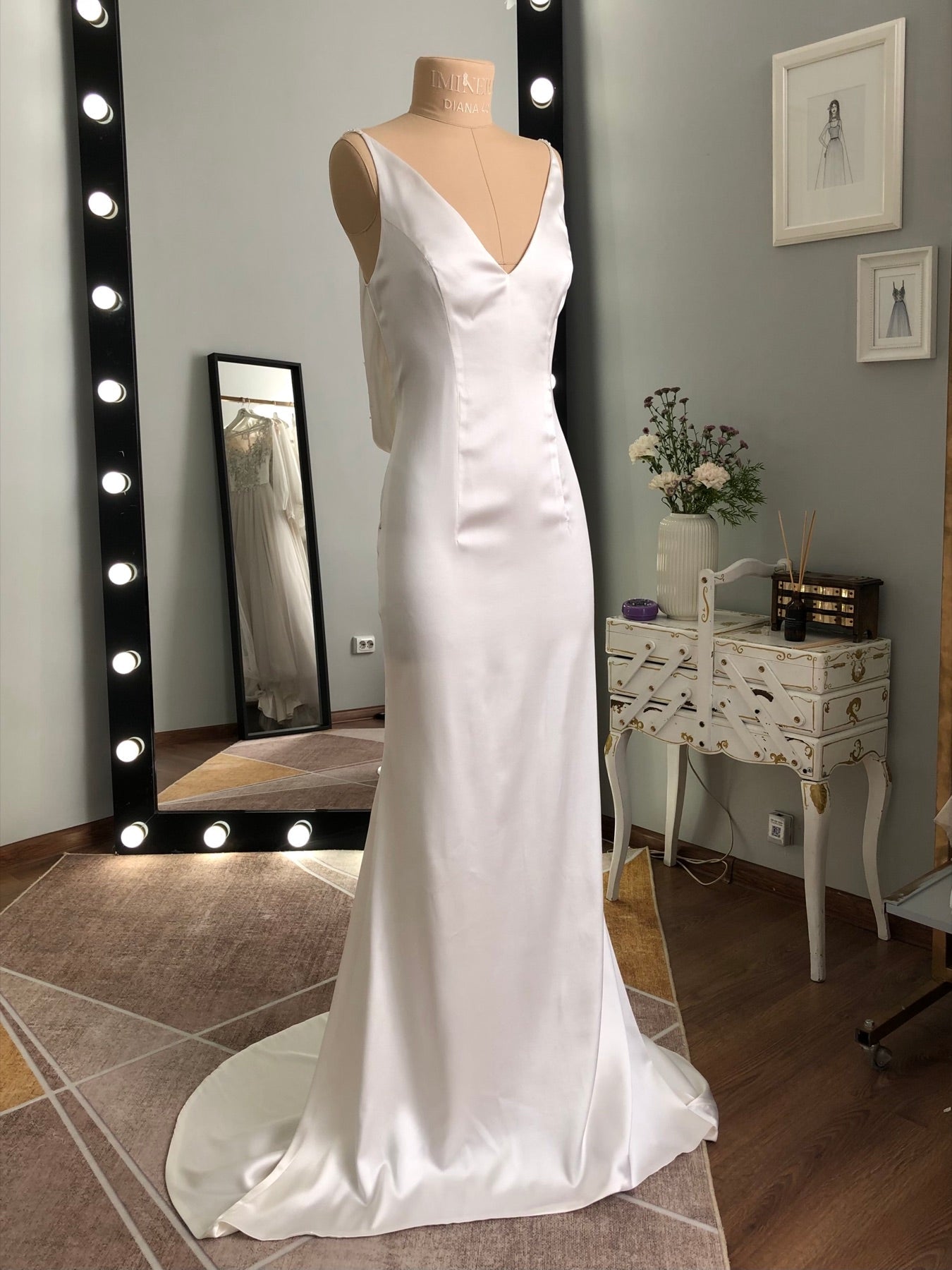

A sheath or column wedding dress falls in a straight vertical line from the shoulders to the hem. It follows the body without gripping it and without flaring out. There is no built-up skirt and usually no internal support structure beyond a light lining.
That restraint is the point. With no volume and no embellishment doing the work, the fabric, the cut, and the fit are the entire design. A straight silhouette is one of the harder shapes to make well, precisely because there is nothing to hide behind.
Key Takeaways
- A sheath or column falls straight from shoulder to hem, skimming the body without a flare and without a fitted grip.
- It differs from a mermaid, which is tight through the hips and thigh before flaring low.
- With no volume or structure, the fabric choice and the pattern accuracy carry the whole look.
- It gives a full walking stride and is one of the lightest silhouettes to wear.
- As a custom order, the fit is tuned to skim rather than cling, and the fabric is chosen for how it falls on you specifically.
Sheath vs. Column vs. Mermaid
The terms sheath and column are used almost interchangeably. Both describe a narrow, straight silhouette with no flare. If a distinction is drawn, a sheath is slightly closer to the body and a column is a touch more relaxed and architectural. In practice, the sketch defines the shape, not the label.
The more useful contrast is with a mermaid or trumpet. A mermaid is deliberately tight through the hips and thighs, then flares. A sheath is not tight anywhere. It grazes the widest points of your figure and falls straight down from there. That means no movement restriction and no need for a boned inner corset.
Against the full range of shapes in our silhouettes guide, the sheath sits at the quiet end, next to the minimalist styles many of these dresses belong to.
Why the Fabric Is the Whole Design
On a ball gown, structure creates the shape. On a sheath, the fabric does. How it falls, how it catches light, and how it responds to movement is what you see.
| Fabric | Effect on a sheath or column |
|---|---|
| Crepe | Matte, dense, fluid. Falls in a clean vertical line with soft movement. A frequent choice for a modern sheath. |
| Satin | Glossy, heavier, structured. Holds a crisp line and shows every seam and contour, which raises the bar on fit. |
| Silk georgette or chiffon | Light and fluid over a lining. Drifts rather than falls straight. A softer, more romantic column. |
| Jersey or stretch crepe | Skims and moves with you. The most forgiving option for a close vertical line. |
| Lace over lining | Adds surface pattern. The lining sets the drape and the fit. |
Our fabric guide for custom gowns covers how each behaves in detail, and our article on how we select fabrics for each order explains why we test drape against your body rather than choosing from a swatch card. For a straight silhouette, that testing step is not optional. The wrong weight of fabric will either cling where you do not want it to or hang without any life.

Why Fit Is Harder on a Straight Line
A flared skirt absorbs small fit errors. A straight one does not. Every contour of your torso and hips is read directly through the fabric, so the pattern has to account for your exact proportions, your posture, and how your weight sits.
The target is a fit that skims. The fabric should touch your body at the shoulders, bust, and hips, and float a few millimeters away everywhere else. Too loose and it looks unshaped. Too close and it reads as tight and shows every line underneath.
We fit these silhouettes from a full set of tailor-taken measurements, using the method in our guide to what measurements we need. We also build a mockup for close-fitted straight dresses so the drape and skim can be checked and corrected on a form before the real fabric is cut. That mockup step is described in our article on what a wedding dress mockup is.
How It Wears
A sheath is one of the easiest silhouettes to spend a day in:
- Full stride. No flare point to restrict your step. Stairs, cars, and dance floors are straightforward.
- Light. No support layers, no petticoat, minimal structure. Often the lightest option after a slip dress.
- Low bulk. Sits close to the body, so it takes up little space in tight venues or crowded receptions.
The one consideration is the fabric memory. A heavy satin sheath will show sitting creases more than a crepe one. We can pre-empt this with fabric choice and lining.
Who a Straight Silhouette Suits
A sheath or column works well if you want:
- A modern, understated line rather than a traditional bridal shape.
- To feel dressed rather than costumed.
- A dress that travels easily, which matters for a destination wedding.
- Length and verticality emphasized, which the unbroken line does naturally.
It is a less automatic choice if you want a strong waist definition or a dramatic skirt. A straight cut can still suggest a waist through seaming, a belt, or a subtle shaping, but it will not create the sharp contrast a ball gown does. If you are between the two, that contrast is usually the deciding factor.
Design Choices That Still Matter
A straight silhouette is minimal, not featureless. The decisions that give it character:
- Neckline. A deep V, a square, a high bateau, or a cowl each change the mood entirely. See our necklines guide.
- Back. A low or open back is often where a plain sheath makes its statement.
- Sleeves. Long fitted sleeves, a soft flutter, or bare shoulders. Our sleeve styles guide covers the options.
- Train. A sweep or a short train keeps the line clean without adding weight. Longer trains are covered in our train lengths guide.
- Seaming. Panel lines can add a subtle shape and vertical emphasis without any added volume.
Planning a Sheath or Column as a Custom Order
The choices that define your dress:
- Fit intent. How much skim versus how close, decided with you and confirmed at fittings.
- Fabric. Matte or glossy, structured or fluid, with or without stretch, tested against your drape.
- Neckline, back, and sleeves. The features that carry the design.
- Train. Length and whether it detaches or bustles.
- Internal finish. Lining weight and any light shaping.
We start from a conversation about the effect you want and how you will move on the day, then translate it into a sketch you approve before fabric is cut. The design process walks through each stage. Every dress is made to your measurements over 10 to 12 weeks, with UPS shipping to the US in 3 to 5 days, from a starting price of 1,490 euros. Our price breakdown explains what moves the number.
FAQ
What is the difference between a sheath and a column dress? Very little. Both describe a straight, narrow silhouette with no flare. If a distinction is made, a sheath sits slightly closer to the body and a column is a touch more relaxed. The sketch defines the shape, not the term.
Is a sheath the same as a mermaid? No. A mermaid is tight through the hips and thighs, then flares below the knee. A sheath is not tight anywhere. It skims the body and falls straight, with no flare and no internal corset.
Does a column wedding dress need Spanx or shapewear? Only if you want it. A skimming fit sits a few millimeters off the body, so it does not require smoothing underneath. What to wear under a straight dress is a personal comfort choice, and we can line the dress to reduce the need.
Is a sheath dress good for a curvy figure? It can be. A custom sheath is cut to your exact proportions, so it follows your shape rather than fighting it. The choice is really about whether you want a straight line or a silhouette that emphasizes a defined waist.
Which fabric is best for a sheath wedding dress? There is no single answer. Crepe gives a clean matte line with movement, satin gives a crisp glossy line that demands precise fit, and a fabric with a little stretch is the most forgiving. We test drape against your body before deciding.
Want a straight silhouette cut to skim rather than cling? Start with a free sketch consultation at Lutien Bridal.
About the author: Vlad Ivanov is the Director of Business Development at Lutien Bridal Atelier in France, home to the design team behind more than 1,000 custom wedding gowns delivered to brides across the US and Europe.