Atelier · France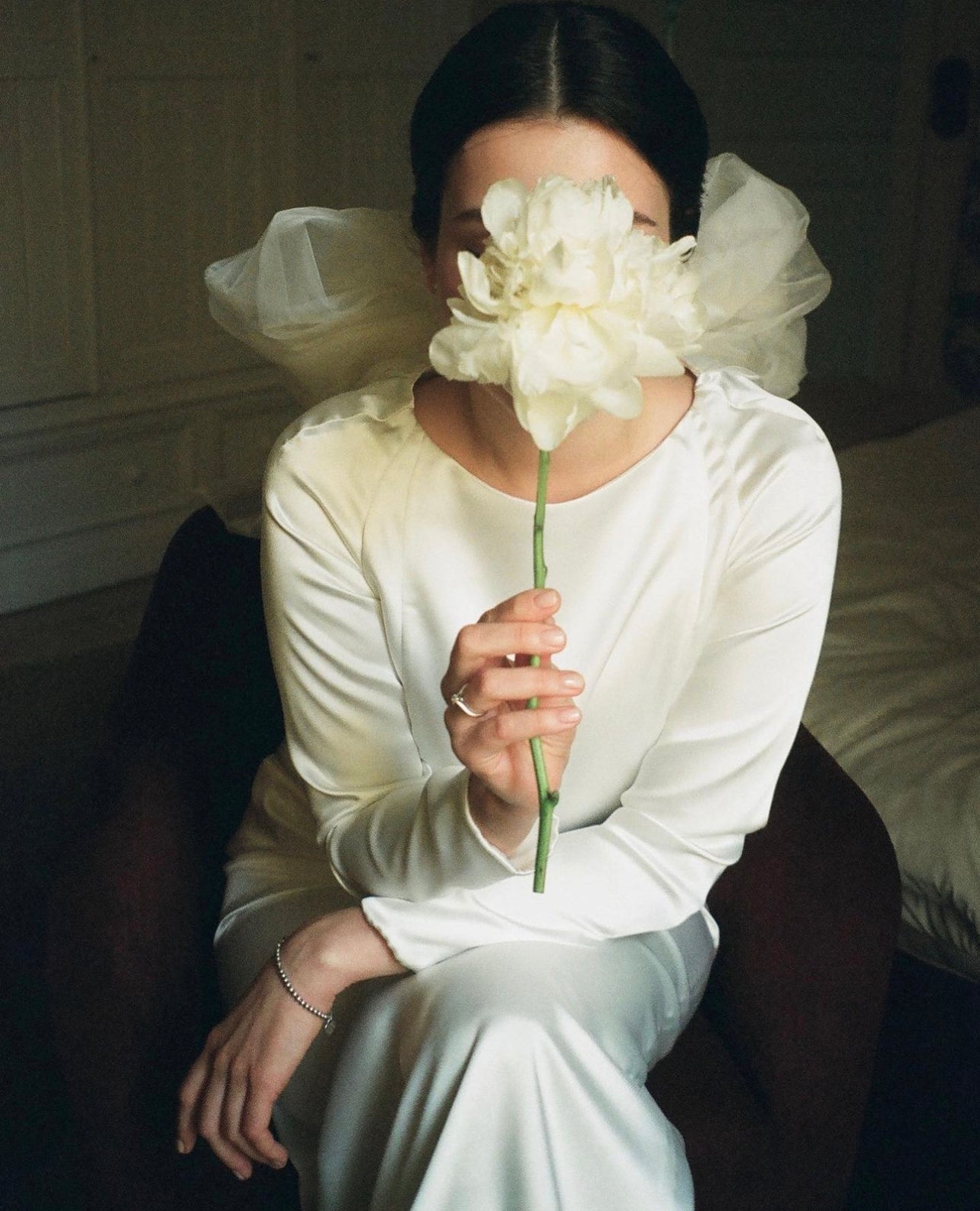
Brides often think about fabric last. The silhouette comes first: the shape, the neckline, the back. Fabric feels like a detail to fill in once the bigger decisions are made.
It does not work that way in practice. Fabric is one of the first decisions we make, and it shapes everything that follows: the construction, the timeline, the behavior of the dress on the body, how it photographs, how it holds up across a twelve-hour day.
Here is how we approach fabric selection at Lutien Bridal, one early step in the full custom ordering process, and what it means for your order.
Key Takeaways
- Fabric is decided early: it affects the pattern, the construction method, the timeline, and the final price
- We source from European suppliers; standard fabrics arrive in about two weeks, specialty fabrics in three to four
- Each fabric family has specific behaviors: satin catches light and reads formal; crepe is matte and architectural; lace requires pattern-matching across every seam
- The fabric conversation starts with the references a bride sends: what draws her to a specific image is often as much about the fabric as the silhouette
- Fabric changes after payment are possible but come with real costs; locking in the fabric early avoids this
The Conversation Starts With Your References
When a bride sends her first message (a Pinterest board, a photo, a description), we are reading more than the silhouette.
The fabric in the reference images tells us where her aesthetic lives. A bride who consistently saves images of fluid, matte dresses that move has a different sensibility from one who saves structured, high-sheen gowns. Neither is wrong; they are different fabrics, different constructions, different outcomes.
We ask about this directly: Is it the texture that draws you to that image? The way it moves? The way it catches light? Would you be happy in a different fabric if the silhouette were the same, or is the fabric itself part of what you want?
These questions narrow the range significantly before we have discussed a single specific fabric name.

The Four Questions We Ask
Before recommending a specific fabric, we need answers to four questions:
1. How should the dress feel on the body?
Structured fabrics (duchess satin, mikado, some jacquards) hold their shape independently of the body. They create silhouette with volume and architecture. Fluid fabrics (charmeuse, crepe, lightweight satin) follow the body. Neither is universally better, but a bride who wants to move freely at her reception and a bride who wants a ballgown skirt that photographs from across the room need entirely different fabrics.
2. How should it photograph?
High-sheen fabrics (duchess satin, charmeuse, silk-faced satin) tend to catch light intensely. In photography, they create bright highlights and deep shadows. This is glamorous in the right conditions and can be harsh in others. Matte fabrics (crepe, matte chiffon, mikado) photograph more evenly and are often more forgiving across different lighting environments.
3. What is the climate on the wedding day?
A fully lined duchess satin gown in August outdoor weather is a different experience from the same gown in a climate-controlled ballroom. Lightweight fabrics (chiffon, crepe, charmeuse) breathe. Heavier fabrics (duchess satin, structured jacquard) hold heat. This is a practical question, not a stylistic one.
4. Are there embellishments in the design?
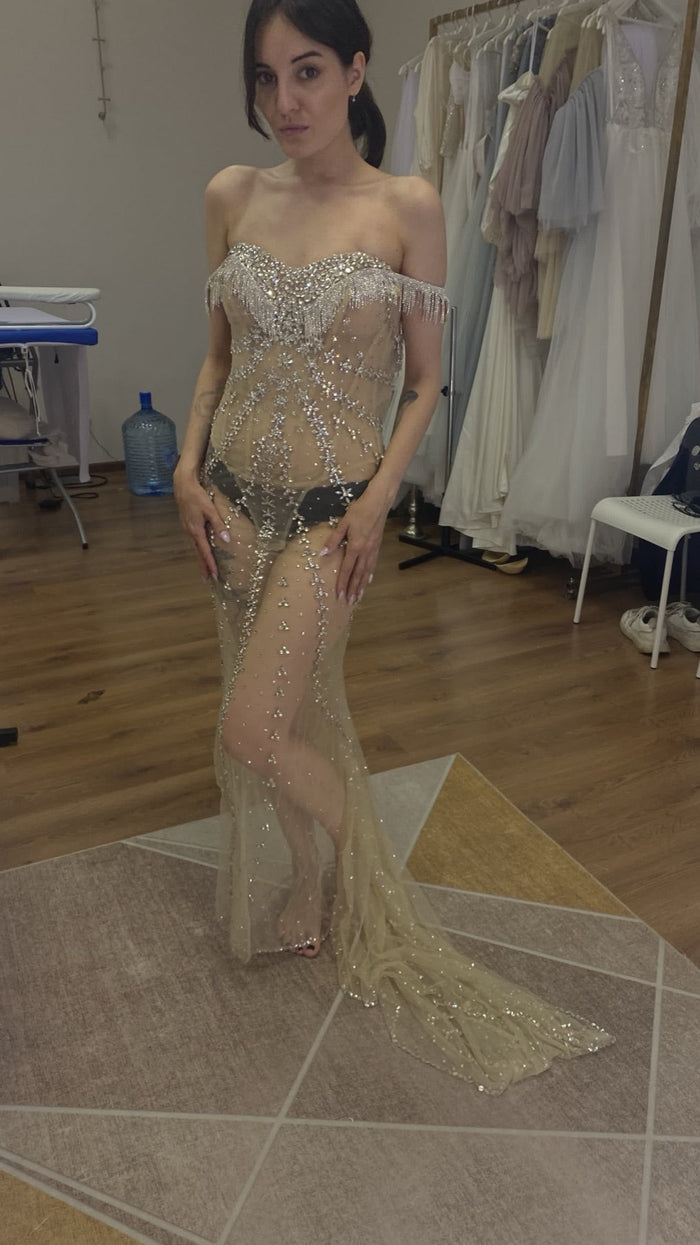
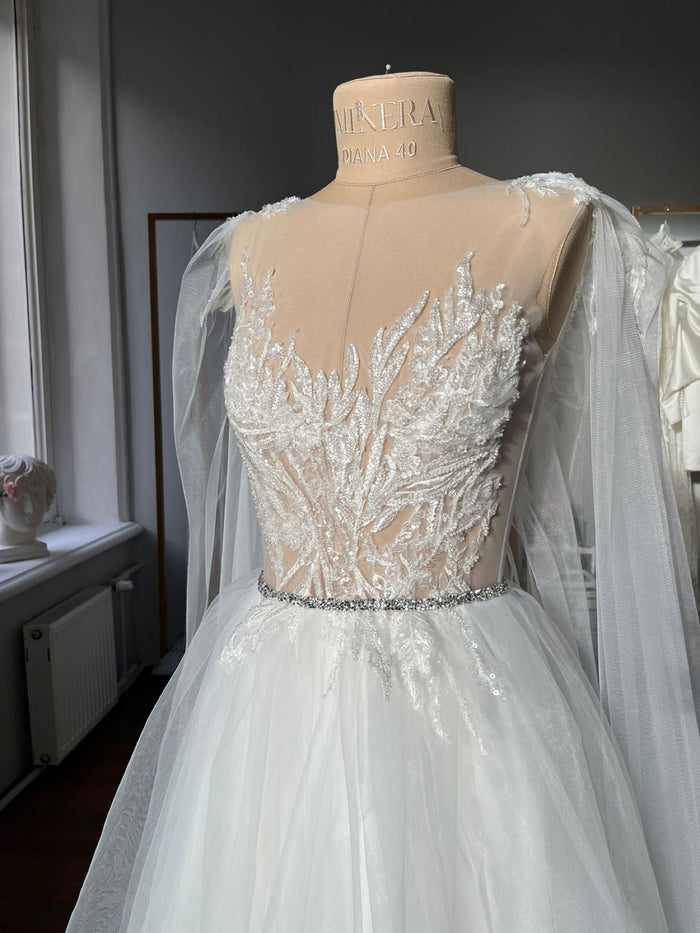
Embellishments (hand embroidery, beading, lace application) work differently on different base fabrics. A heavily beaded bodice on a fluid charmeuse requires more structural support in the lining than the same beading on a duchess satin. The base fabric affects how embellishment is applied and how it holds over time, and it affects labor: see what hand embroidery adds to the cost.
The Main Fabric Families: What Each One Does
Satin
The most common bridal fabric, and the most varied. "Satin" describes a weave structure, a smooth, high-sheen face, that can be achieved in many weights and fiber compositions. Our satin wedding dress guide covers how those weights read in a finished gown.
Duchess satin is heavy and stiff. It holds structured silhouettes independently of the body. Ballgowns, full A-lines with volume, stiff bodices that maintain their shape without help from the body. The sheen is intense and formal.
Lightweight satin is fluid and has a softer sheen. It drapes and follows the body more closely. Better for column silhouettes, fitted dresses, designs where the fabric should feel like a second skin.
Crepe-back satin has two faces: the satin face (sheen) and the crepe back (matte). It can be used either way, giving the designer a choice of finish depending on the look.

Crepe
Crepe is a matte, slightly textured fabric that drapes with clean, even weight. It does not catch light the way satin does, which makes it exceptionally versatile across different lighting conditions.
Crepe is the fabric for brides who want architectural minimalism, a dress that reads with precision and intention rather than with shimmer. It holds a clean edge, which makes it ideal for structured necklines, geometric seaming, and open backs where the fabric edge is a design element.
Lace
Lace is not a single fabric; it is a category that covers dozens of techniques and weights. The main families we work with:
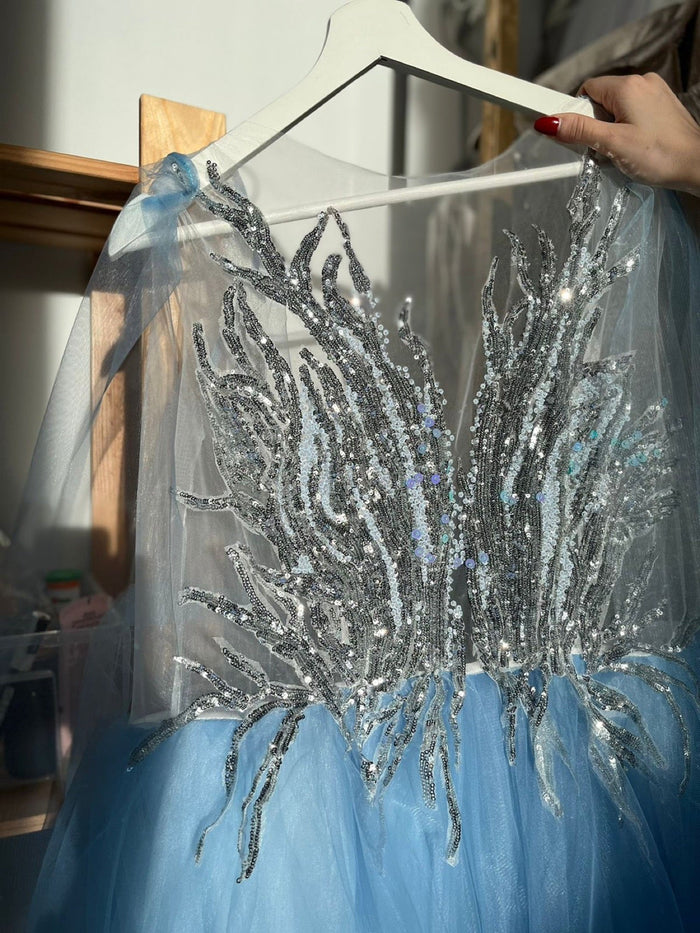
Chantilly lace: lightweight, delicate, with a fine floral or botanical pattern. It drapes softly and is often used as an overlay over a satin or crepe base.
Guipure (Venetian) lace: heavier, with a distinct three-dimensional quality. It holds its shape and is typically used without a backing, since the structure is in the lace itself.
Stretch lace: has elastic properties, used for fitted bodices or sleeves where the lace needs to move with the body.
The critical construction factor with lace is pattern matching. Every seam in a lace garment requires the floral or geometric pattern to align across the seam line. On a simple garment, this doubles the cutting time. On a complex garment with many panels or voluminous sleeves, it is the most labor-intensive part of the entire construction. See how a custom wedding dress is made for where that work sits in the build.
Chiffon and Tulle
Both are lightweight, semi-sheer fabrics used primarily for layered skirts, overlays, and dramatic silhouettes. Chiffon drapes softly and flows with movement. Tulle holds volume without much weight. In our designs, they appear as outer layers of multi-layer skirts or as overlay fabrics over a satin or crepe base.

Sourcing: Why Fabric Takes Time
After the design is finalized and payment is collected, we order fabric from European suppliers. That is a deliberate choice: nothing is bought until an order is confirmed, which is central to why made-to-order works this way.
Standard fabrics (satin in common weights, crepe, basic chiffon, standard lining materials) are typically in stock with distributors and arrive in about two weeks.
Specialty fabrics (specific lace patterns, rare silk blends, unusual jacquards, custom-dyed materials) are sourced from mills and may take three to four weeks.
Why we source after payment, not before: until the design is fully agreed and the final price confirmed, the exact fabric specifications are not locked. We cannot order a specific lace at a specific width in a specific color until the design is final. Sourcing after payment means we are ordering exactly what the dress needs, not a closest approximation.
This is one of the reasons we are transparent about our 10 to 12 week production timeline: fabric sourcing is real time with real variables. We recommend starting about 10 months before the wedding. A bride who needs her dress in eight weeks cannot have specialty lace that takes four weeks to arrive. We tell you this upfront.
How Fabric Affects the Final Price
Fabric cost is a significant component of the total price, which starts at an individual quote for a custom gown and varies considerably from there. Standard satin and crepe for a simple silhouette sit at the lower end. Specialty lace for a full-coverage gown sits significantly higher. Natural fiber options (silk charmeuse, silk satin, silk crepe) cost more than polyester equivalents and can behave differently on the body. A higher-grade fabric also tends to age better, which we cover in how a wedding dress holds up after the wedding.
We discuss fabric options during the design consultation and include the fabric cost in the final quoted price. No fabric substitutions happen after payment without your explicit approval.
The most common question we get after the initial quote: "Can we use a different fabric to bring the cost down?" The answer is usually yes, but the fabric change almost always requires revisiting the design, because the silhouette and the fabric are interdependent. A design that works in duchess satin may not work in crepe. We can make both work, but they will be different dresses.
Working With Us on Fabric Selection
You do not need to arrive at the consultation knowing what fabric you want. Most brides do not, and the ones who do sometimes revise their choice after seeing how their preferred fabric interacts with their silhouette.
What helps: references that show the texture and behavior you are drawn to. A matte or a shiny dress in your saved images tells us something immediately. From those signals, we propose specific fabrics, explain how each would build, and let you make a decision with real information. For a broader look at the materials we reach for most, see the fabrics we use most for custom gowns.
Start with a free sketch consultation
Frequently Asked Questions
Can I choose a specific fabric I have already researched?
Yes. If you have a specific fabric in mind, tell us during the consultation. We will assess whether it is buildable in your silhouette and source it if so. We will also tell you if there is a better alternative for your specific design.
Do you use natural or synthetic fabrics?
Both. Natural fiber fabrics (silk satin, silk crepe, silk charmeuse) behave differently from their polyester counterparts, particularly in how they breathe: polyester holds very little moisture, which a 2021 study in the journal Polymers put at roughly 0.4 percent, against about 5 percent for cotton and 10 percent for wool, so a natural fiber gown manages heat and humidity in a way a polyester one does not. Silk also tends to drape with more weight and fluidity. Polyester equivalents are more affordable. We will discuss both options and their tradeoffs during the consultation.
What if I change my mind about the fabric after payment?
If the fabric has not been ordered yet, changes are straightforward. If fabric has already been ordered and arrived, the cost of the original fabric has been incurred. We will discuss what the change requires and give you a clear picture before proceeding.
Can I see fabric samples before committing?
We can describe fabric options in detail and share photos of how specific fabrics behave in completed gowns. We do not send physical fabric samples: the process is remote and samples add significant lead time. The references you provide and our descriptions of how each fabric builds are the tools we use to make the decision together.