Atelier · France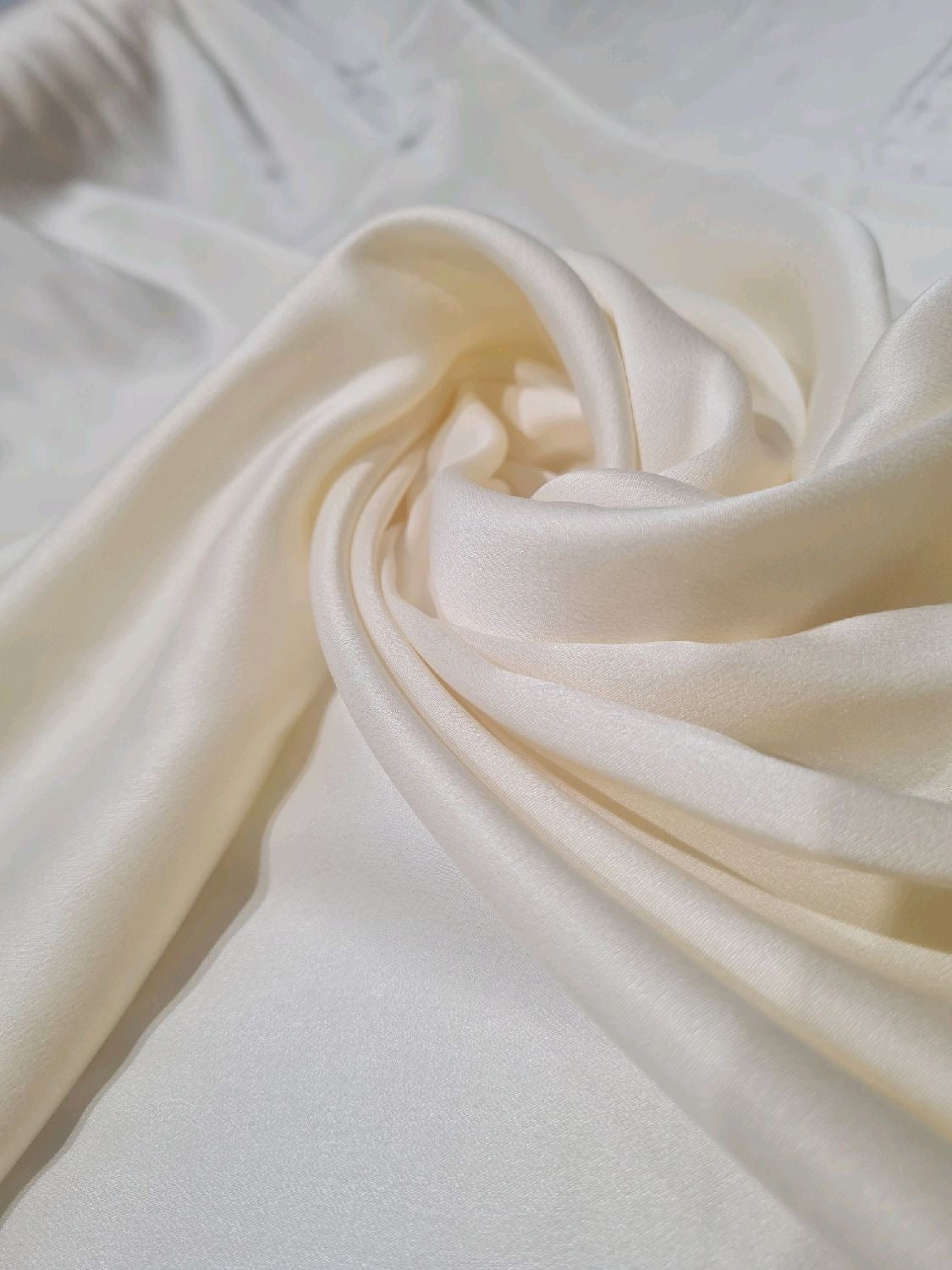

Key Takeaways
- Most wedding dresses are worn once, for one day, then packed into a box, not because that is the goal, but because many are not built to be worn again.
- Fiber matters most: natural fibers can be restored by a specialist, while polyester, common in ready-to-wear bridal, degrades and responds poorly to restoration.
- Hand-finished seams and boned corset construction hold their shape through repeated wear; mass-cut, glue-assisted construction often does not survive a single alteration cleanly.
- A dress built with quality materials and real construction can be preserved, cleaned, and, with alteration, worn again: at an anniversary, a vow renewal, or repurposed into another piece entirely.
- We do not market ourselves as an eco-brand. Durable construction is just what happens when a dress is made once, properly, instead of cut for a season.
Table of Contents
- Why Most Wedding Dresses Only Get Worn Once
- Fiber Is the First Decision That Determines Longevity
- Construction: What Actually Survives Repeated Wear
- What "Wearing It Again" Actually Looks Like
- Preservation Starts Before the Wedding, Not After
- FAQ
The wedding dress conversation usually stops at the wedding day. What happens after, whether the dress can be cleaned, altered, worn again, or handed to someone else eventually, depends on decisions made months earlier, at the fabric and construction stage, not at the dry cleaner. If you are still weighing whether to order custom at all, our complete guide to ordering a custom wedding dress online walks through the whole process.
Why Most Wedding Dresses Only Get Worn Once {#worn-once}
It is not that brides intend to wear a dress exactly once. It is that many ready-to-wear gowns are not built with a second wearing in mind. Mass production favors fast assembly: fused seams, adhesive-backed trims, lightweight interfacing that holds up for one long day but was not engineered for a second fitting, an alteration, or years in storage.
A dress that is not built for reuse tends to become a single-use garment by default, regardless of what the bride would have preferred. It gets boxed, and the box rarely gets opened again with the intention of wearing it.
Fiber Is the First Decision That Determines Longevity {#fiber}
Many ready-to-wear bridal gowns, even ones marketed as "satin" or "silk," are made from polyester. It photographs well and resists creasing in transit, which is why mass-market production favors it. It is also petroleum-based: conventional polyester is manufactured from crude oil, as Textile Exchange notes. Unlike natural fibers, aged polyester gives a specialist cleaner or conservator very little to work with once discoloration or stiffening sets in.
Natural fibers behave differently over time. Lutien Bridal uses natural silk for silk garments; the exact weave and care instructions are confirmed for each gown. A conservator can advise on cleaning and long-term preservation for the specific fabric.

This is a decision made once, at the design consultation, and it quietly determines what is possible for the dress twenty years later. For the full comparison of fabric options, see the best wedding dress fabrics for a custom gown, and for one fabric in depth, our satin wedding dress guide.
Construction: What Actually Survives Repeated Wear {#construction}
Fabric is half the equation. Construction is the other half, and it is the part almost nobody asks about before ordering.

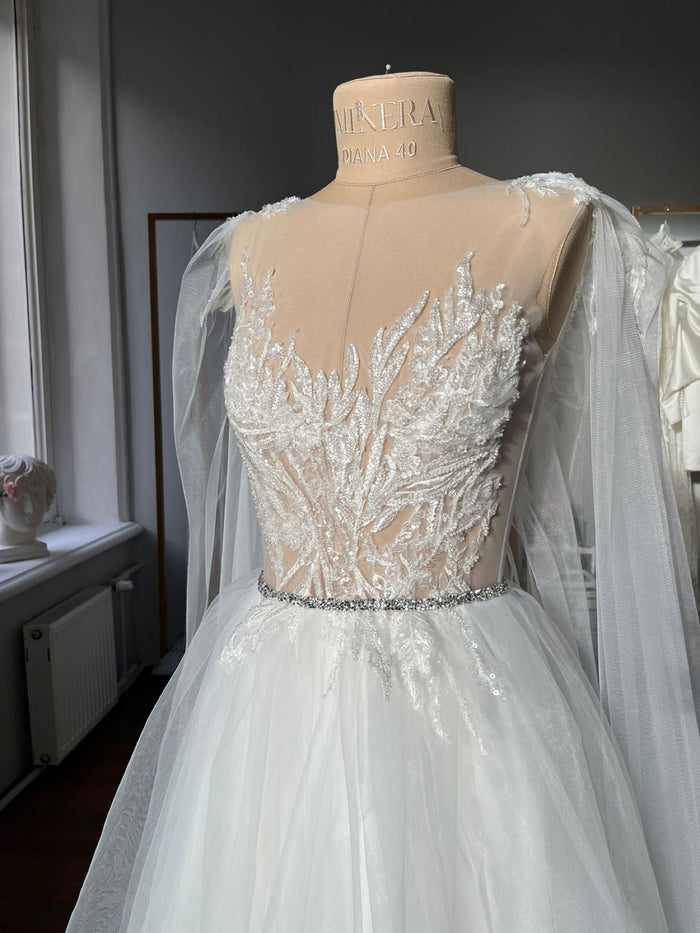
Hand-finished seams, properly boned corset construction, and lining built to support the structure over years of storage and occasional wear hold up differently than fused seams and adhesive trims. A boned bodice built to hold its shape through a 12-hour wedding day is also built to hold its shape if it is worn again five years later: the same structural principles apply. Our guide to corset construction in custom bridal covers how that structure is built.
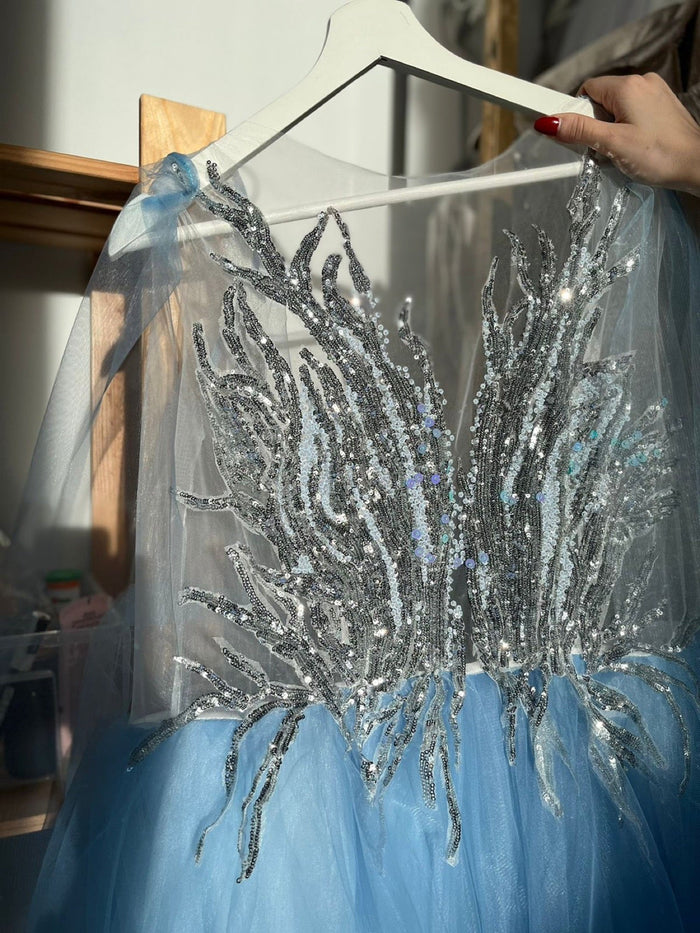
Hand embroidery and beading, applied directly to the finished garment rather than glued or heat-pressed, also hold up to cleaning and storage differently. Individually stitched elements can be repaired one at a time if something loosens over the years; adhesive-applied decoration tends to fail as a whole section.
What "Wearing It Again" Actually Looks Like {#wearing-again}
Almost nobody wears a full wedding gown, unaltered, to a second event. "Wearing it again" usually means something more specific:
A vow renewal or anniversary. A well-preserved dress can be cleaned and worn again, sometimes with a hem or fit adjustment for a body that has changed over the years.
Restyling into a different piece. A skilled seamstress can shorten a gown into a reception dress, separate a bodice from a skirt, or rework embellished panels into a different garment entirely: options that only work if the original construction can withstand being taken apart and rebuilt.
Passing it to someone else. A dress that has been properly preserved and built from a fiber that ages well can, with alteration to the new wearer's measurements, be worn by someone else years later. This is not guaranteed by custom construction alone, but it is foreclosed entirely by fused-seam, polyester construction that degrades in storage.
None of these require an "eco" dress. They require a dress built with the assumption that someone, someday, might want to open the box again.
Preservation Starts Before the Wedding, Not After {#preservation}
The choices that make preservation possible are made at the design consultation (fiber, construction method, embellishment technique), not at the dry cleaner six months after the wedding.
What happens after the wedding still matters: professional wedding-gown cleaning soon after the event (before stains set), and storage in a breathable, acid-free box rather than a sealed plastic bag, both extend a dress's life regardless of how it was built. Museum conservators store historic costume in acid-free boxes and acid-free tissue for the same reason, as the Smithsonian's Museum Conservation Institute describes. Those steps work with what the construction gives them; they cannot manufacture longevity a dress was not built to have. For the long view on keeping a gown wearable for the next generation, see our guide to wedding dress heirloom preservation.
If a long train was part of your design, cleaning is worth planning for regardless; see our guide to the extra long train wedding dress for what venue surfaces do to fabric over the course of a day.
Start with a free sketch consultation
FAQ {#faq}
Does a custom wedding dress last longer than a ready-to-wear one?
It depends on the fabric and construction, not on "custom" as a label alone. A custom dress built with quality fiber and hand-finished construction (the standard we build to) holds up to cleaning, storage, and potential alteration better than a mass-produced polyester gown assembled with fused seams and adhesive trim.
Can a hand-embroidered dress be cleaned professionally without damage?
Yes, when the embroidery is hand-stitched rather than glued or heat-pressed. Individually secured beads and appliqués tolerate professional wedding-gown cleaning far better than adhesive-applied decoration, which can lift or discolor during cleaning.
Is natural silk really worth it for longevity?
If you plan to preserve your gown, discuss the exact natural silk fabric and care requirements with us before ordering. A specialist cleaner or conservator can advise on long-term storage and restoration.
What should I do with my dress right after the wedding to help it last?
Have it professionally cleaned by a wedding-gown specialist as soon as reasonably possible, since stains are easier to remove before they set. Store it in a breathable, acid-free box rather than a sealed plastic bag, out of direct light and humidity.
Can you build a dress specifically with future alteration or preservation in mind?
Yes. Tell us during the design consultation if long-term wearability matters to you. It can influence fabric choice and construction details without changing the design you want for your wedding day.
Construction and material guidance based on Lutien Bridal's experience completing 1,000+ custom orders from our atelier in France.