Atelier · France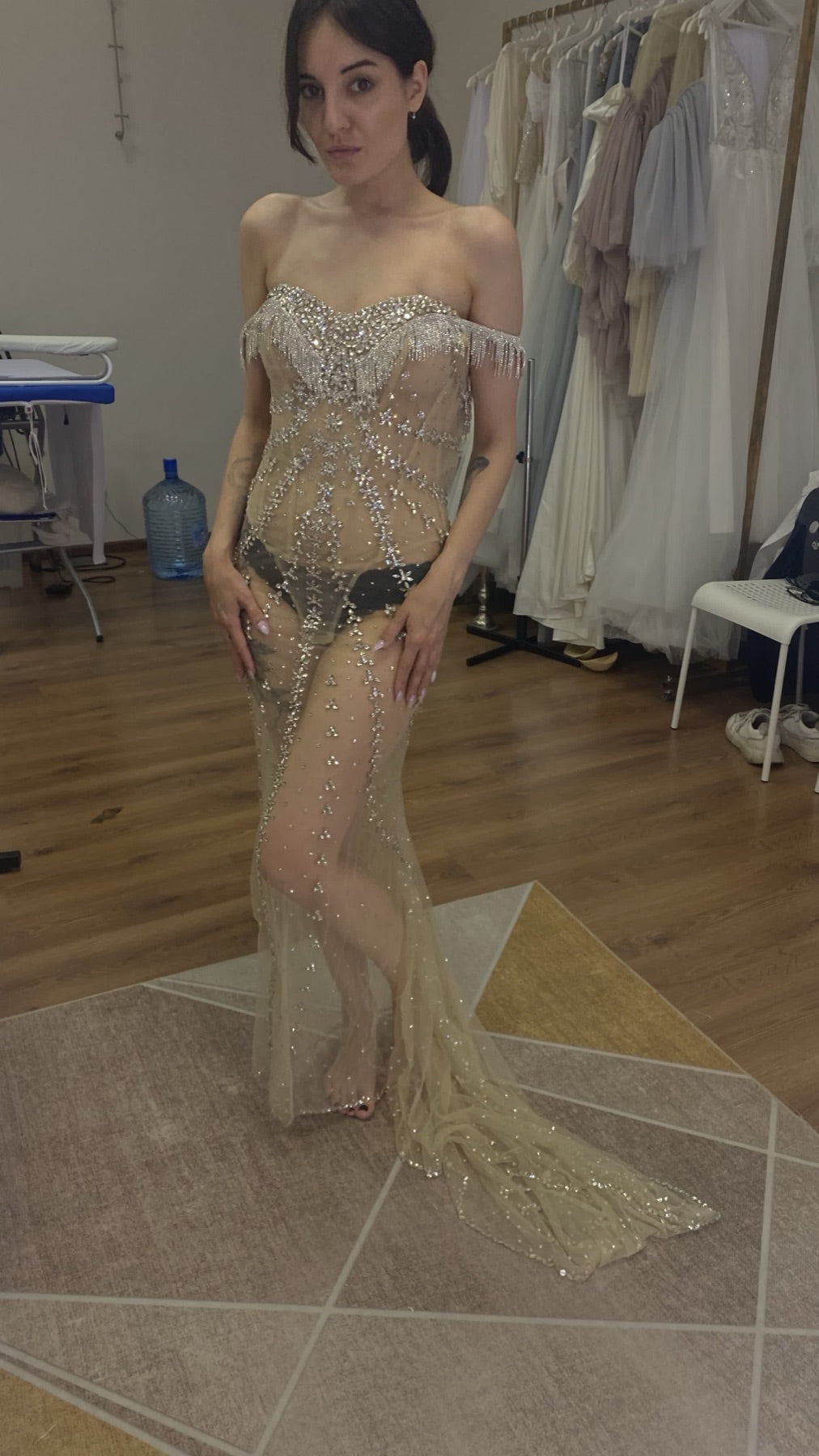

Fringe on a wedding dress is a row of hanging strands, beaded, crystal, chain, or thread, that sway with movement and catch light as they move. A tassel is a bound bunch of strands used as a single accent, often at the end of a tie or sash. Both add motion and a sense of energy to a dress with almost no structural weight when chosen well.
The design decisions are where the fringe goes, what the strands are made of, and how long, because those set how much it moves, how much it weighs, and whether it reads Art Deco, western, or modern.
Key Takeaways
- Fringe is a row of hanging strands that sways with movement; a tassel is a single bound bunch used as an accent.
- Beaded and crystal fringe catches light and has some weight; chainette and thread fringe is lighter and floppier.
- It moves most at the hem, the hip, and the sleeve, which is why it suits dancing and photographs well in motion.
- Long fringe over a slit or a short skirt keeps coverage while showing movement.
- On a custom order the strand type, length, and density are chosen on a sample and set on a mockup.
Fringe vs Tassel
- Fringe. A continuous row of strands hanging from a tape or a seam, along a hem, a hip, a sleeve, or a bodice line.
- Tassel. A single bound bunch of strands, used at the end of a braided tie or sash, at the point of a statement bow, or as a zip pull.
- Both are often paired with an Art Deco or themed design.
Strand Types
- Beaded fringe. Seed beads or bugle beads strung on thread. Catches light, has a gentle weight that makes it swing rather than fly.
- Crystal fringe. Faceted crystals or teardrops on a chain. The most sparkle and the most weight per strand.
- Chainette. Fine soft cord in loops. Very light, floppy, moves a lot, matte.
- Thread or silk fringe. Bundled fine threads. Soft, matte, and the lightest.
- Chain fringe. Fine metal chain. Cool, sleek, drapes with weight.
Where Fringe Moves Best
- Hem of a column, sheath, or tea-length skirt. Moves with every step.
- Hip or a dropped waist, so it swings when you turn, a classic flapper placement.
- Sleeve or an off-the-shoulder band, moving with your arms.
- Bodice tier lines, adding motion to an otherwise still torso.
Length, Density, and Weight
- Short fringe (a few inches) is subtle and light. Good as a hem accent.
- Long fringe (knee length or more, from the hip) is dramatic and adds real weight in crystal or chain; the bodice and skirt support have to carry it.
- Dense fringe reads as a solid moving curtain; sparse fringe reads as scattered strands.
Heavier fringe on a light fabric needs the fabric stabilized so it does not pull out of shape.
The Look It Creates
- Art Deco / flapper: beaded fringe at the hip and hem on a drop-waist column.
- Modern minimal: a single row of fine chain fringe at the hem of a plain sheath.
- Western or boho: suede-look or thread fringe on a sleeve or yoke.
- Glamour: crystal fringe as a full skirt over a short lining.
Fringe Over a Slit or Short Skirt
Long fringe from the hip or the hem of a short lining gives movement and shows the leg through the strands without fully exposing it, a softer alternative to a slit or a high-low hem. The lining length and the fringe length together set how much shows.
Planning Fringe Detail Custom
Steps:
- Choose the placement and the look you want.
- Choose the strand type and length on a sample, seen moving and photographed.
- Set the density and confirm the weight is comfortable on a mockup, walking and dancing.
- Stabilize the base fabric if the fringe is heavy.
For a remote order the fringe sample is sent to you and the finished detail is shown moving in photos and video during the remote fitting process. Every dress is made over 10 to 12 weeks, with UPS shipping to the US in 3 to 5 days. Beaded and crystal fringe is hand-strung; see the price breakdown.
FAQ
What is the difference between fringe and a tassel on a wedding dress? Fringe is a continuous row of hanging strands along a hem, hip, sleeve, or bodice line. A tassel is a single bound bunch of strands used as an accent, for example at the end of a sash tie, the point of a bow, or as a zip pull.
Is beaded fringe heavy? Beaded fringe has a gentle weight that makes it swing rather than fly. Crystal and chain fringe is heavier per strand, and long dense versions add real weight that the bodice and skirt support have to carry. Chainette and thread fringe is very light.
Where does fringe move best on a dress? At the hem, so it moves with every step; at the hip or dropped waist, so it swings when you turn; and on a sleeve or off-shoulder band, moving with your arms. Fringe is chosen partly because it photographs well in motion and suits dancing.
Can fringe give coverage over a slit? Yes. Long fringe from the hip or the hem of a short lining shows the leg through the strands without fully exposing it, a softer alternative to an open slit or a high-low hem. The lining length and fringe length together control how much shows.
Does fringe suit an Art Deco wedding dress? Yes, it is a signature of the style: beaded fringe at the hip and hem of a drop-waist column reads directly as 1920s. Fine chain fringe on a plain sheath is a more modern, minimal use of the same idea.
Want fringe that moves and catches light without weighing the dress down? Start with a sketch consultation at Lutien Bridal.
About the author: Vlad Ivanov is the Director of Business Development at Lutien Bridal Atelier in Ansignan, France, home to the design team behind more than 1,000 custom wedding gowns delivered to brides across the US and Europe.