Atelier · France

The bodice of a wedding dress does two jobs: it supports the top of the gown, and it sets where your waist appears to be. That second job is a design decision, separate from the silhouette. The same A-line skirt reads completely differently under a natural waist, a basque point, or a dropped seam.
Where the bodice ends and the skirt begins changes your proportions, how long your torso looks, and how formal the dress feels. This is one of the details we settle early, because it shapes the pattern.
Key Takeaways
- Natural waist: the seam sits at your narrowest point. Balanced and classic.
- Basque waist: the seam dips to a V below the natural waist, lengthening the torso and adding formality.
- Drop waist: the seam sits low on the hip, elongating the body and softening the waist emphasis.
- Corset bodice: a structured, boned bodice that shapes the waist firmly, at any of those seam positions.
- The right one depends on your torso length, the effect you want, and the silhouette it sits on.
What "Bodice Type" Actually Means
Two things are often confused:
- The bodice structure: how it is built inside. Boned corset, lightly boned, or soft with cups. Covered in our guide to corset construction and fit.
- The waist position: where the bodice-to-skirt seam sits on your body. Natural, basque, or dropped.
This article is about the second one. Any waist position can be built as a firm corset or a soft bodice.
Natural Waist
The seam sits at your natural waist, the narrowest point of your torso, usually an inch or two above the belly button.
- Effect. Balanced, classic, and the most universally flattering. It marks the waist without distorting your proportions.
- Best with. Almost any silhouette: A-line, ball gown, fitted.
- Custom advantage. An off-the-rack natural waist is graded to an average torso and often sits low. A custom pattern places the seam at your actual waist, which is the single change that makes a dress look "made for you."
Basque Waist
The seam starts at the natural waist at the sides and dips to a V or U at the center front, several centimeters below.
- Effect. Lengthens the torso, narrows the waist visually, and adds a formal, slightly historical note. The point draws the eye down and in.
- Best with. A full ball gown skirt or a structured A-line, where the deep point has volume to sit against.
- Watch for. On a very short torso, a deep basque can crowd the hip. We set the depth of the V to your proportions rather than a standard.
Drop Waist
The seam sits below the natural waist, low on the hip. The fitted section extends over the top of the hip before the skirt releases.
- Effect. The most elongating of the group. It de-emphasizes the waist and creates a long, lean line through the torso and upper hip. Reads as modern or 1920s, depending on the fabric.
- Best with. A fitted-to-flared skirt (a soft trumpet effect), a fluid A-line, or a sheath with a released hem. Pairs well with Art Deco design.
- Watch for. The fitted section over the hip needs precise measurement and a mockup, because there is no ease to hide a fit error there.
Empire (For Comparison)
An empire waist is the opposite extreme: the seam sits just under the bust, above the natural waist. It is a distinct silhouette rather than a bodice variation, covered in its own guide, but it belongs on the same scale: empire (highest) to natural to basque to drop (lowest).
Corset vs. Soft Bodice
Any of these waist positions can be built two ways:
- A corset bodice. Firmly boned, often with an inner corset that closes independently. It sculpts the waist and holds a strapless design up. It gives the strongest waist definition and the most support for a heavy skirt.
- A soft bodice. Lightly boned or unboned, with cups. It skims and shapes gently, sits more comfortably for a long day, and suits a bride who does not want a compressive feel.
Your closure choice interacts with this, covered in our guide to wedding dress closures.
How the Bodice Pairs With the Skirt
- Natural waist + full skirt is the classic ball gown proportion.
- Basque + full skirt adds drama and formality; the point flows into the volume.
- Drop waist + soft flare is a modern, elongated line.
- Natural waist + fitted skirt gives an hourglass emphasis.
- Drop waist + fitted skirt de-emphasizes the waist and keeps the line long.
The full range of skirts is in our silhouettes guide.
Planning the Bodice as a Custom Order
The decisions:
- Waist position: natural, basque, or drop, chosen for your torso length and the effect you want.
- The depth of a basque point, or the drop of a low waist, set on your body.
- Corset or soft structure, for support and comfort.
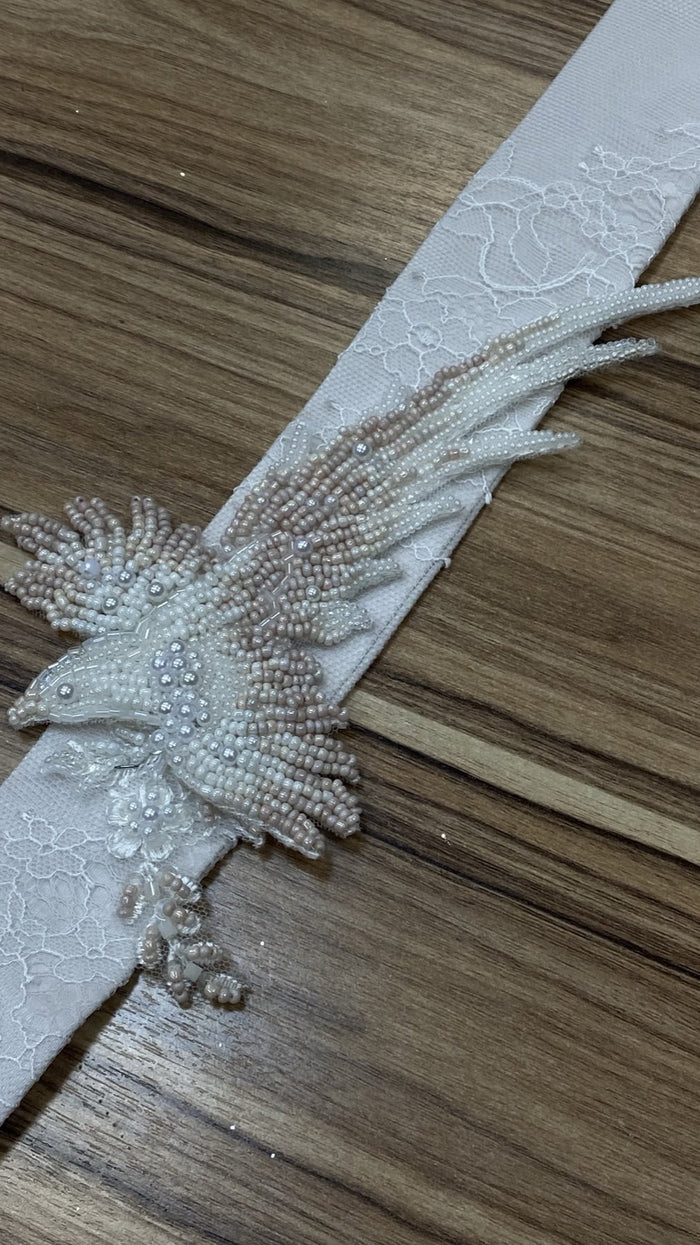
- How it meets the skirt, and any seam detail (a belt, a piped edge, a lace border).
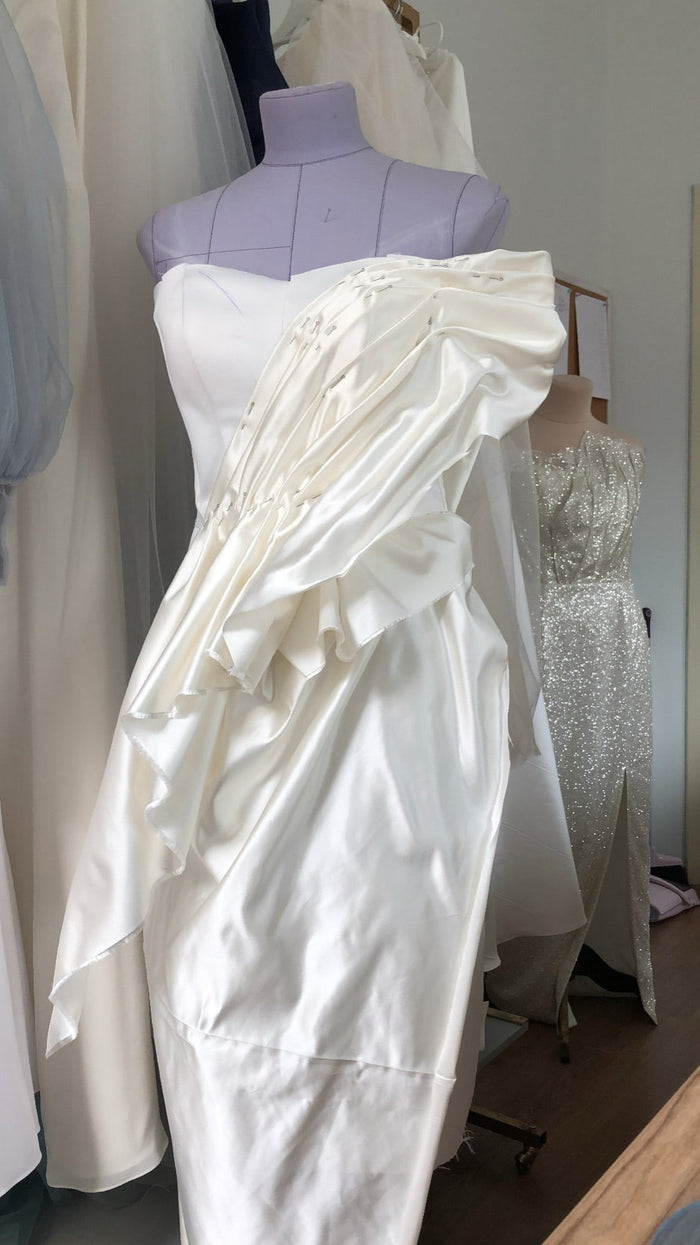
We confirm the waist position on a mockup with you standing, because it looks different in three dimensions than on a sketch. Our design process walks through each stage. Every dress is made to your measurements over 10 to 12 weeks, with UPS shipping to the US in 3 to 5 days, with an individual quote confirmed before production. Our price breakdown explains what changes the cost.
FAQ
What is a basque waist on a wedding dress? A bodice seam that sits at the natural waist at the sides and dips to a V or U at the center front, several centimeters below. It lengthens the torso, narrows the waist visually, and adds a formal note. It suits a full skirt.
What is a drop waist wedding dress? One where the bodice-to-skirt seam sits below the natural waist, low on the hip. The fitted section extends over the upper hip before the skirt releases. It elongates the body and de-emphasizes the waist.
Which bodice waist is most flattering? A natural waist is the most universally flattering because it marks your narrowest point without distorting your proportions. Basque and drop waists are more elongating but depend more on your torso length, which is why a custom pattern sets the exact position on your body.
Is a corset bodice the same as a basque waist? No. A corset is how the bodice is built inside (firmly boned, sculpting). Basque is where the waist seam sits (a deep V). A corset bodice can have a natural, basque, or drop waistline.
Can a drop waist work on a short torso? It can, but the position has to be judged carefully. Too low and it shortens the leg line. On a short torso we usually keep the drop shallow and confirm it on a mockup.
Deciding where your waist should sit? Start with a sketch consultation at Lutien Bridal.
About the author: Vlad Ivanov is the Director of Business Development at Lutien Bridal Atelier in France, home to the design team behind more than 1,000 custom wedding gowns delivered to brides across the US and Europe.