Atelier · France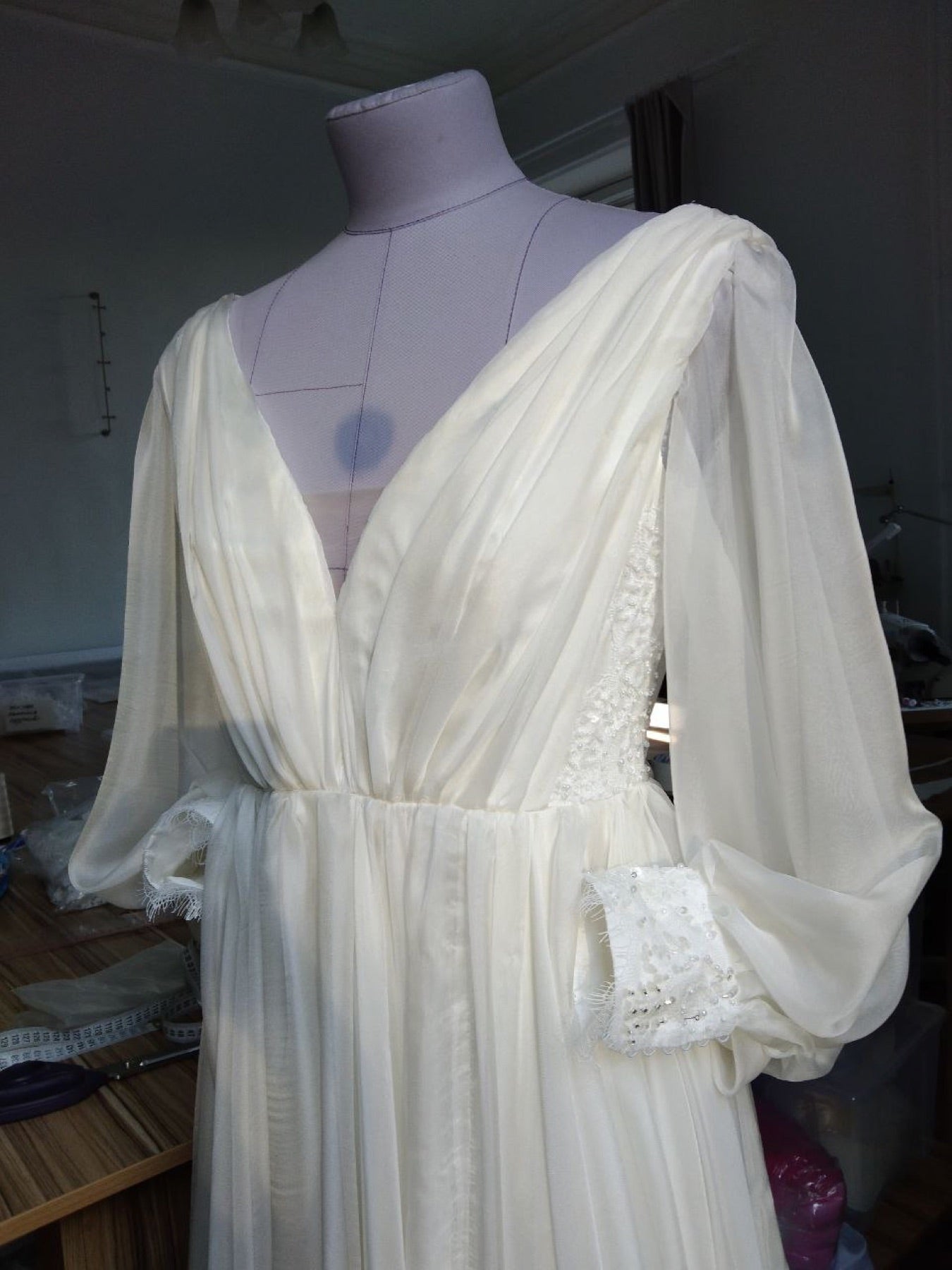

An empire waist wedding dress has its seam placed just below the bust, with the skirt falling straight and loose from that point to the hem. It does not mark the natural waist at all. The result is a long, vertical, uninterrupted line and a dress that is one of the easiest to move and breathe in.
The whole silhouette depends on one measurement being right: where your under-bust actually is. Placed even slightly wrong, an empire seam either cuts across the bust or drops onto the ribs. This is where a custom pattern makes a real difference.
Key Takeaways
- The defining feature is a seam just below the bust, with the skirt falling free from there.
- It creates a tall, fluid line and does not draw attention to the waist or hips.
- It needs light, flowing fabric. Structured or heavy fabric fights the line.
- It is one of the most comfortable silhouettes for a long day, a warm venue, or pregnancy.
- The seam is placed at your actual under-bust measurement, which is the single decision that makes or breaks the fit.
Where the Empire Seam Sits
The empire seam runs horizontally around the body directly under the bust, at the point where a well-fitted bra band sits. Everything above the seam is a fitted bodice. Everything below it is skirt, released with no shaping through the waist or hip.
That one line does two things. It shortens the visual torso and lengthens the visual leg, so the body reads as taller. And it removes any horizontal emphasis at the waist, so the eye travels straight down.
The catch is that under-bust position varies a lot between people, and it is not the same as the natural waist. An off-the-rack empire dress is graded to an average. If your under-bust sits higher or lower than that average, the seam lands in the wrong place and the whole effect is lost. A custom empire dress is drafted from your measured under-bust, confirmed on a mockup before the real fabric is cut.
Why Fabric Choice Is Not Optional
An empire waist is defined by how the skirt falls from the seam. It has to drift and flow. A fabric with too much body will stand away from the seam and create a bell shape, which reads as a different silhouette entirely.
| Fabric | Works with an empire waist? |
|---|---|
| Silk chiffon | Yes. Drifts and floats. The classic empire fabric. |
| Georgette | Yes. Slightly more weight than chiffon, still very fluid. |
| Crepe | Yes, in a lightweight version. Gives a cleaner, more modern fall. |
| Soft tulle | Yes, in few layers. Adds a little volume without stiffness. |
| Satin or mikado | Usually no. Too much body. The skirt props out from the seam. |
| Guipure or heavy lace | No. Stiff and heavy, fights the drape. |
Our fabric guide for custom gowns covers how each of these behaves. For an empire dress specifically, we test the drape from the actual seam height on your body before confirming the fabric.
Who an Empire Waist Suits
An empire waist works well if you want:
- A tall, elongated line. It adds visual height, which many petite brides use deliberately.
- Comfort over a long day. Nothing is fitted below the bust, so sitting, eating, and dancing are unrestricted.
- A warm-weather or outdoor wedding. The loose skirt and light fabric move air well.
- A dress that accommodates a changing body. It is a common choice for a pregnant bride or one who expects her body to change before the day, because the fit above the bust is what holds the dress, not the waist.
- Attention away from the midsection. The silhouette skims the stomach and hips entirely.
It is a less obvious choice if you want a defined waist or a structured, formal effect. For that, a ball gown or a fitted mermaid is the opposite direction.
Empire vs. A-Line vs. Sheath
These three are often confused because all of them avoid a tight fit through the hips.
- Empire. Seam under the bust. Skirt falls straight and loose from there. Highest waist of the three.
- A-line. Seam at or near the natural waist. Skirt widens gradually in a straight diagonal to the hem.
- Sheath or column. No flare at all. The dress skims the body its full length.
If you like the idea of a flowing skirt but want the seam at your natural waist, you want an A-line. If you want the skirt to follow the body rather than float away from it, you want a sheath.
Design Choices That Work With It
An empire waist pairs cleanly with:
- A V or scoop neckline. Both draw a vertical line down to the seam. A deep sweetheart also works.
- Soft sleeves. Flutter, short puff, or a long sheer sleeve. The bodice is small, so the sleeve can carry detail.
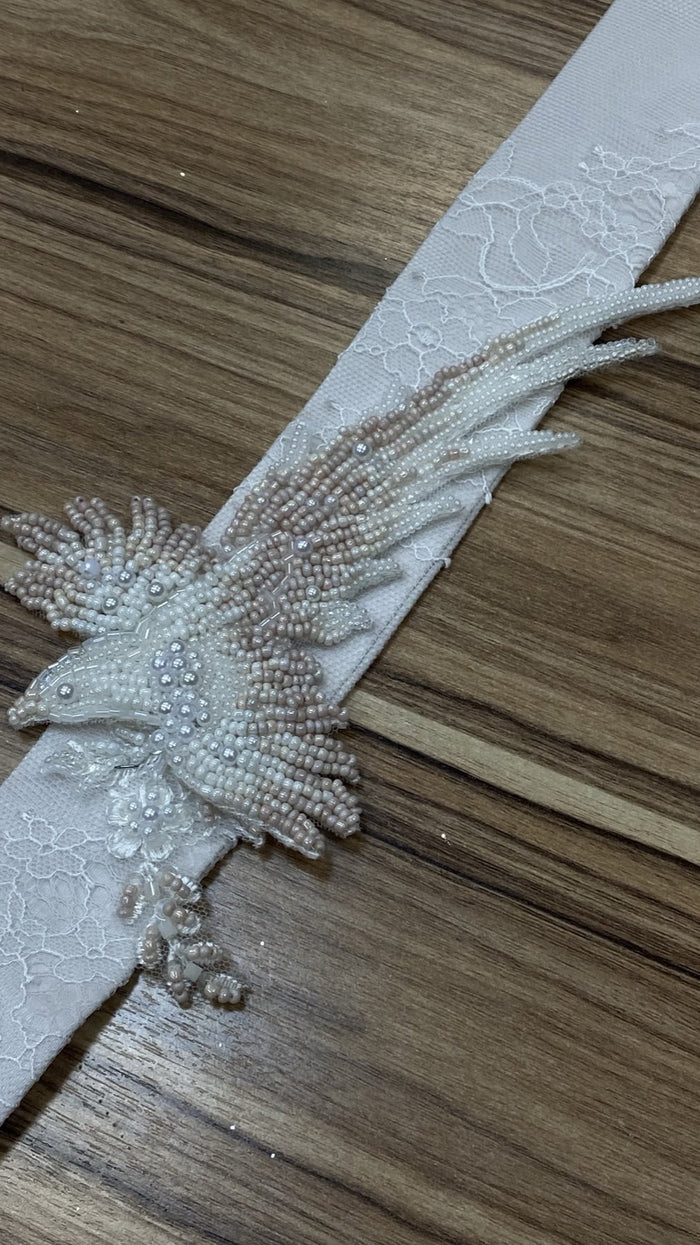
- A delicate beaded or embroidered band at the seam. This is the natural place for a single line of detail, marking the seam without weighing down the skirt.
- A sweep or chapel train. A long train works, but the light fabric means it needs a bustle for the reception.
Heavy all-over embellishment usually works against an empire dress, because it adds the weight the silhouette is trying to avoid.
Planning an Empire Waist as a Custom Order
The decisions that define the dress:
- Under-bust seam height. Measured on your body, confirmed on a mockup.
- Bodice structure. Light boning and cups to hold the fit above the seam without a separate bra.
- Fabric. Chiffon, georgette, light crepe, or soft tulle, tested for drape from the seam height.
- Skirt fullness. From a narrow, drifting fall to a softly gathered one.
- Seam detail. Plain, a fine band, or a delicate beaded line.
We begin with a conversation about the effect you want and how you will move on the day, then translate it into a sketch you approve before any fabric is cut. Our design process walks through each stage. Every dress is made to your measurements over 10 to 12 weeks, with UPS shipping to the US in 3 to 5 days, from a starting price of 1,490 euros. Our price breakdown explains what changes the cost.
FAQ
Is an empire waist wedding dress only for pregnant brides? No. It is a good option during pregnancy because the fit sits above the bump, but it suits any bride who wants a tall, fluid line, all-day comfort, or attention away from the waist and hips. It is a full silhouette in its own right, not a maternity workaround.
Where exactly does an empire waist sit? The seam runs horizontally directly under the bust, where a well-fitted bra band sits. This is higher than the natural waist. In a custom dress the height is set from your measured under-bust, not a standard grading point.
What fabric is best for an empire waist wedding dress? Light, fluid fabric: silk chiffon, georgette, lightweight crepe, or a few layers of soft tulle. Structured or heavy fabrics like satin, mikado, and guipure lace fight the drape and turn the silhouette into a bell shape.
Does an empire waist hide your stomach? It skims it. Because nothing is fitted below the bust, the skirt drifts past the midsection and hips without contact. It does not compress or shape the stomach the way a fitted bodice does; it draws the eye away from it.
Can an empire waist dress have a train? Yes. A sweep or chapel train works well. Because the fabric is light, a longer train benefits from a bustle so it lifts off the ground for the reception.
Want a tall, fluid silhouette with the seam in exactly the right place? Start with a sketch consultation at Lutien Bridal.
About the author: Vlad Ivanov is the Director of Business Development at Lutien Bridal Atelier in France, home to the design team behind more than 1,000 custom wedding gowns delivered to brides across the US and Europe.