Atelier · France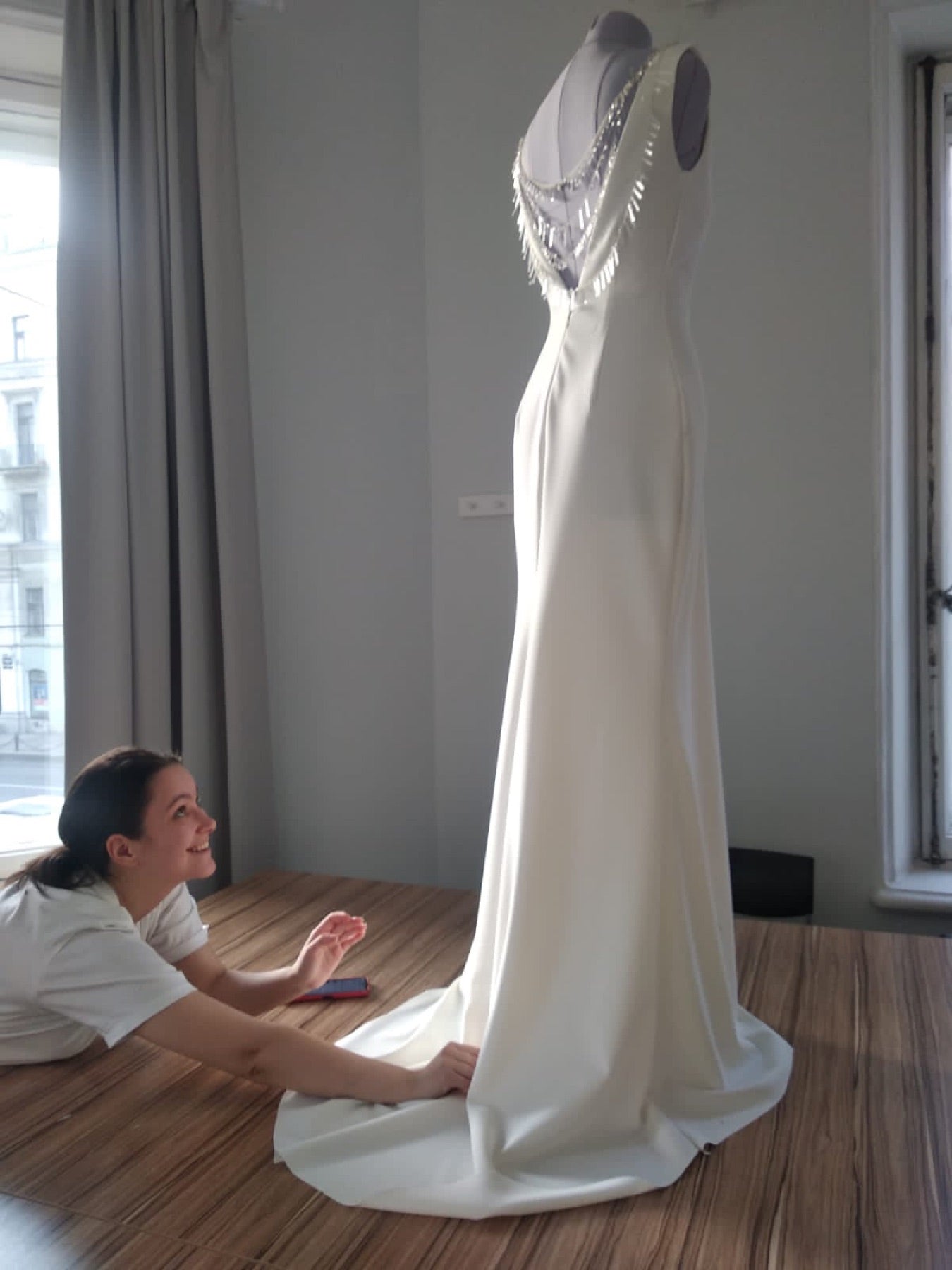

A wedding dress train is the length of fabric that extends behind the hem and trails on the ground. Train names, from sweep through chapel and cathedral to royal, describe roughly how far that fabric extends past your heels. The categories are common bridal usage, not a fixed standard, so the numbers vary between sources.
What matters more than the name is how the train is measured to you, how it behaves at your venue, and how it lifts for the reception. This guide covers the categories in plain terms, then the practical decisions.
Key Takeaways
- Train categories run from sweep (just brushing the floor) to royal (the longest, several feet or more).
- The length names are conventional, not standardized, so treat them as a starting point for a conversation, not exact measurements.
- A custom train is measured from your waist or hem to a length you choose, based on your height, venue, and how much you want to manage.
- A bustle lifts and pins the train off the ground for the reception. A detachable train removes it entirely.
- Longer trains need more planning for outdoor ground, stairs, transport, and photography.
Train Length Categories
These are the terms you will hear, described by effect rather than exact measurement.
| Train name | Roughly how far it extends past the heels | Character |
|---|---|---|
| No train / hemline | None. The hem sits at the floor all the way around. | Practical. Full freedom of movement. Common on a sheath or a short dress. |
| Sweep (or brush) | A short extension, brushing the floor behind you. | The most manageable train. Adds a soft trail without much to carry. |
| Chapel | A moderate extension, trailing a few feet behind. | The most common choice for a formal wedding. Balances presence and practicality. |
| Cathedral | A long extension, noticeably longer than chapel. | Dramatic. Reads strongly in photos and down a long aisle. Needs a bustle for the reception. |
| Royal (or monarch) | The longest, extending well beyond cathedral. | Ceremonial. Almost always requires attendants to arrange it and a plan for every transition. |
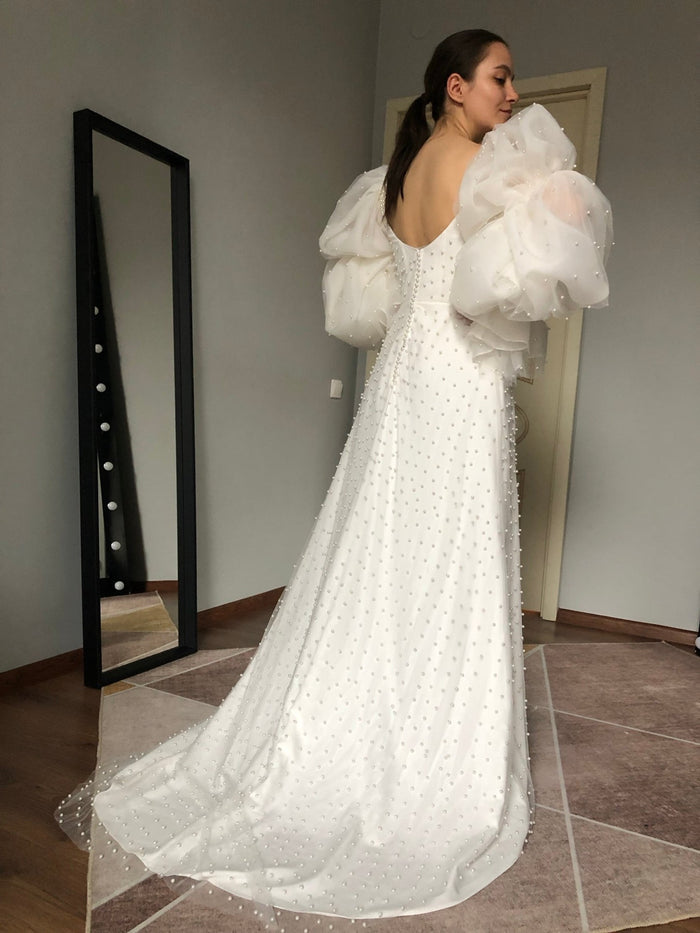
Because the categories are not standardized, one designer's cathedral may be another's long chapel. In a custom process we do not rely on the label. We agree a specific length in your fitting and mark it on the pattern.
How a Custom Train Is Measured
A train length is set from a reference point on the dress, usually the natural waist at center back or the point where the skirt meets the floor, to the end of the train fabric.
The right length for you depends on:
- Your height. The same measured train reads as longer on a shorter bride and shorter on a taller one. We adjust the number to the visual effect you want.
- The silhouette. A ball gown carries a long train easily because the skirt volume supports it. A fitted mermaid train flows from a narrow base and shows every ripple, so the fabric and finish matter more.
- How much you want to manage. Some brides want to feel the train behind them all evening. Others want it gone after the ceremony photos.
We confirm the length on a mockup or at a fitting, with you standing and walking, before it is finalized. That process is described in our article on what a wedding dress mockup is.

Bustles: Lifting the Train for the Reception
A bustle is a set of hidden hooks, buttons, or ribbons that gathers the train up and secures it at or above the hem, so you can move freely after the ceremony.
Common bustle types:
- Over-bustle (American bustle). The train is lifted and fastened on the outside of the skirt, creating soft draped folds. Works on most fabrics.
- Under-bustle (French bustle). The train is gathered underneath, creating a fuller, rounder skirt shape. Suits fuller skirts well.
- Ribbon or side bustle. Ties inside the skirt pull the train up. Simple and quick, better for shorter trains.
We choose the bustle type during fittings based on your fabric, train length, and how quickly you want to be able to do it. A cathedral or royal train needs multiple bustle points and a helper who has practiced it once before the day.
Detachable Trains and Overskirts
A detachable train removes the length entirely for the reception, rather than gathering it. It attaches at the waist with hooks, buttons, or a covered zip, and comes away to leave a clean floor-length or sweep-length dress underneath.
This is effectively two looks in one dress:
- A long, formal silhouette for the ceremony and portraits.
- A shorter, movement-friendly dress for dinner and dancing.
A detachable overskirt does the same job in reverse. The base dress is a fitted or straight silhouette, and a separate voluminous layer clips over it for the ceremony. Both approaches are planned from the sketch stage because the attachment point has to be engineered into the waistline.
Choosing a Train for Your Venue
The venue often decides the practical ceiling on train length.
- Ballroom or church. Smooth floors and space. Any length works.
- Garden or outdoor. Grass, soil, and gravel catch and stain a long train. A sweep or chapel is easier, and a detachable train keeps the ground contact short. Our garden wedding dress guide covers this in detail.
- Beach. Sand and a long train do not combine well. Sweep length or no train is the practical choice.
- Multiple locations or a lot of travel between them. A shorter or detachable train reduces handling and transport risk. This matters for a destination wedding.
Fabric and Embellishment on a Train
The train is where fabric weight and finish are most visible, because it is a large, mostly flat expanse of material in motion.
- Light fabrics (tulle, chiffon, organza) float and recover well from being handled. Good for long trains on grass.
- Heavy fabrics (satin, mikado) hold a sculptural shape and a defined edge, but show foot traffic and creasing more, and are heavier to carry.
- Lace or embellishment along a train adds weight and can catch on rough ground. A scalloped lace hem is beautiful and needs a smoother venue.
Our fabric guide for custom gowns covers how each material behaves. For a train specifically, we match the fabric to the length and the ground you will actually walk on.
FAQ
What is the most popular wedding dress train length? A chapel train is the most common choice for a formal wedding. It gives a clear trailing shape in photos and down the aisle while staying manageable, and it bustles easily for the reception.
How long is a cathedral train? A cathedral train extends noticeably further behind the heels than a chapel train, commonly by several feet, but the categories are not standardized. In a custom process the exact length is agreed at a fitting rather than taken from the label.
What is a bustle and do I need one? A bustle is a set of hidden fasteners that lifts the train off the ground for the reception. You need one for any train longer than a sweep if you want to move freely after the ceremony. Longer trains need several bustle points.
Can a wedding dress train be removed? Yes. A detachable train attaches at the waist and comes away entirely, leaving a floor-length or sweep-length dress. It has to be planned from the sketch stage so the attachment point is built into the waistline.
Is a long train practical for an outdoor wedding? It needs planning. Light fabrics handle grass better than heavy or embellished ones, and a detachable train limits how long the fabric is on the ground. For a garden or beach ceremony, a sweep or chapel length is easier to manage.
Want a train sized to your height, your venue, and how you want to move? Start with a free sketch consultation at Lutien Bridal.
About the author: Vlad Ivanov is the Director of Business Development at Lutien Bridal Atelier in France, home to the design team behind more than 1,000 custom wedding gowns delivered to brides across the US and Europe.