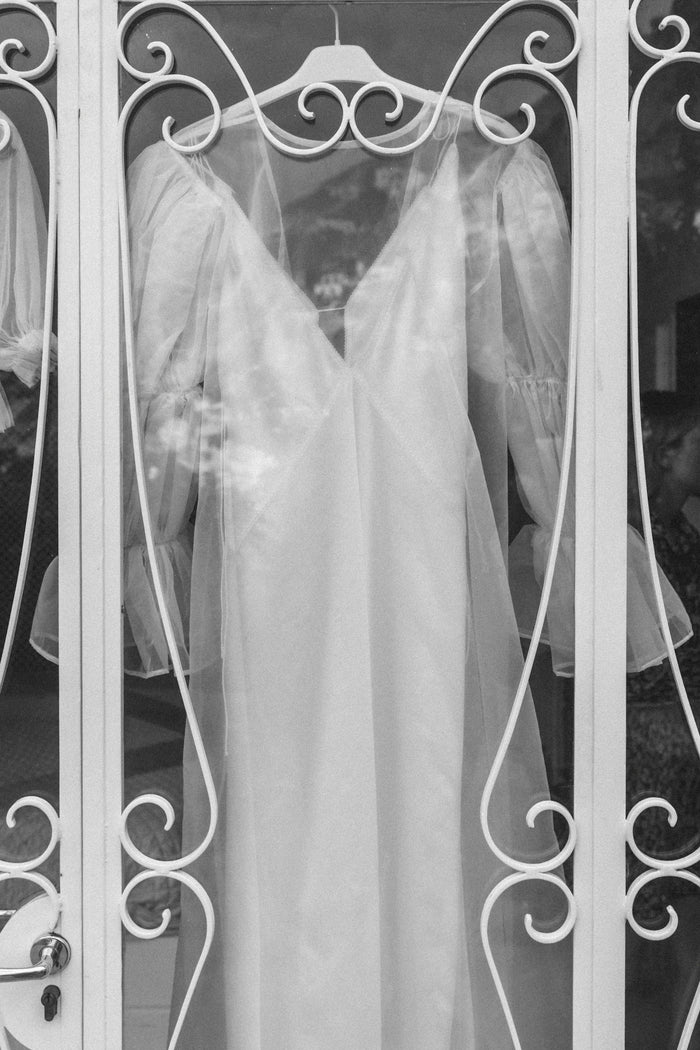
Atelier · France

Key Takeaways
- A destination wedding adds a second leg of travel after your dress arrives at home, so plan your timeline around both.
- We still recommend ordering about 10 months before the wedding date, with extra buffer if you are flying internationally.
- Some construction choices travel better than others. Tell us at the design stage if the dress is going somewhere.
- Most brides do best carrying the dress on board rather than checking it, and we will tell you how to pack it either way.
- Fold lines from travel behave the same as fold lines from shipping: they fall out with steam and time.
If your wedding is in Tulum, Tuscany, or your parents' backyard three states away, your dress has two trips ahead of it: the one from our atelier to your door, and the one from your door to the wedding. This guide covers what changes when you are planning for both.
For the first leg, our own shipping process is unchanged: see the custom wedding dress timeline for how production and UPS delivery work. This guide is about what happens after that, once the dress is yours and you are the one getting it to the venue.
Planning Your Timeline Around Two Trips
Production at our atelier takes 10 to 12 weeks, plus 3 to 5 days for UPS delivery to the US. We recommend ordering about 10 months before your wedding date, and that recommendation holds for destination weddings too, with one addition: build in time between the dress arriving and the day you leave for the venue. If you want the full picture of how an order runs from first sketch to delivery, read the Lutien Bridal ordering process.
That buffer matters for two reasons. First, you want time to try the dress on, confirm fit, and handle any minor adjustment before you are also packing for a trip. Second, if your venue is international, customs rules for personal items vary by country and are worth checking early. We cover that in the customs section below.
Rush production may be possible depending on your timeline. The surcharge scales with how close you are to your date: €500 at five months, €700 at four months, and €1,000 at three months, which is the hard floor. We do not take orders inside three months. If your wedding is sooner than six months away, write to us early and we will tell you honestly what is achievable before you commit. For how pricing is built, see our guide to what goes into the price of a custom gown.
What We Build Differently for a Destination Dress
Tell us at the design consultation if the dress is traveling. It changes a few of our recommendations, not the design itself.
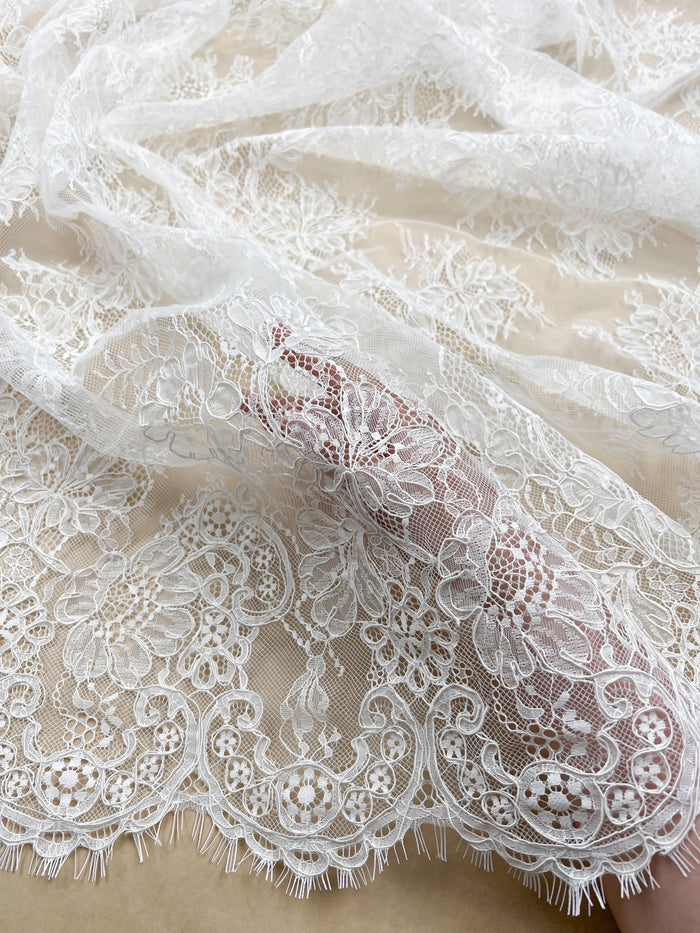
Fabric choice matters more. Natural silk organza and certain jacquards hold creases differently from silk satin or crepe. We confirm the selected natural silk fabric and its care instructions before production. If your dress is getting folded into a suitcase or garment bag for a flight, we will talk through how the fabric you want behaves under that kind of travel, and how to manage it if it does wrinkle.

Structure affects how it packs. A dress with a boned corset or a built-in structured train packs differently than an unstructured slip silhouette. See how corset construction holds its shape: that same rigidity is what makes it bulkier to transport. A long train needs a plan for how it is folded or bustled for the trip, not just for the ceremony.
None of this changes what is possible. We are not steering you away from a silhouette or a train because it is traveling. We are telling you what to expect so there are no surprises at the venue.
How Your Dress Is Packaged for the Trip Home
When we ship your dress, it arrives padded, folded along its structural seams, and wrapped to minimize creasing, the same process for every US order regardless of where the wedding is. Any fold lines from that first shipment fall out within a few hours of hanging in a well-ventilated room.
That first unpacking is also your first real look at how the dress behaves when folded. Pay attention to how it hangs out. It tells you what to expect the second time, when you pack it yourself.
Packing It for the Second Trip
Carry it on if you can. Most brides do best treating the dress as a carry-on rather than checked luggage. A garment bag stored in the overhead bin, or hung in the forward closet if the crew has room, avoids the compression and handling that checked bags go through. The TSA's guidance on traveling with a wedding dress recommends packing it in a garment-style bag and contacting your airline ahead of time to confirm how the dress can be stowed and how it counts against carry-on limits, which matters most if it has significant volume like a full ball gown skirt.

Fold along the seams, not against them. If the dress must be folded for a suitcase, fold along existing structural seams and pattern lines where possible, not across the middle of a skirt panel. Tissue paper between folds reduces sharp crease lines.
Pack a steamer or know your venue's options. A garment steamer is the single most useful thing you can bring. If checked baggage restrictions make that impractical, ask your venue or wedding planner ahead of time whether they can arrange pressing on arrival. Many destination venues that host weddings regularly have a relationship with a local seamstress or dry cleaner for exactly this.
What to Do When You Arrive
Unpack the dress as soon as you reasonably can, ideally the same day you land. Hang it in a well-ventilated room, away from direct sun, for at least 24 hours before the wedding if your schedule allows it.
Fold lines from air travel behave the same as fold lines from shipping. They are not permanent. Gravity and a little humidity in the air do most of the work; a light steam finishes the job. Structural areas like a boned bodice or a heavily beaded panel hold their shape well and rarely show creasing at all.
Customs and International Travel
If your destination wedding is outside the US, customs rules for personal items vary from country to country, so check the destination country's official customs authority before you travel. For the US side, U.S. Customs and Border Protection's guidance for travelers going abroad is a sensible starting point, and CBP also lets you register personal effects you take abroad so a dress you already own is not treated as a new purchase when you return home.
This is separate from the US customs process for the dress arriving from our atelier, which is built into your all-inclusive price and handled entirely on our end. For that part, see how US customs and duties work for a wedding dress and ordering from a European atelier as a US bride.
If you are unsure how a specific country treats this, your wedding planner or the venue's events coordinator will usually know, since they handle this question for other traveling brides regularly.
Working With a Wedding Planner or Venue
If you are using a destination wedding planner, loop them in on your dress details once you have placed your order: the fabric, whether there is a structured element like a corset or long train, and your expected pack-and-travel plan. A good planner will already have a relationship with a local presser or seamstress and can tell you what services are available on-site, which takes one thing off your plate during an already busy trip.
Ready to Start?
We take a limited number of orders each season, and destination weddings are exactly the kind of order where starting early makes the difference between a relaxed timeline and a stressful one.
Start with a free sketch consultation.
Curious about the full ordering process first? See The Complete Guide to Ordering a Custom Wedding Dress Online.
FAQ
Should I check my wedding dress as luggage or carry it on? Carry it on whenever possible. A garment bag in the cabin avoids the compression and rough handling checked luggage goes through. The TSA recommends packing the dress in a garment-style bag and checking with your airline about how it can be stowed and how it counts toward carry-on limits.
Does a destination wedding change how long production takes? No. Production is still 10 to 12 weeks plus 3 to 5 days for UPS delivery, regardless of where the wedding is. What changes is the buffer you should build in after the dress arrives, to cover trying it on, any adjustments, and your own travel to the venue.
Will my dress wrinkle in a suitcase? Some fabrics show fold lines more than others, and structured elements like boning hold their shape better than soft, flowing fabrics. Fold lines from travel behave the same as fold lines from shipping: they fall out with time, humidity, and a light steam.
Should I tell you the dress is for a destination wedding? Yes, at the design consultation. It does not limit your options, but it helps us talk through fabric and construction choices with your travel plan in mind, and it helps you know what to expect when you pack it.
What if my destination is international, are there customs issues? Customs rules for personal items vary by country, so check the destination country's official customs authority, and see U.S. Customs and Border Protection on registering personal effects you take abroad and bring back. Your wedding planner or venue coordinator will usually know the local specifics.
About the author: Vlad Ivanov is the Director of Business Development at Lutien Bridal Atelier in France, home to the design team behind more than 1,000 custom wedding gowns delivered to brides across the US and Europe.