Atelier · France

A Grecian or goddess wedding dress is built around draped, pleated fabric that flows from the shoulder or the underbust and falls in soft vertical folds to the floor. It reads relaxed and classical, and it moves constantly, which is its whole appeal.
It looks unstructured, but it is not. The folds are placed deliberately, the fabric is chosen for how it falls, and there is a fitted inner layer doing the shaping and support so the outer drape can stay soft.
Key Takeaways
- A Grecian gown drapes pleated fabric from the shoulder or underbust into soft vertical folds to the floor.
- It looks unstructured but has a fitted inner layer that shapes and supports; the outer drape is decorative.
- Fluid fabrics with weight fall right: silk crepe, matte jersey, fine charmeuse, chiffon over a slip.
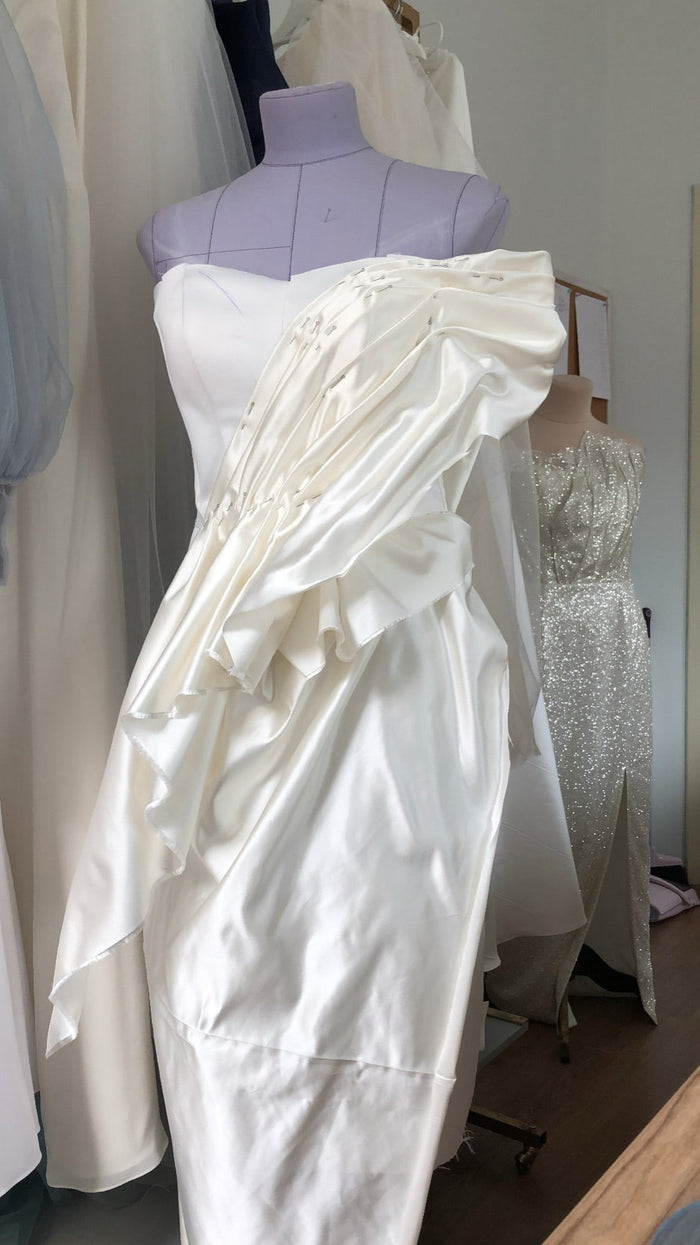
- The pleats and drape are arranged on the body, not cut from a flat pattern, so they fall where they flatter.
- It suits an empire or natural waist and pairs well with a one-shoulder or draped-cowl neckline.
What Grecian and Goddess Mean
Both describe a dress built from draped, softly pleated fabric that flows rather than holds a shape. The reference is classical drapery: fabric caught at the shoulder or under the bust and falling in columns of folds. It overlaps with an empire waist gown and a fluid column, and it is the opposite of a structured ball gown or a mikado gown.
The Structure Underneath
The soft look sits on a firm foundation:
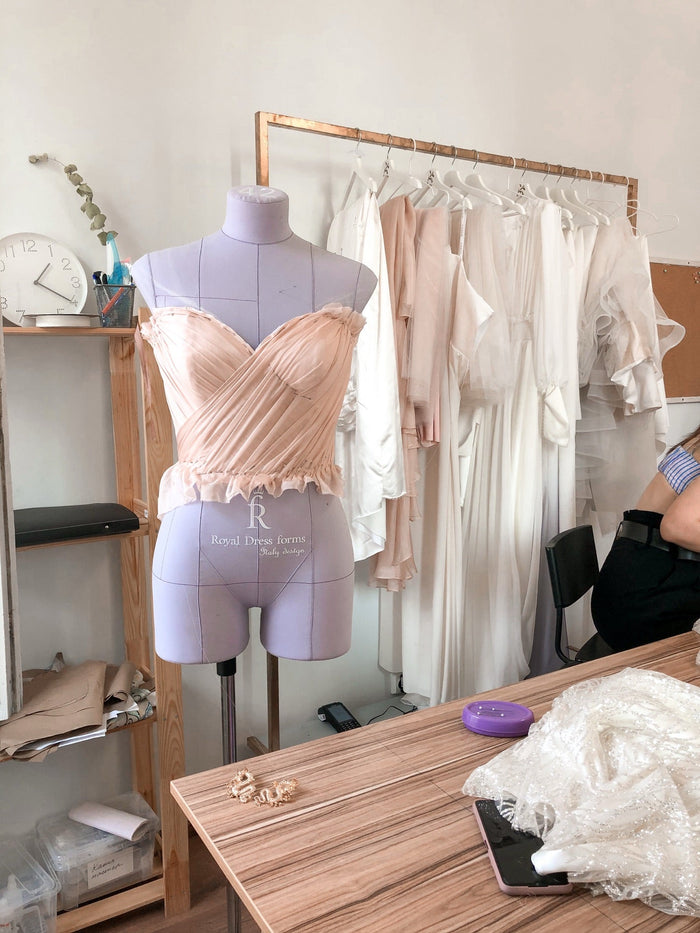
- A fitted inner bodice or slip, lightly boned, shaped to the ribcage, with bust support built in.
- The outer draped fabric attached over it, free to fold and move.
- The inner layer holds the dress up and defines the body; the drape does the rest.
Without the inner layer the fabric would pull, sag, and lose its column.
Where the Drape Starts
- From one shoulder. A one-shoulder drape, fabric caught at the shoulder and falling diagonally.
- From both shoulders. Symmetrical drape over each shoulder into a cowl front or back.
- From the underbust. An empire drape, folds released from a seam just under the bust.
- A draped overlay. A separate panel of pleated fabric over a plain slip, sometimes a removable overlay.
Fabrics That Fall Right
The fabric has to have weight and drape:
- Silk crepe and matte jersey. Fall in heavy, fluid columns. The classic goddess fabrics.
- Fine charmeuse satin. Fluid with a soft sheen.
- Chiffon or georgette over a slip. Lighter, floatier folds.
- Crepe. Matte and controlled.
Stiff fabrics (mikado, taffeta) hold the folds as hard shapes and are the wrong choice.
How the Pleats Are Set
The drape is modeled on the body or the form, not drafted flat:
- The fabric is pinned into folds at the shoulder or underbust seam.
- The folds are arranged for depth and spacing, checked from every angle.
- They are tacked at the seam and left free below.
- The whole thing is re-checked after the fabric has hung, because it drops.
This is why a draped gown rewards a made-to-measure approach: the folds are set to your proportions, not a size grade.
Necklines and Waist
- Neckline: one-shoulder, a draped cowl front or back, a soft V, or a plain round.
- Waist: an empire seam under the bust is the most classical; a soft natural waist with a fine belt or sash is also common.
- A draped gown suits a garden, beach, or destination wedding because it moves with the wind and packs small.
Fitting a Draped Gown Custom
Steps:
- Fit the inner bodice or slip to shape and support.
- Choose the fabric for how it falls, seen draped, not flat.
- Model the drape on you at a fitting, arranging the folds for your proportions.
- Re-hang and re-check, then confirm walking and seated.
For a remote order the inner layer is fitted to your measurements and the drape modeled on a form, shown in photos and video during the remote fitting process. Every dress is made over 10 to 12 weeks, with UPS shipping to the US in 3 to 5 days. Hand-modeled draping is skilled work; see the price breakdown.
FAQ
What is a Grecian or goddess wedding dress? A dress built around draped, softly pleated fabric that flows from the shoulder or the underbust and falls in soft vertical folds to the floor. It reads relaxed and classical and moves constantly. It looks unstructured but has a fitted inner layer doing the shaping.
Does a draped goddess dress have any structure? Yes. There is a fitted inner bodice or slip, lightly boned and shaped to the ribcage with bust support built in. It holds the dress up and defines the body. The outer draped fabric is attached over it and is decorative.
Which fabrics work for a Grecian dress? Fluid fabrics with weight: silk crepe, matte jersey, fine charmeuse, and chiffon or georgette over a slip. These fall in heavy, fluid columns. Stiff fabrics like mikado and taffeta hold the folds as hard shapes and are the wrong choice.
How are the drapes and pleats made? They are modeled on the body or a form set to your measurements, not drafted from a flat pattern. The fabric is pinned into folds at the shoulder or underbust seam, arranged for depth and spacing, tacked, and left free below, then re-checked after the fabric has hung.
What neckline suits a goddess gown? One-shoulder, a draped cowl at the front or back, a soft V, or a plain round neckline. The waist is usually an empire seam under the bust for the most classical look, or a soft natural waist with a fine belt or sash.
Drawn to a soft, draped gown that moves with you? Start with a sketch consultation at Lutien Bridal.
About the author: Vlad Ivanov is the Director of Business Development at Lutien Bridal Atelier in France, home to the design team behind more than 1,000 custom wedding gowns delivered to brides across the US and Europe.