Atelier · France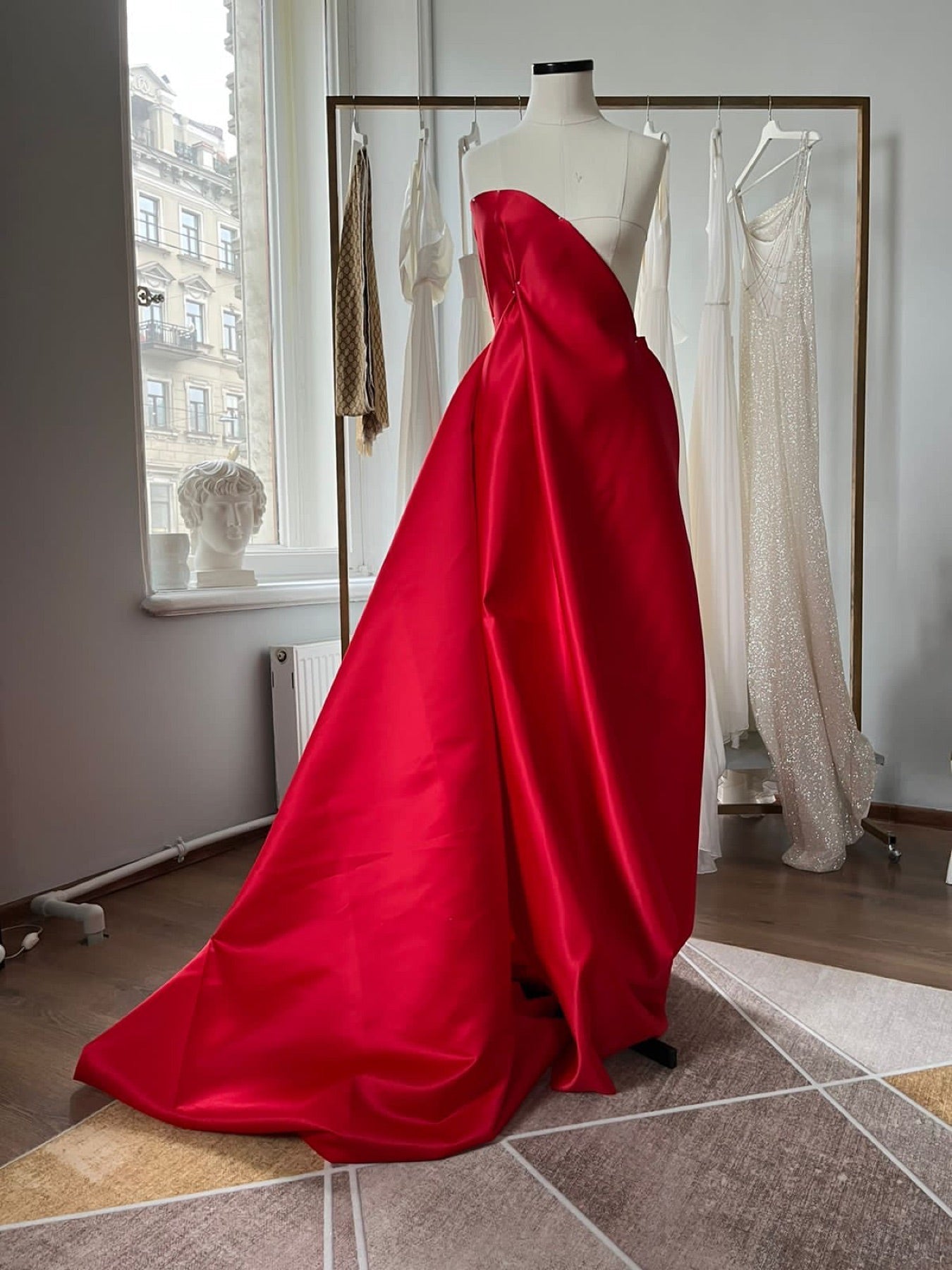

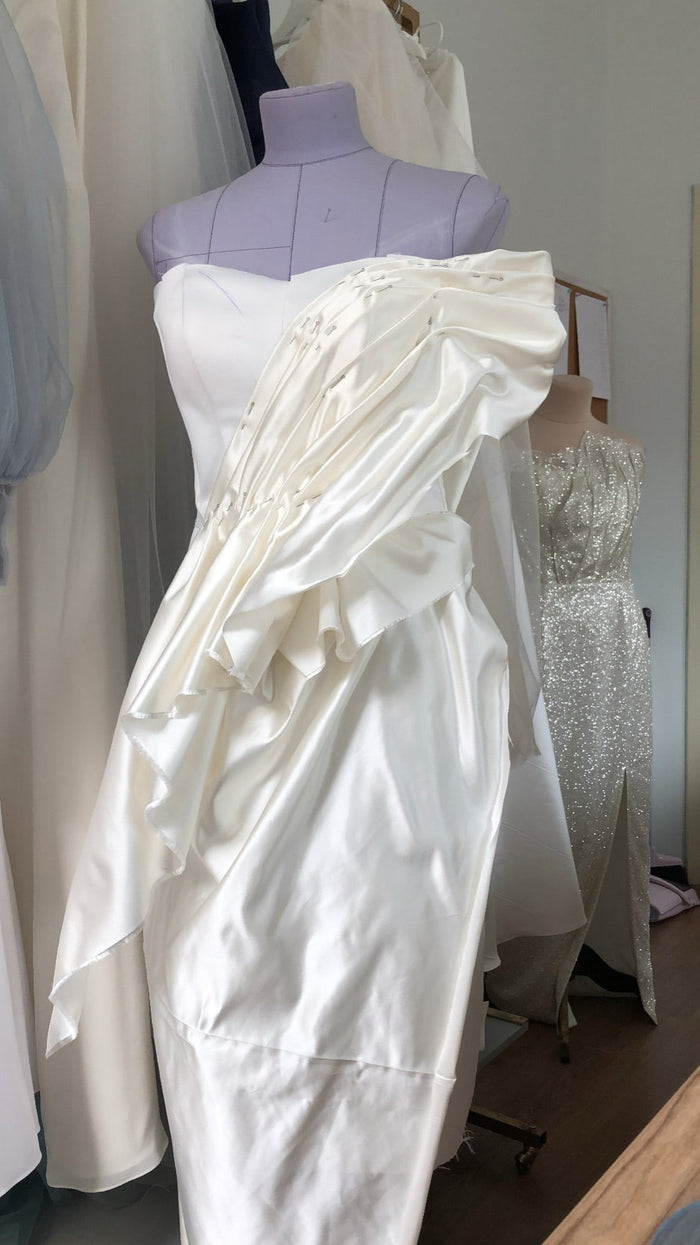
A one-shoulder wedding dress covers one shoulder with a strap, sleeve, or fold of fabric and leaves the other bare. The asymmetry is the whole point: it draws a diagonal line across the body and reads as modern and architectural.
The design question is balance. With support on only one side, the bodice has to stay level and stay up without pulling toward the covered shoulder. That is solved in the internal structure, not the visible strap, and it is why a one-shoulder dress rewards a made-to-measure approach.
Key Takeaways
- A one-shoulder dress covers one shoulder and leaves the other bare, drawing a diagonal line across the body.
- It stays up on a boned bodice fitted to the ribcage. The single strap is a design line, not the main support.
- The strap can be a plain band, a draped fold, a ruffle, a sleeve, or a beaded piece, and it is placed to balance your frame.
- Asymmetry adds visual movement; it flatters most shapes and is especially good at softening even, square shoulders.
- On a custom order the bodice is fitted to stay level with support on one side only, tested with arm movement.
What One-Shoulder Means
One shoulder is covered, the other is bare. The covered side can carry:
- A narrow band, like a single wide strap.
- A soft draped fold of fabric that continues from the bodice.
- A ruffle or flounce over the shoulder.
- A full or short sleeve on one arm only.
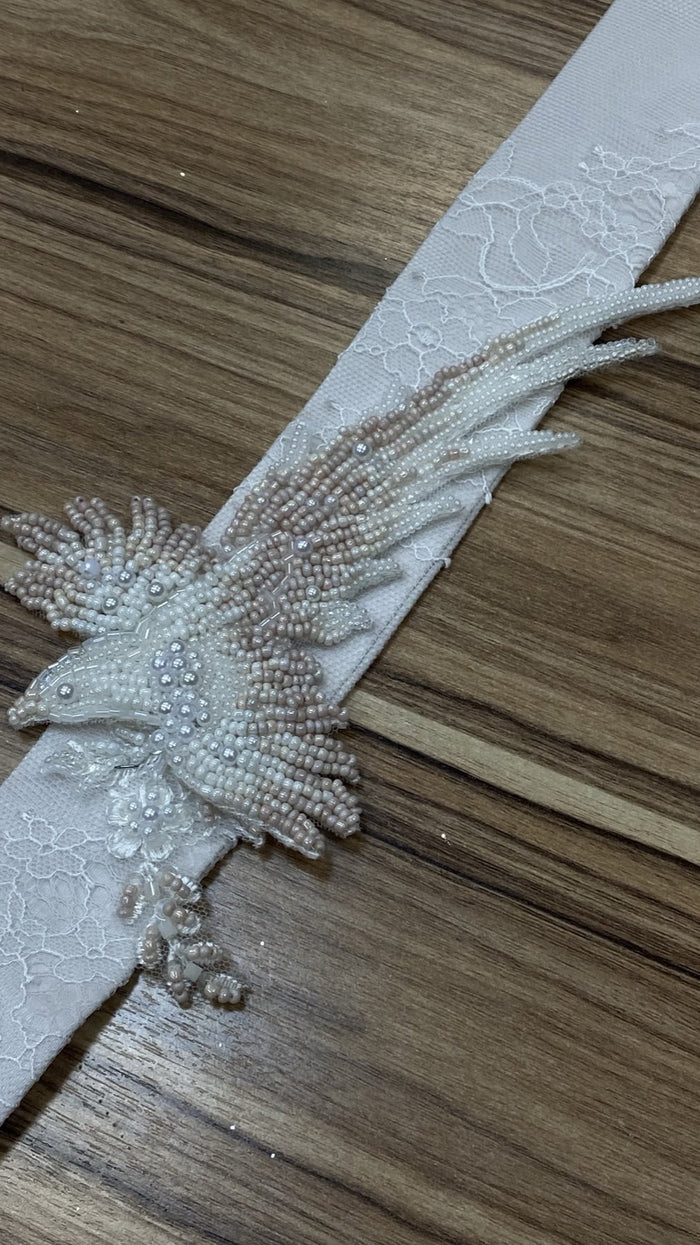
- A structured or beaded piece as a focal detail.
It sits between a strapless and a two-strap or off-the-shoulder design, and it is a form of the asymmetric approach applied to the bodice.
How It Stays Level and Up
The internal bodice does the work:
- Boned, so the front and side seams stay straight and the top edge does not fold down on the bare side.
- Fitted firmly to the ribcage, so the dress sits on the body rather than hanging from the one strap.
- Often built over an internal corset or corselette layer that grips on its own.
- Balanced. The pattern is adjusted so the bodice does not pull toward the covered shoulder. This is the part an off-the-rack one-shoulder dress most often gets wrong.
The strap is attached after the bodice is proven to stay level with no strap at all.
Strap Styles
- Plain band. A clean strip in the dress fabric. Modern and minimal.
- Draped fold. Fabric gathered from the bodice up over the shoulder. Soft, and flattering over the bust.
- Ruffle. A frill over the shoulder. Romantic, and it hides the shoulder line.
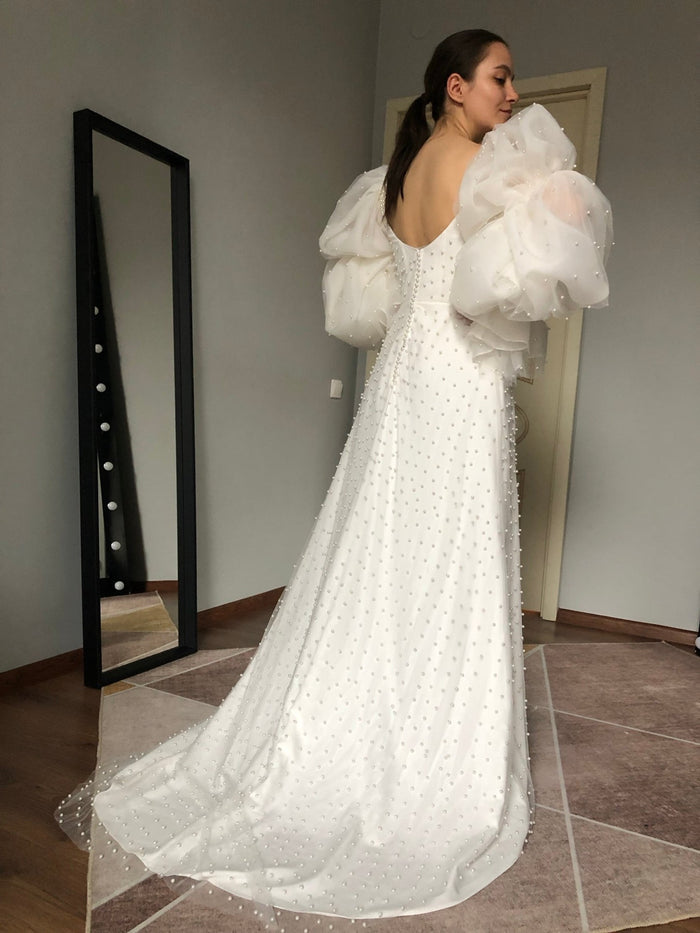
- One sleeve. A full or bishop sleeve on one arm, bare on the other. Dramatic and unusual.
- Beaded or structured piece. A decorated strap as the focal point on an otherwise plain sheath or column.
How the Asymmetry Reads
- It adds visual movement to a simple dress without embellishment, in the spirit of simple over embellished.
- It softens even, square, or broad shoulders by breaking the horizontal line with a diagonal.
- It elongates the neck and collarbone on the bare side.
- The covered side can be chosen to suit your hair, a tattoo you want covered or shown, or the side you turn to the camera.
Pairing It With a Skirt
A one-shoulder bodice works with almost any skirt:
- A sheath or column keeps the whole look clean and modern.
- A trumpet adds curve without competing with the bodice line.
- A ball gown balances a bold draped or beaded shoulder.
Movement and Comfort
- A plain band allows full arm movement.
- A draped fold stays comfortable but can shift a little; it is tacked discreetly so it does not slide.
- One sleeve restricts that arm the way any sleeve does, so it is fitted for lift.
- The bare shoulder needs no special care once the bodice is holding correctly.
We test all of this at a mockup, with you raising and crossing your arms and hugging.
Fitting a One-Shoulder Bodice Custom
Steps:
- Fit the bodice first, boned and firm, proven to stay level with no strap.
- Balance the pattern so it does not pull toward the covered shoulder.
- Choose and place the strap, band, drape, ruffle, or sleeve, on your covered side.
- Movement test, then a final fitting seated and dancing.
For a remote order the bodice is built to your measurements and its balance shown on a form in photos and video during the remote fitting process. Every dress is made over 10 to 12 weeks, with UPS shipping to the US in 3 to 5 days. See the price breakdown for what affects the cost.
FAQ
How does a one-shoulder wedding dress stay up? On a boned bodice fitted firmly to the ribcage, often over an internal corset layer, with the pattern balanced so it does not pull toward the covered shoulder. The single strap is a design line. A well-made one-shoulder bodice stays level with no strap at all.
Does a one-shoulder dress suit broad shoulders? Yes, particularly well. The diagonal strap breaks the horizontal shoulder line, which softens even, square, or broad shoulders. It also elongates the neck and collarbone on the bare side.
Can I have a sleeve on the covered shoulder? Yes. A full or bishop sleeve on one arm with the other bare is a dramatic version of the one-shoulder look. That sleeve is fitted for arm lift the way any long sleeve is.
Which skirt goes with a one-shoulder bodice? Almost any. A sheath or column keeps the look clean and modern, a trumpet adds curve, and a ball gown balances a bold draped or beaded shoulder.
Will the draped fold slide off my shoulder during the day? Not if it is constructed correctly. The bodice holds the dress up on its own, and the drape is tacked discreetly so it keeps its shape and position. It is tested with arm movement at a fitting.
Drawn to an asymmetric, one-shoulder line? Start with a sketch consultation at Lutien Bridal.
About the author: Vlad Ivanov is the Director of Business Development at Lutien Bridal Atelier in France, home to the design team behind more than 1,000 custom wedding gowns delivered to brides across the US and Europe.