Atelier · France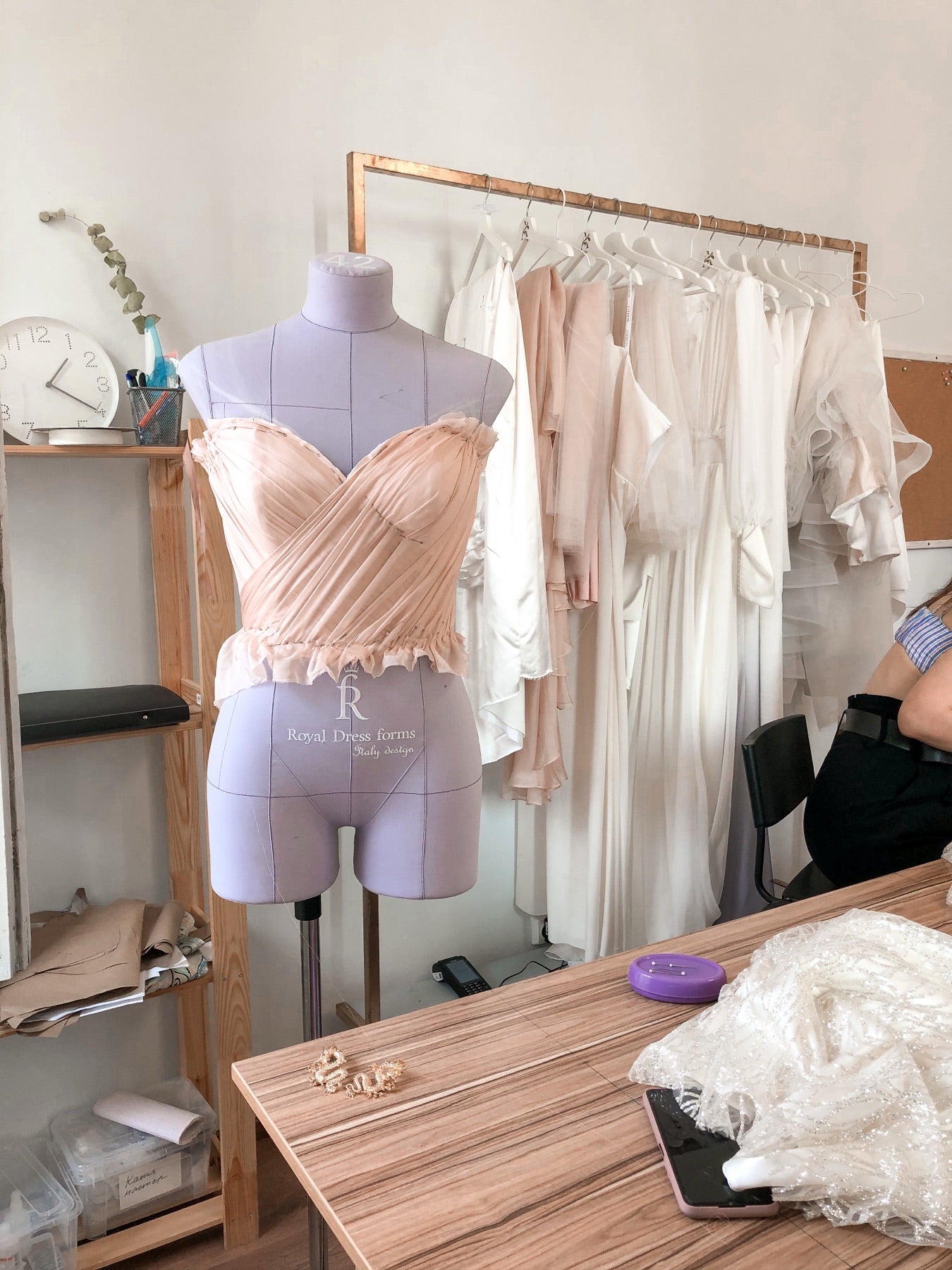

A ruched bodice has the outer fabric gathered into soft folds across the body, so the surface is textured rather than smooth. A pleated bodice does the same with regular, pressed or crisp folds. Both sit over a firm, structured base and are one of the most flattering bodice treatments, because gathered fabric skims the midsection instead of clinging to it.
The design choices are the direction of the gathering, how soft or crisp the folds are, and how much fabric is used, because those set how much texture and how much camouflage the bodice gives.
Key Takeaways
- A ruched bodice gathers the outer fabric into soft folds; a pleated bodice uses regular, defined folds.
- The gathered layer sits over a firm boned base, so the bodice still supports and shapes; only the surface is soft.
- Diagonal ruching is the most flattering, drawing the eye across and skimming the waist and tummy.
- Draped ruching is soft and forgiving; knife or box pleats are crisp and more structured.
- On a custom order the gathering is arranged on you at a fitting so the folds fall where they flatter.
Ruched vs Pleated
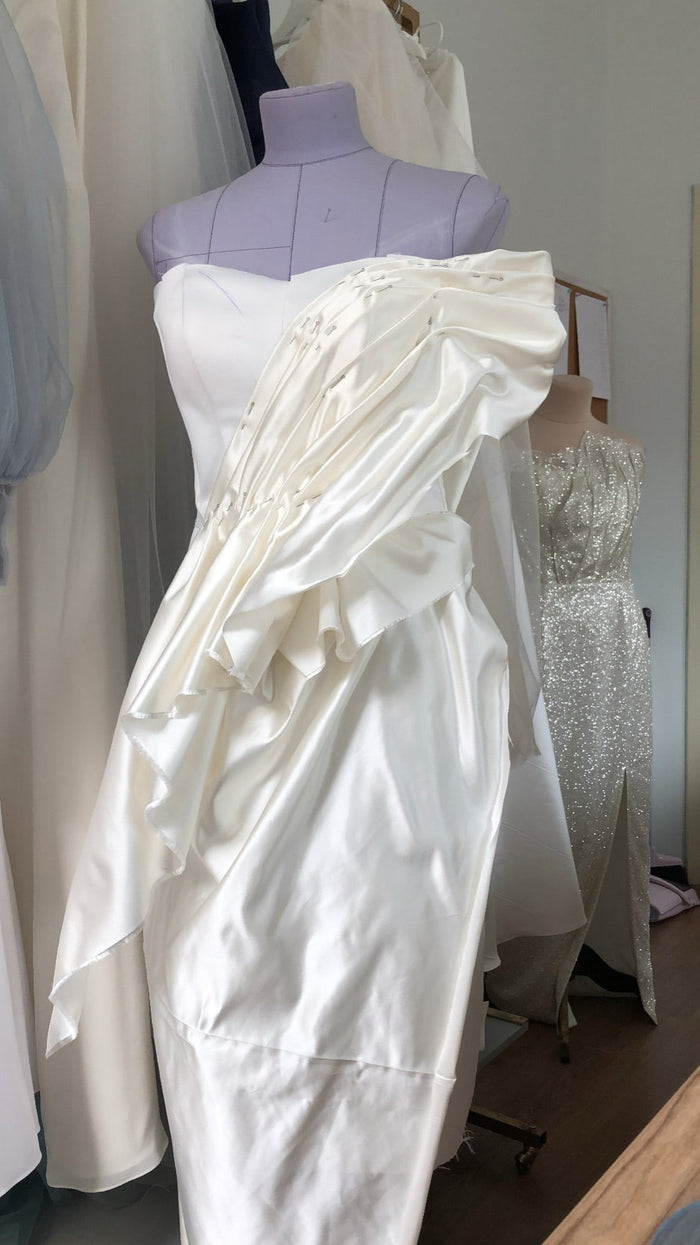
- Ruched (draped). The fabric is gathered along a seam or an internal stay and allowed to fold softly and irregularly across the body. Reads soft and romantic.
- Pleated. The fabric is folded into regular pleats, knife (all folded one way), box (folded away from each other), or fan (radiating from a point). Reads crisp and architectural.
- Draped fold / cowl. A related treatment where the fabric falls in a loose fold at the neckline or back, covered in the cowl neck guide.
How It Is Built
The gathered layer is decorative. Underneath is a firm, boned bodice fitted to the ribcage with built-in support, exactly as a smooth strapless bodice would be. The outer fabric is cut larger than the base and pinned into folds on the form or on you, then tacked down at the seams. The base does the shaping; the folds hide it.
Direction of the Gathering
- Diagonal. Gathering that runs from one hip up toward the opposite ribcage. The most flattering: it draws the eye across the body and skims the waist and tummy.
- Horizontal. Gathering across the waist. Shortens the torso slightly, adds width, best on a long torso.
- Vertical. Gathering up and down. Lengthens the torso, less camouflage.
- Radiating. Fan pleats from a center point at the waist or bust, a strong focal detail.
Why It Flatters
- Gathered fabric does not cling, so it skims a soft midsection, a scar, or a tummy rather than outlining it.
- It adds texture, which breaks up a plain expanse of fabric and hides small fit imperfections.
- Diagonal folds create a visual line that narrows the waist.
- It works across body shapes and is a common choice for a pregnant bride or anyone who wants a forgiving bodice.
Fabrics for a Gathered Bodice
- Soft ruching: crepe, jersey, soft satin, chiffon, tulle. Fold softly.
- Crisp pleats: mikado, taffeta, structured satin. Hold a pressed edge.
- Illusion ruching: gathered tulle over a lined base, adding texture with almost no bulk.
Pairing With Neckline and Skirt
- A ruched bodice pairs naturally with a sweetheart or V neckline and a defined natural waist.
- With a fitted mermaid or trumpet skirt, ruching continues into the hip for a smooth, curved line.
- With a full ball gown, a pleated bodice balances the volume below.
Fitting a Ruched or Pleated Bodice Custom
Steps:
- Build the firm base bodice to support and shape.
- Choose ruched or pleated, the direction, and the softness, from reference images.
- Arrange the gathering on you at a fitting, so the folds fall where they flatter your body specifically.
- Tack and finish, then check seated and moving.
For a remote order the base bodice is fitted to your measurements and the draping arranged on a form, shown in photos and video during the remote fitting process. Every dress is made over 10 to 12 weeks, with UPS shipping to the US in 3 to 5 days. Hand-arranged draping is skilled work; see the price breakdown.
FAQ
What is a ruched bodice on a wedding dress? A bodice where the outer fabric is gathered into soft folds across the body, so the surface is textured rather than smooth. It sits over a firm boned base that does the shaping, while the folds skim the midsection instead of clinging to it.
What is the difference between ruching and pleating? Ruching gathers the fabric into soft, irregular folds and reads romantic. Pleating folds the fabric into regular, defined folds, knife, box, or fan, and reads crisp and architectural. Both sit over the same firm base bodice.
Does a ruched bodice hide a tummy? Yes. Gathered fabric does not cling, so it skims a soft midsection, a scar, or a tummy rather than outlining it. Diagonal ruching is the most flattering because it also draws a visual line that narrows the waist.
Which fabrics work for a ruched bodice? Soft fabrics like crepe, jersey, soft satin, chiffon, and tulle for draped ruching; structured fabrics like mikado, taffeta, and firm satin for crisp pleats. Gathered tulle over a lined base gives texture with almost no bulk.
How is the gathering fitted to me? On a custom dress the folds are arranged on your body at a fitting, or on a form set to your measurements for a remote order, so they fall where they flatter you specifically rather than to a generic pattern.
Want a gathered bodice arranged to flatter your body? Start with a sketch consultation at Lutien Bridal.
About the author: Vlad Ivanov is the Director of Business Development at Lutien Bridal Atelier in France, home to the design team behind more than 1,000 custom wedding gowns delivered to brides across the US and Europe.