Atelier · France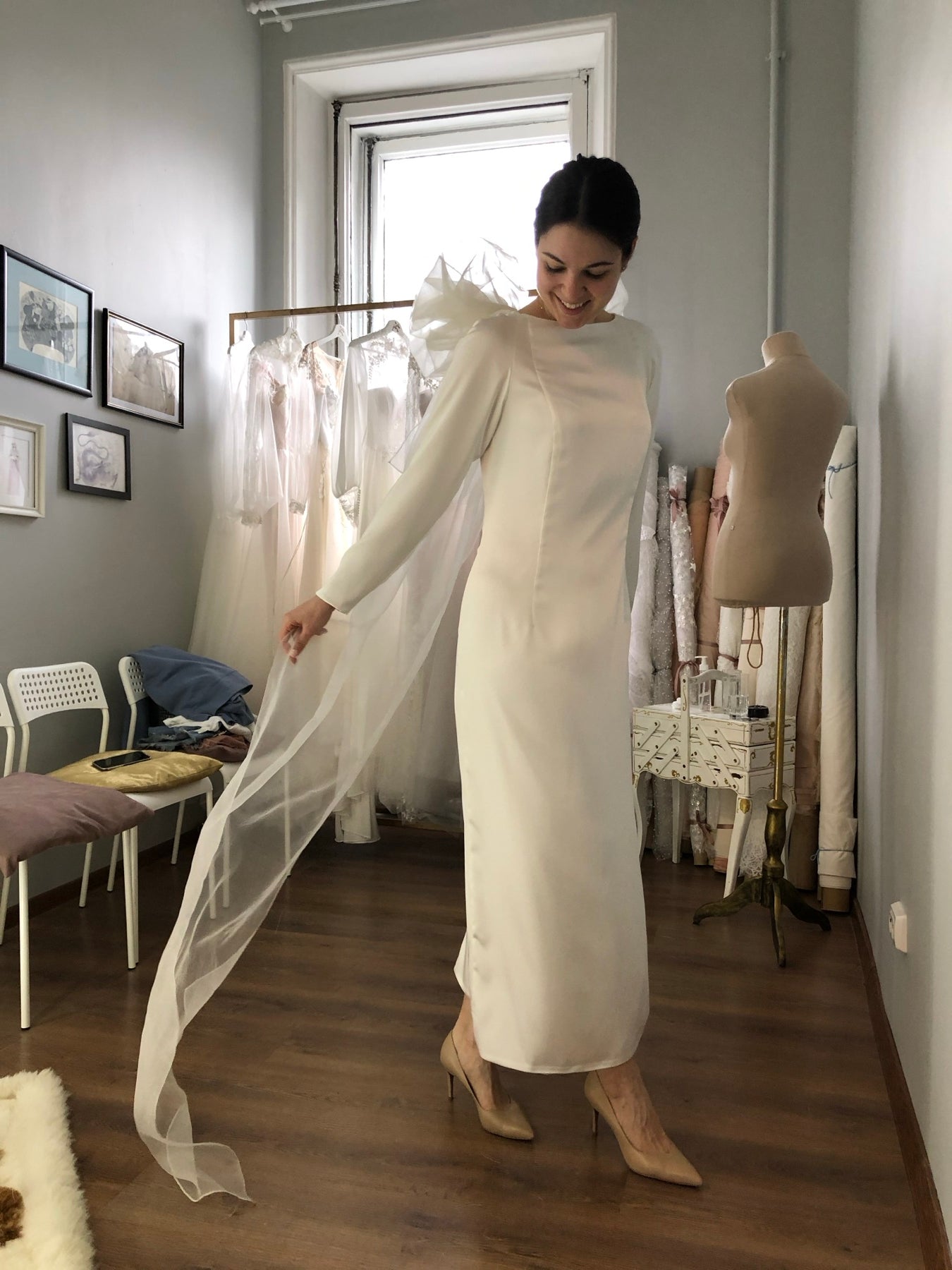

A beach wedding dress has to deal with three things a ballroom gown never does: sand, wind, and humidity. Sand catches in a long trailing hem. Wind lifts light fabric and a long veil. Humidity and heat make a heavy, tightly boned dress uncomfortable within an hour.
The good news is that the dress that solves those problems is also one of the most comfortable to wear. Light fabric, a shorter hem, minimal structure, and a considered neckline give you a gown that moves with the setting instead of fighting it.
Key Takeaways
- Light, fluid fabrics like chiffon, georgette, and soft crepe move well in wind and feel cool.
- A sweep train or no train keeps sand out of the hem. Skip a long cathedral train on the beach.
- Minimal internal structure keeps the dress comfortable in heat. A soft inner bra is better than heavy boning.
- Wind lifts a long veil constantly. Consider a short veil, a cape, or no veil.
- Sunscreen, sand, and salt spray can mark a dress. Plan the fabric and a post-ceremony clean.
Fabrics That Handle Wind and Humidity
The beach rewards fabrics that drift rather than sail.
| Fabric | On the beach |
|---|---|
| Silk chiffon | Very light, floats with the breeze, feels cool. The classic beach fabric. |
| Georgette | A touch more weight than chiffon, so it moves without flying. Very fluid. |
| Soft crepe | Matte and fluid, falls close to the body. Handles a breeze without ballooning. Our crepe guide covers how it behaves. |
| Soft tulle | Light and airy in a few layers. More volume, which the wind can catch. |
| Heavy satin, mikado, duchess | Hot, stiff, and prone to sailing in gusts. A poor beach choice. |
Our fabric guide for custom gowns has the full comparison. In humid air, natural fibres feel cooler than polyester, as our guide to natural silk and synthetic fabrics explains.
Hem and Train for Sand
Sand collects in any fabric that drags, and it stays there. Options, from easiest to hardest to manage:
- No train, ankle or floor length. Nothing touches the sand behind you. The most practical.
- A tea-length or midi hem. Fully clears the sand, and reads as relaxed and appropriate for the setting.
- A sweep train. A short trail. Manageable if you lift it for photos on wet sand.
- A detachable train. A longer look for the aisle, removed before you walk on the beach. This is the same engineering as a convertible gown.
A long chapel or cathedral train on dry sand is a constant lift-and-shake task, and on wet sand it stains.
Structure and Comfort in Heat
A tightly boned strapless bodice in direct sun is uncomfortable fast. For a beach dress we lean toward:
- A soft built-in bra or light cups rather than a full boned corset.
- Straps or sleeves that hold the dress without heavy internal structure.
- A skimming fit rather than a compressive one, so air moves.
- A minimal or breathable lining.
A structured silhouette is still possible. It just needs care in how the support is built. The trade-offs are covered in our guide to what to wear under a custom wedding dress.
Neckline, Back, and Sleeves
For a beach ceremony:
- A neckline that suits your comfort with sun exposure. A V, scoop, or off-shoulder is common; a high neck can feel warm.
- A low or open back is comfortable in heat and photographs well against the water. Plan the support around it.
- Sleeves are a personal call. A soft flutter or a fine sheer sleeve gives some shoulder coverage without warmth; long lined sleeves are usually too hot.
Veil, Cape, or Nothing
Wind and a long veil do not get along. A long cathedral veil on a beach needs someone to manage it and will still whip across your face in every photo. Alternatives:
- A short veil (fingertip or shorter) that sits closer to the head.
- A cape attached at the shoulders, which moves as a piece and stays where it is pinned.
- No veil. A clean, headpiece-free look reads as intentional at the beach.
Protecting the Dress
- Sunscreen transfers onto a bodice and neckline. Apply it well before dressing and let it absorb.
- Salt spray and damp sand can mark some fabrics. We factor this into the fabric choice.
- Have a plan for after. A professional clean soon after the wedding lifts sunscreen, salt, and sand before they set, which matters for our heirloom preservation guidance.
- Travel. If the beach is a destination, a light fabric also packs and recovers better.
Planning a Beach Dress as a Custom Order
The decisions:
- Fabric, weighted toward light and fluid.
- Hem and train, matched to how much you will walk on sand.
- Support, kept soft and breathable.
- Neckline, back, and sleeves, for sun comfort and photos.
- Veil or alternative, planned for wind.
We start with a conversation about the exact setting and time of day, then translate it into a sketch you approve before any fabric is cut. Our design process walks through each stage. Every dress is made to your measurements over 10 to 12 weeks, with UPS shipping to the US in 3 to 5 days, from a starting price of 1,490 euros. Our price breakdown explains what changes the cost.
FAQ
What is the best fabric for a beach wedding dress? Light, fluid fabrics: silk chiffon, georgette, and soft crepe. They move with a breeze without ballooning and feel cool in humidity. Heavy satin, mikado, and duchess satin are hot, stiff, and prone to sailing in wind.
Can you wear a train on the beach? A short sweep train is manageable if you lift it for photos on wet sand. A long chapel or cathedral train is a constant lift-and-shake task and stains on damp sand. A detachable train, or no train, is the practical choice.
Should I wear a veil for a beach wedding? A long veil fights the wind and will cross your face in most photos. A short veil, a cape attached at the shoulders, or no veil at all are all better suited to the beach.
Will a beach wedding dress be too see-through in the sun? Only if it is unlined. A light fabric can be lined with a fine, breathable layer so it is opaque without being hot. This is planned with the fabric.
How do I keep sand and sunscreen off the dress? Apply sunscreen well before dressing and let it absorb. Keep the hem short or lifted on sand. Book a professional clean soon after the wedding to lift salt, sand, and sunscreen before they set.
Planning a ceremony on sand? Start with a sketch consultation at Lutien Bridal.
About the author: Vlad Ivanov is the Director of Business Development at Lutien Bridal Atelier in France, home to the design team behind more than 1,000 custom wedding gowns delivered to brides across the US and Europe.