Atelier · France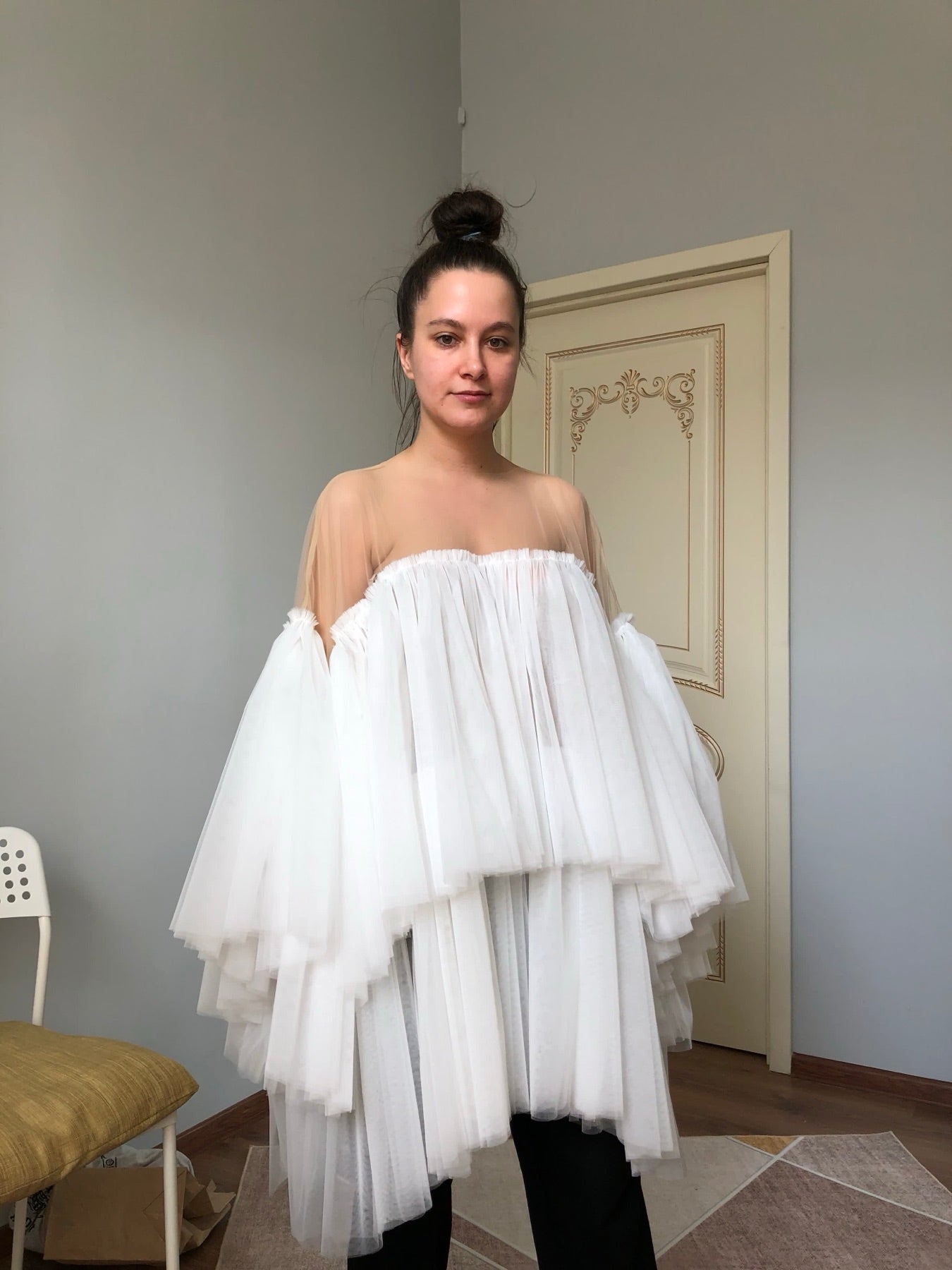

A shorter wedding dress is a length choice, not a separate silhouette. You can build an A-line, a fitted shape, or a full skirt at a shorter hem. What changes is the practicality, the mood, and how much the hem itself has to carry the design.
Tea-length hits mid-calf. Midi sits between the knee and mid-calf. Short or mini ends at or above the knee. Each length has a distinct feel and a distinct set of venues where it makes sense.
Key Takeaways
- Tea-length falls at mid-calf, midi between the knee and mid-calf, short at or above the knee.
- A shorter hem suits civil ceremonies, garden and city weddings, second weddings, and receptions after a longer ceremony gown.
- The hem finish matters more on a short dress, because it is fully visible in every photo and every step.
- Proportion has to be re-planned, since bodice-to-skirt balance that works at floor length does not translate directly.
- Shoes become part of the design, not an afterthought.
The Length Categories
These terms are used loosely, so the sketch matters more than the label. As a guide:
| Length | Where the hem falls | Feel |
|---|---|---|
| Tea-length | Mid-calf | Retro, elegant, garden-appropriate. The most traditional of the shorter lengths. |
| Midi | Between the knee and mid-calf | Modern, city, understated. Reads as fashion rather than costume. |
| Short / knee-length | At the knee | Classic sixties bridal. Playful and clean. |
| Mini | Above the knee | Bold, contemporary, statement. Often a second look rather than a ceremony dress. |
In a custom process we set the exact hem point on your body, standing in your ceremony shoes, so it lands where you want it rather than at a standard number.
When a Shorter Hem Makes Sense
A shorter dress is a strong choice for:
- A civil or courthouse ceremony. A floor-length gown can feel out of scale in a small registry room. A tea-length or midi reads as considered rather than under-dressed.
- A garden or outdoor wedding. No hem dragging through grass, soil, or gravel. Tea-length in particular has a long association with garden ceremonies.
- A city wedding with a lot of walking, public transport, or a restaurant reception.
- A second wedding or vow renewal. Many brides want something less formal the second time, and a shorter hem carries that intent clearly.
- A reception look after a longer ceremony gown, covered below.
- A destination or elopement where packing and movement matter, which our destination wedding dress guide addresses.
Why the Hem Finish Matters More
On a floor-length gown, the hem is often just below eye level and half-hidden in movement. On a short dress it is front and centre in every photograph and every step. That raises the bar on the finish.
Options we use include a fine rolled hem, a horsehair-supported hem for a soft flip, a scalloped lace edge, a bound edge, or a deep faced hem for weight and structure. The right one depends on the fabric and the shape. A crisp A-line can carry a structured faced hem; a fluid crepe midi suits a fine rolled edge. This is a detail we decide together during the design stage.
Rebalancing the Proportions
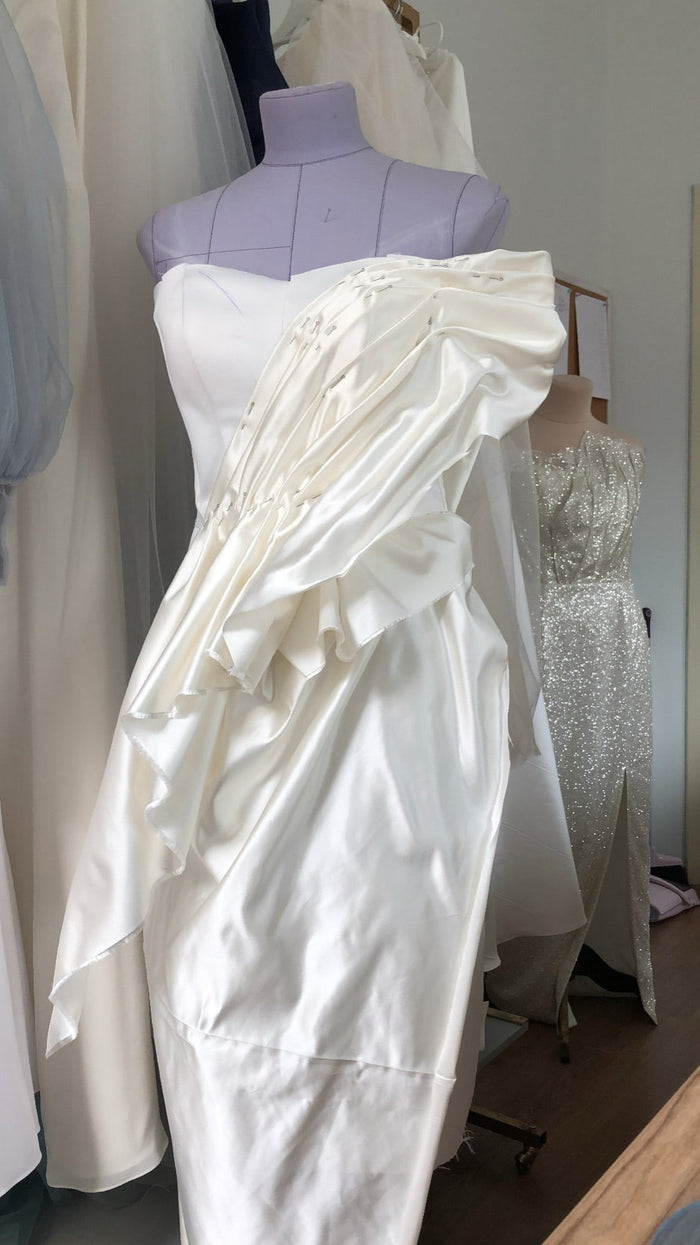
A shorter dress is not a floor-length dress with the bottom cut off. The relationship between the bodice and the skirt has to be redrawn.
- A long bodice over a short skirt can look top-heavy.
- A very full short skirt can shorten the leg visually.
- A waist seam placed for a floor-length gown may sit wrong once the skirt is short.
We re-plan the bodice length, the waist position, and the skirt fullness for the finished hem, then confirm it on a mockup with you in your shoes.
Shoes Are Part of the Design
With a floor-length gown, shoes are barely seen. With a short dress, they are always in frame. Choose them before the final fitting, because the hem is set relative to the shoe height. A change from a flat to a heel after the hem is finalized will move where the dress lands on your leg.
Bring the actual ceremony shoes to fittings, or send photos and the heel height for a remote fitting, for the same reason we ask you to bring your undergarments.
A Short Dress as a Second Look
A common custom request is a floor-length ceremony gown plus a short reception dress, or a single dress with a detachable overskirt that reveals a shorter hem underneath. Both give you a formal entrance and a movement-friendly evening.
If it is one dress with a detachable layer, the attachment point has to be engineered into the waistline from the sketch stage. This is the same construction logic as a detachable train.
Planning a Shorter Dress as a Custom Order
The decisions:
- Hem length. Set on your body in your ceremony shoes.
- Underlying silhouette. A-line, fitted, full, or straight, built at the shorter length.
- Hem finish. Rolled, faced, horsehair, scalloped, or bound, matched to the fabric.
- Proportion. Bodice length, waist position, and skirt fullness redrawn for the hem.
- Whether it is a standalone dress or a second look with a detachable layer.
We begin with a conversation about the venue and the effect you want, then translate it into a sketch you approve before any fabric is cut. Our design process walks through each stage. Every dress is made to your measurements over 10 to 12 weeks, with UPS shipping to the US in 3 to 5 days, from a starting price of 1,490 euros. Our price breakdown explains what changes the cost.
FAQ
What is a tea-length wedding dress? A wedding dress with a hem that falls at mid-calf, between the knee and the ankle. It is the most traditional of the shorter lengths and is strongly associated with garden ceremonies, civil weddings, and vintage styling.
Is a short wedding dress less formal? It reads as less formal than a floor-length gown, which is often the point. A well-constructed tea-length or midi in a fine fabric with a considered hem finish still looks deliberate and elevated, not casual.
Can any silhouette be made short? Most can. A-line, fitted, and full skirts all work at a shorter hem. The proportions and the hem finish are re-planned for the length, so it is not simply a floor-length pattern cut shorter.
Do I need a special hem on a short wedding dress? The hem matters more because it is fully visible. Options include a fine rolled hem, a structured faced hem, a horsehair hem for a soft flip, or a scalloped lace edge. The right one depends on the fabric and silhouette.
Should I choose my shoes before the dress is finished? Yes. The hem is set relative to your shoe height. Choosing or changing shoes after the hem is finalized will move where the dress lands on your leg. Bring the actual shoes to fittings.
Planning a shorter hem for your ceremony or your reception? Start with a sketch consultation at Lutien Bridal.
About the author: Vlad Ivanov is the Director of Business Development at Lutien Bridal Atelier in France, home to the design team behind more than 1,000 custom wedding gowns delivered to brides across the US and Europe.