Atelier · France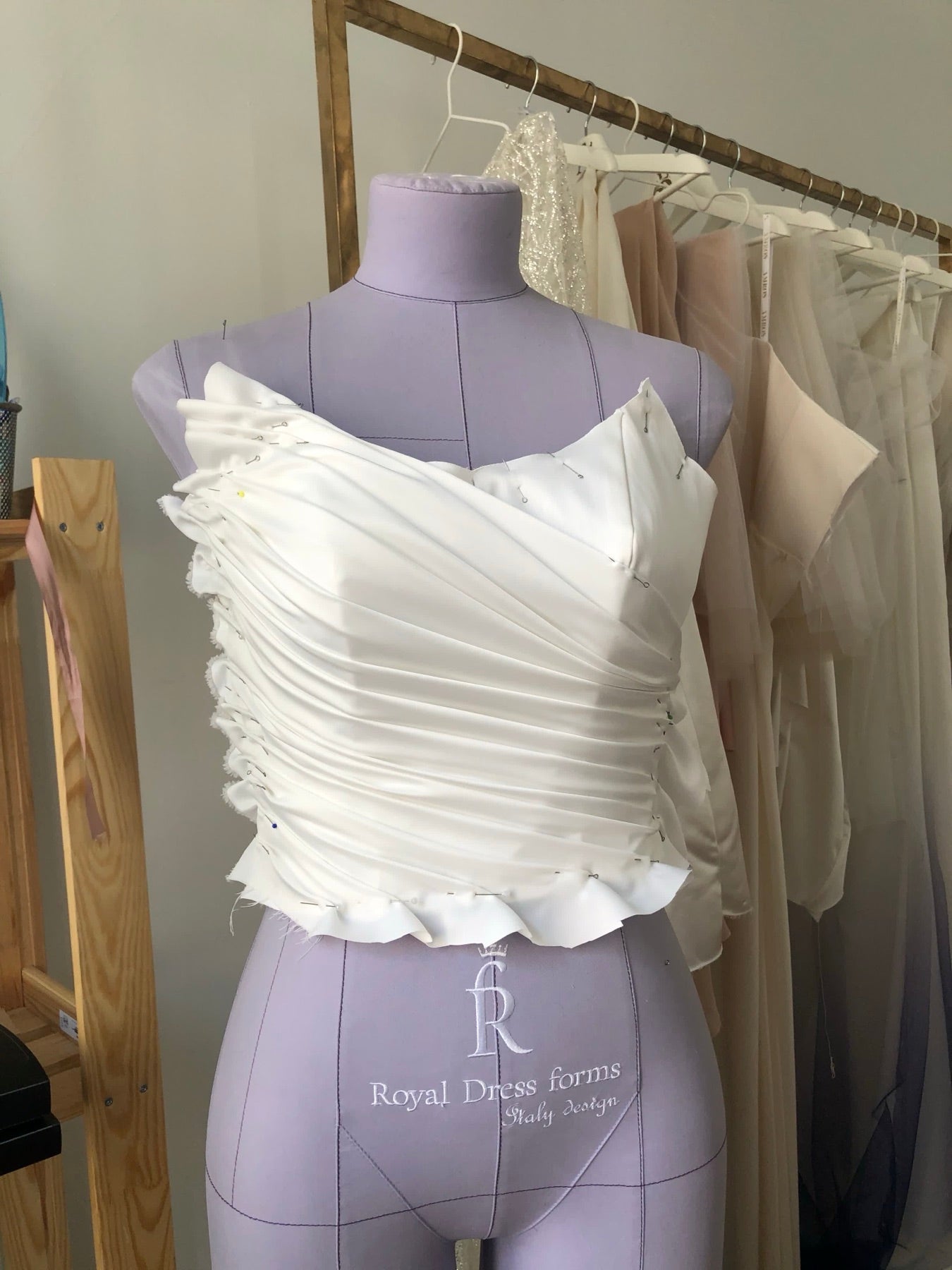

With a custom wedding dress, most of what would normally be a separate undergarment can be built into the dress. A structured inner bodice, cups, boning, and a waist stay are constructed as part of the gown and fitted to you. That means fewer separate pieces to buy, position, and worry about slipping.
You still need to decide a few things: what goes under the skirt, whether you want smoothing, and what to wear for your own comfort. Planning this at the design stage, rather than shopping for it the week before, is what keeps the final fit clean.
Key Takeaways
- A custom dress can have the bra, cups, boning, and waist support built into an inner structure, fitted to your body.
- This removes most visible-strap and slipping problems and is one real advantage of custom over off-the-rack.
- You usually still choose underwear for under the skirt, and optionally light smoothing shorts or a slip.
- Bring your intended undergarments to every fitting. The dress is fitted over exactly what you will wear on the day.
- Backless, sheer, and very fitted designs need the support solution planned from the first sketch, not added later.
What Can Be Built Into the Dress
In a custom gown, the support layer is part of the construction. Depending on the design, that inner structure can include:
- A built-in bra or cups. Molded or soft cups sewn into the bodice at the position set by your measurements and fittings, so there is nothing to align on the day.
- Boning. Thin flexible stays in the bodice seams that hold the shape and keep the dress from folding or sliding. Covered in detail in our guide to corset construction and fit.
- An inner corset or bodice. A separate structured layer inside the dress that carries the fit and, on a fuller skirt, the weight. It closes independently and anchors the gown at your waist.
- A waist stay. An inner band at the natural waist that takes the downward pull of a heavy skirt or train.
- Straps or a halter that are structural, not decorative. Positioned to do real work if the design allows.
For most dresses with a bodice, this means you do not wear a separate bra. The dress is the bra.
What You Still Choose Separately
A few things are still yours to decide and bring.
- Underwear. Choose a style and color that will not show through your fabric. For a light or unlined skirt, a seamless style in a tone close to your skin is the safe default. For a lace or sheer panel, plan the coverage with us.
- A slip or underskirt. Sometimes built in, sometimes a separate layer, depending on the fabric's opacity and how much movement you want in the skirt.
- Optional smoothing shorts. If you want a smooth line under a close sheath or column, light shaping shorts can help. They are a choice, not a requirement, since a custom dress is cut to skim rather than cling.
- Anti-chafe shorts. Many brides wear thin cotton or seamless shorts purely for comfort during a long day, especially in warm weather.

By Design: What Each One Needs
| Design | Support approach |
|---|---|
| Strapless or corseted bodice | Full inner corset with boning and cups. No separate bra. Planned from the sketch. |
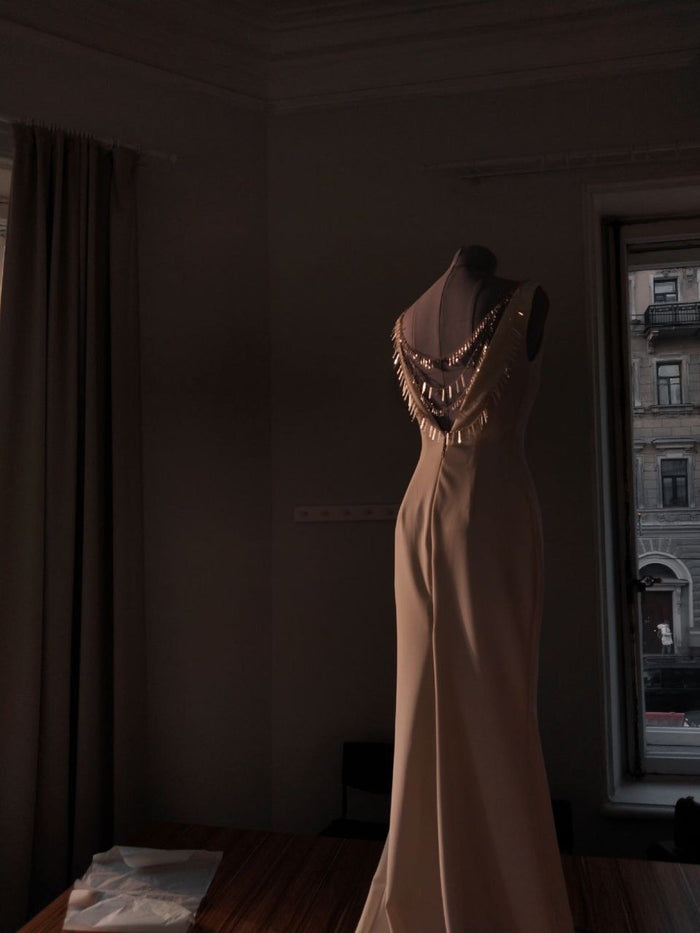
| Backless or low back | Support built low into the dress, with cups and boning routed around the open back. Must be designed in from the start. |
| Mermaid or trumpet | Inner corset extending past the waist toward the hip. Seamless underwear that sits below the flare point. |
| Deep V or plunge neckline | Cups and side support angled to the neckline. Sometimes a hidden modesty panel. |
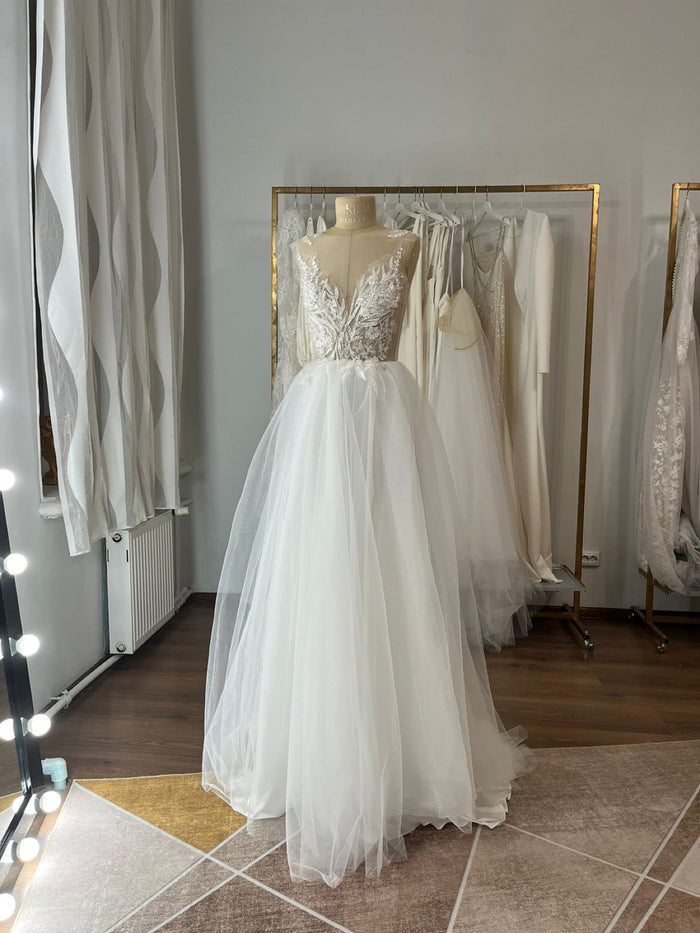
| Sheer bodice or illusion panels | Support integrated into the lining behind the sheer area. Underwear color and coverage planned with the fabric. |
| Soft A-line with a lined bodice | Built-in cups and light boning. Standard seamless underwear underneath. |
Smoothing and Shapewear: Optional, Not Assumed
Off-the-rack dresses are cut to a size chart, so shapewear is often used to bridge the gap between the dress and the body. A custom dress is cut to your body, so that gap is not there by default.
If you like the feel of a smooth compressive layer, you can wear one, and we will fit the dress over it. If you do not, the dress is built to give a clean line on its own. This is worth deciding early, because a dress fitted over shapewear and then worn without it, or the reverse, will not fit the same way.
Bring It to Every Fitting
This is the single most useful rule: at every fitting, and in any photos you send for a remote fitting, wear or include the exact undergarments you plan to wear on the wedding day.
The dress is adjusted to sit over what is underneath it. A different bra, different shorts, or no shorts at the final fitting changes the fit at the bust, waist, and hip. If you are undecided, tell us, and we will build in a small allowance while you decide.
Comfort and the Long Day
A wedding day is long, often warm, and involves sitting, dancing, and hours of standing. A few comfort notes:
- Natural fibers next to the skin feel cooler over a long day. This matters more for a summer or outdoor wedding.
- A built-in corset should be firm, not painful. If it pinches at a fitting, say so. It can be adjusted. It is meant to support you comfortably for the whole day.
- Have a plan for the bathroom. A fuller skirt and a fitted underlayer both affect this. We can note which closures open quickly.
FAQ
Do you wear a bra under a custom wedding dress? Usually not. A custom dress with a bodice has cups and support built into the inner structure, fitted to your body. You wear a separate bra only for specific designs where one is easier to integrate, and we tell you if that applies.
What underwear do you wear under a wedding dress? Seamless underwear in a tone close to your skin is the safe default, so nothing shows through the fabric. For lace, sheer panels, or a very light skirt, plan the style and coverage with the atelier against your specific fabric.
Do I need Spanx or shapewear under a custom dress? Not by default. A custom dress is cut to your body, so it does not rely on shapewear to close a sizing gap. You can wear a smoothing layer if you like the feel, but the dress should give a clean line without it. Decide before your final fitting.
What do I wear under a backless wedding dress? The support is built low into the dress, with cups and boning routed around the open back, so no separate bra is needed. This has to be designed in from the first sketch. For underwear, a low-cut or thong style keeps the line clean.
Should I bring my undergarments to fittings? Yes, every time. The dress is fitted to sit over exactly what you will wear on the day. Changing the bra or shorts, or skipping them, after the fitting will change how the dress fits at the bust, waist, and hip.
Planning a design where the support needs to be built in? Start with a free sketch consultation at Lutien Bridal.
About the author: Vlad Ivanov is the Director of Business Development at Lutien Bridal Atelier in France, home to the design team behind more than 1,000 custom wedding gowns delivered to brides across the US and Europe.