Atelier · France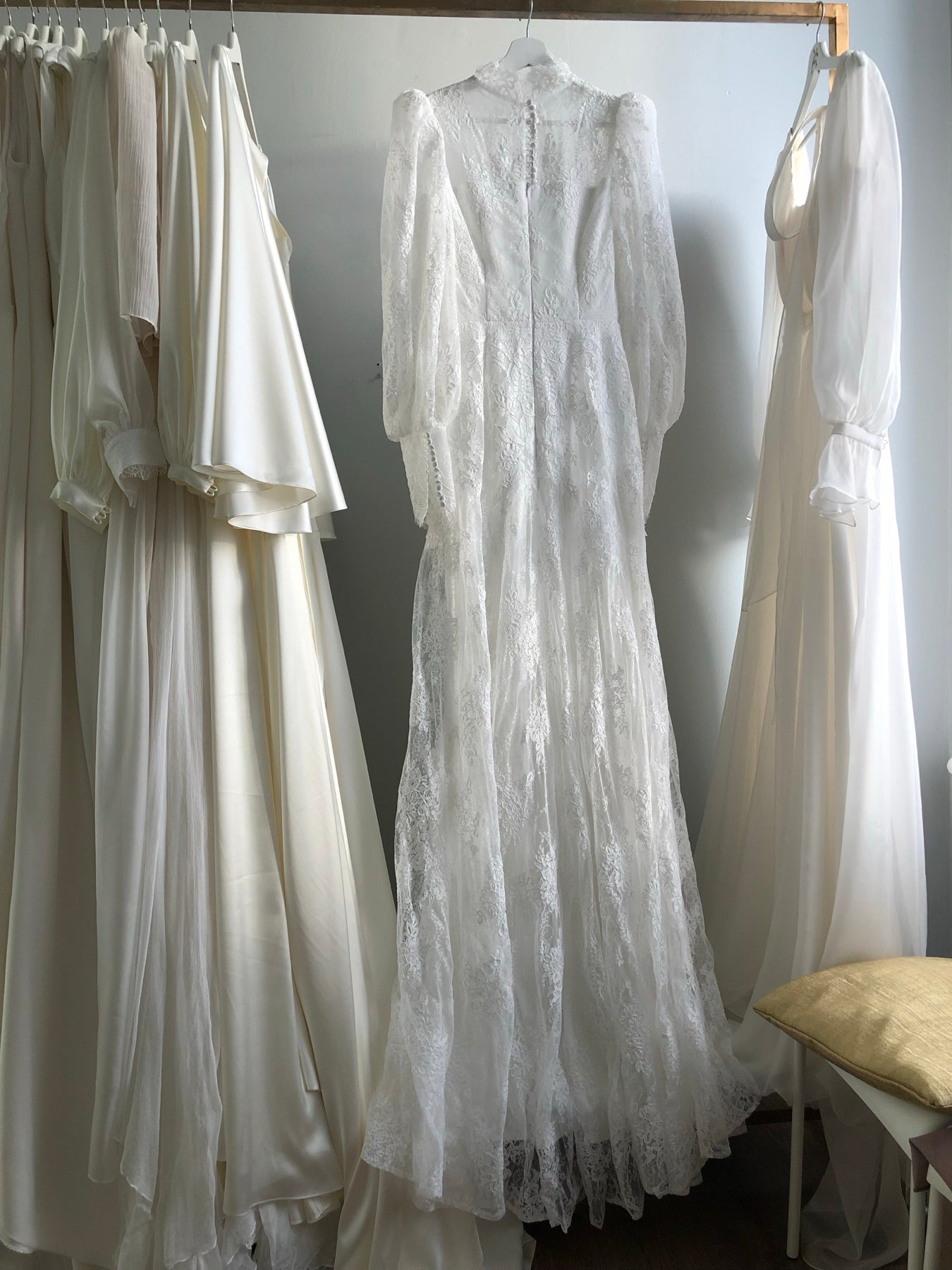

The closure on a wedding dress does more than get you into it. It sets how secure the fit is, how much the dress can be adjusted on the day, how long it takes to dress you, and how the back looks in every photo. The three main options, a covered zip, button loops, and corset lacing, each do this differently.
Most custom gowns use one of these, or a combination: a hidden zip for security with buttons over it for the look, or corset lacing with an inner zip for a clean close.
Key Takeaways
- A covered zip is the most secure and the fastest to dress. It gives a smooth, close back.
- Button loops are decorative. On their own they are slower and less secure, so they usually sit over a zip.
- Corset lacing is the most adjustable. It accommodates a range of fit and is common on structured bodices.
- Combinations are normal: a zip under buttons, or lacing with a modesty panel and an inner zip.
- The closure affects how quickly you can dress, use the bathroom, and change for the reception.
Covered Zip
A concealed zip runs up the centre back under a fabric flap, often with a hook and eye at the top to take the strain off the zip pull.
- Security. High. Once it is up and hooked, it does not move.
- Speed. Fastest. One person, a few seconds.
- Adjustability. Low. The fit is fixed. Small changes need a seam adjustment.
- Look. A smooth, uninterrupted back. Best under a sheer or lace back where the closure should disappear.
- Bathroom and reception. Quick to open and close.
The zip is the default for a close-fitting sheath, column, or fitted mermaid where the back should read as seamless.
Button Loops
A row of small fabric loops fastens over covered buttons down the back or the wrist.
- Security. On their own, moderate. Loops can work loose, and a missed button is not obvious.
- Speed. Slow. Twenty to forty tiny buttons take a patient helper several minutes.
- Adjustability. None.
- Look. The classic decorative bridal back. A defined line of buttons that photographs beautifully, especially on lace or satin.
- Bathroom and reception. Slow, unless the buttons are over a zip.
For this reason, buttons on a custom gown almost always sit over a functional zip. The zip does the work; the buttons do the look. A loop tool (a small hook) speeds up dressing.
Corset Lacing
Ribbon or cord laces through covered eyelets or loops down the back, drawing the two edges together over a modesty panel.
- Security. High once tied. The lacing holds firmly across the back.
- Speed. Moderate. A helper laces from the top or bottom and ties off. Faster than buttons.
- Adjustability. Highest of the three. The lacing tightens or loosens across a range with no sewing, which is why it suits a bride whose weight may change before the day.
- Look. A visible criss-cross of ribbon over a panel, often with a long tail. A strong, romantic back detail. It reads as structured.
- Bathroom and reception. The tie can be loosened without full unlacing.
Corset lacing is common on a structured, boned bodice and on a ball gown, where the bodice is already doing structural work. The construction is covered in our guide to corset construction and fit.
Combinations
Custom gowns mix closures to get the best of each:
- Zip plus buttons. The zip closes and secures; the buttons are decorative over it. The most common combination.
- Lacing plus inner zip. The lacing gives the adjustable, structured look; a hidden zip behind the modesty panel makes the final close clean and quick.
- Lacing plus hook-and-bar top. Lacing down the body, a firm hook at the top edge.
Front and Side Closures
Not every closure is centre back:
- A side zip on a fitted sheath keeps the centre back completely clean.
- A front closure (buttons or a wrap) suits some designs and is easier to do yourself, which matters for an elopement or a small wedding.
- A back that is entirely open may close with a low zip below the opening plus internal support, as on some backless designs.
Choosing a Closure
Weigh these:
- How the back should look. Seamless points to a zip; a decorative line points to buttons over a zip; a structured criss-cross points to lacing.
- How adjustable you need it. Lacing if your fit may change; a zip if it is settled.
- Who dresses you and how much time there is. Buttons need a patient helper; a zip needs almost none.
- The silhouette. Structured bodices suit lacing; close fluid dresses suit a zip.
We plan the closure at the sketch stage, because it affects the pattern and the timeline. Our design process walks through the stages. Every dress is made to your measurements over 10 to 12 weeks, with UPS shipping to the US in 3 to 5 days, from a starting price of 1,490 euros. Our price breakdown covers what changes the cost, including a full run of covered buttons, which is hand-work.
FAQ
What is the most secure wedding dress closure? A covered zip with a hook and eye at the top. Once it is up and hooked, it does not move, and it is the fastest to dress. Corset lacing is also very secure once tied.
Are wedding dress buttons functional or decorative? Usually decorative. A row of small covered buttons on its own is slow and less secure, so on a custom gown the buttons sit over a functional zip. The zip closes the dress; the buttons are the look.
Is a corset back easier to fit than a zip? Yes. Corset lacing is the most adjustable closure. It tightens or loosens across a range with no sewing, which suits a bride whose weight may change before the wedding or who wants a firmer or looser fit on the day.
How long does it take to button up a wedding dress? A full row of twenty to forty covered buttons and loops takes a patient helper several minutes, longer without a loop tool. If the buttons sit over a zip, the zip does the closing in seconds and the buttons are fastened at leisure.
Can I have both buttons and a zip? Yes, and it is the most common setup. A concealed zip runs under the button placket. You get the security and speed of the zip and the decorative back of the buttons.
Deciding how your dress should close and how the back should look? Start with a sketch consultation at Lutien Bridal.
About the author: Vlad Ivanov is the Director of Business Development at Lutien Bridal Atelier in France, home to the design team behind more than 1,000 custom wedding gowns delivered to brides across the US and Europe.