Atelier · France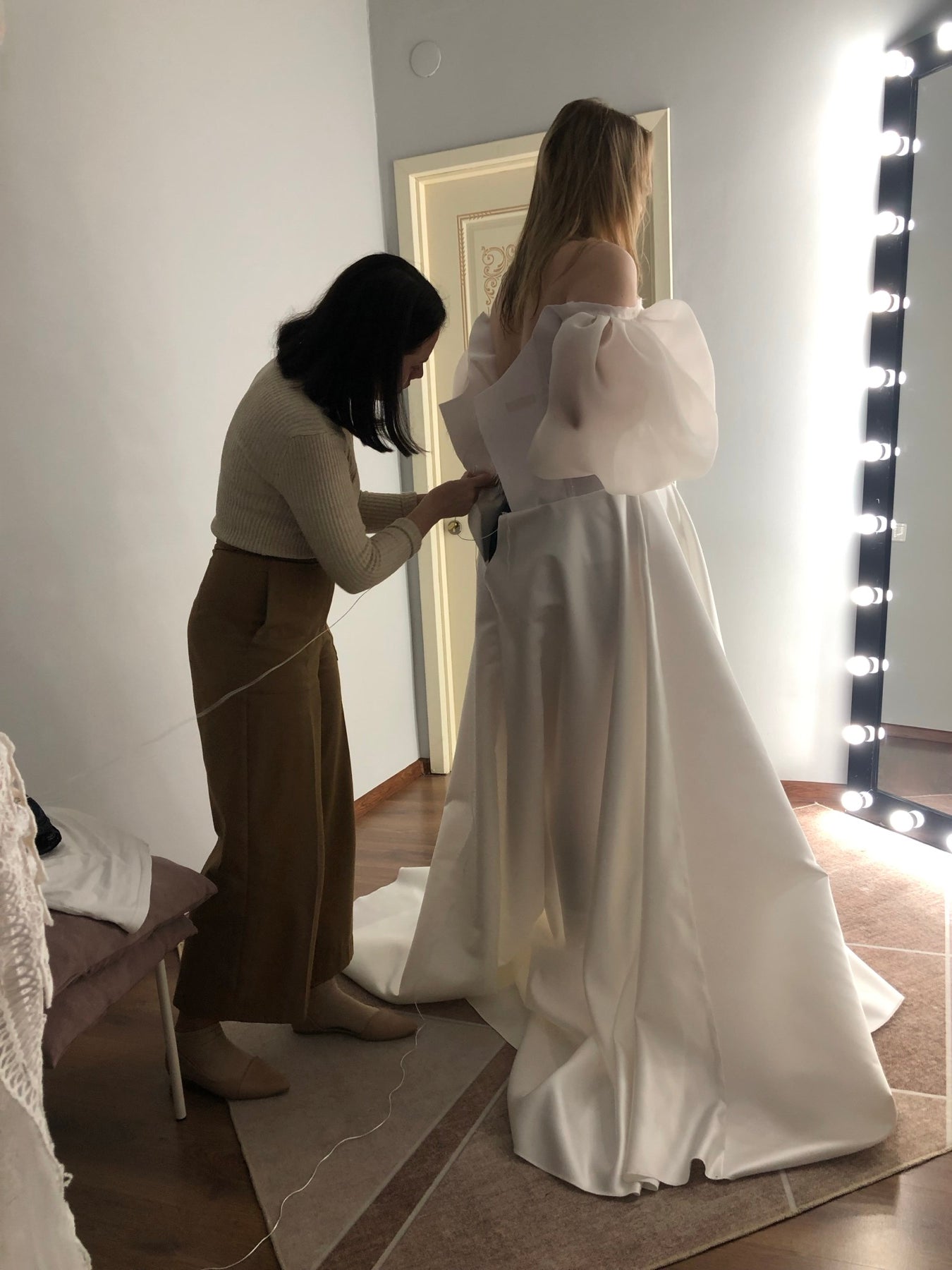

The hem finish is how the bottom edge of a wedding dress skirt is closed, and it changes how the skirt hangs, how it moves, and how the edge reads in photos. The common finishes are a plain turned hem, a horsehair braid hem, a narrow rolled hem, a bound hem, and a lettuce edge.
It is a small detail with a visible effect. A horsehair hem gives a skirt a soft flare and body at the floor; a rolled hem lets a chiffon layer float; a plain turned hem disappears. The finish is chosen for the fabric and the shape, and it is one of the last decisions made on a custom dress, after the final length is set.
Key Takeaways
- The hem finish closes the skirt's bottom edge and affects how it hangs, moves, and photographs.
- Horsehair braid adds body and a soft flare at the floor; wider braid gives more flare. Common on A-lines and ball gowns.
- A narrow rolled or pin hem is nearly invisible and lets light fabrics float. Standard on chiffon and tulle layers.
- A bound hem wraps the edge in a strip of fabric or ribbon for a clean, defined finish, sometimes in a contrast color.
- The hem is finished after the final length is set at a late fitting, once the fabric has hung and dropped.
Why the Hem Finish Matters
The hem is the edge you see most in full-length photos, and it is where the skirt meets the floor, so it takes the most wear. A finish that suits the fabric:
- Holds the intended silhouette right down to the floor.
- Keeps the edge from curling, fraying, or rippling.
- Handles being walked on, stepped on, and swept along the ground, as covered in the afterlife and durability guide.
Plain Turned Hem
The edge is folded up once or twice and stitched, by hand for an invisible finish or by machine.
- Effect. None visible. The hem disappears.
- Best for. Satin, crepe, mikado, and other fabrics with enough weight to hang straight on their own.
- Note. A deep hem (several inches) adds a little weight that helps a fluid skirt hang cleanly.
Horsehair Braid Hem
A stiff, springy mesh braid (once made of horsehair, now nylon) is sewn into the folded hem edge.
- Effect. Adds body and a gentle outward flare at the floor. The wider the braid, the more flare, from a subtle lift to a strong kick-out.
- Best for. A-line and ball gown skirts, and the flare of a trumpet.
- Note. It can be set to flare outward or to roll the hem gently under, depending on the look.
Rolled and Pin Hems
The edge is rolled tightly and stitched into a very narrow finish, often by machine with a rolled-hem foot or by hand.
- Effect. Nearly invisible. The fabric keeps its full drape and float.
- Best for. Chiffon, georgette, organza, and tulle, especially floating overlayers and high-low or handkerchief hems.
- Note. On a circular or bias hem, a rolled finish is often the only one that lies flat.
Bound Hem
The raw edge is wrapped in a narrow strip of fabric or ribbon, enclosing it.
- Effect. A clean, defined edge. Can match the dress or be a deliberate contrast, tonal or colored.
- Best for. An unlined skirt where the inside of the hem might show, a structured fabric where a crisp edge suits the design, or a colored dress where a contrast binding is a design feature.
Lettuce and Wired Edges
- Lettuce edge. The edge is stretched as it is stitched so it ripples like a lettuce leaf. Playful, used on light knits and fine tulle, uncommon on formal gowns.
- Wired edge. A fine wire is enclosed in the hem so the edge can be shaped and holds a sculptural wave. Used on structural details, capes, and dramatic ruffles rather than a whole skirt.
Matching the Finish to the Fabric
- Heavy, structured fabric (mikado, satin, crepe): plain turned hem, or horsehair if you want more flare.
- Light, floating fabric (chiffon, organza, tulle): rolled or pin hem.
- A-line or ball gown needing shape at the floor: horsehair braid, width chosen for the amount of flare.
- Unlined or contrast design: bound hem.
The lining hem is finished separately and usually kept a little shorter than the outer skirt so it never shows below it.
How the Hem Is Set on a Custom Order
The hem is one of the last steps:
- The dress hangs for a day or more so the fabric drops, especially on the bias.
- The length is marked on you, in your wedding shoes, at a late fitting.
- The finish is chosen for the fabric and the flare you want.
- The hem is sewn, pressed, and checked again on you, walking.
For a remote order the hem length is set from your measurements and heel height, and the finished edge is shown on a form in photos and video during the remote fitting process, part of our full design process. Every dress is made over 10 to 12 weeks, with UPS shipping to the US in 3 to 5 days.
FAQ
What is a horsehair hem on a wedding dress? A hem with a stiff, springy mesh braid (originally horsehair, now nylon) sewn into the folded edge. It adds body and a soft outward flare at the floor. Wider braid gives more flare. It is common on A-line and ball gown skirts.
What hem finish is best for a chiffon or tulle skirt? A narrow rolled or pin hem. It is nearly invisible and lets the fabric keep its full float and drape. On a circular or bias-cut hem it is often the only finish that lies flat.
What is a bound hem? A hem where the raw edge is wrapped in a narrow strip of fabric or ribbon. It gives a clean, defined edge and can match the dress or be a deliberate contrast color, which makes it a design feature on a colored gown.
When is the hem finished on a custom dress? Near the end. The dress hangs for a day or more so the fabric drops, the final length is marked on you in your wedding shoes at a late fitting, and only then is the hem sewn, pressed, and rechecked.
Does the lining have its own hem? Yes. The lining hem is finished separately and kept slightly shorter than the outer skirt so it never shows below the hemline.
Planning a skirt shape that depends on the right hem? Start with a sketch consultation at Lutien Bridal.
About the author: Vlad Ivanov is the Director of Business Development at Lutien Bridal Atelier in France, home to the design team behind more than 1,000 custom wedding gowns delivered to brides across the US and Europe.