Atelier · France

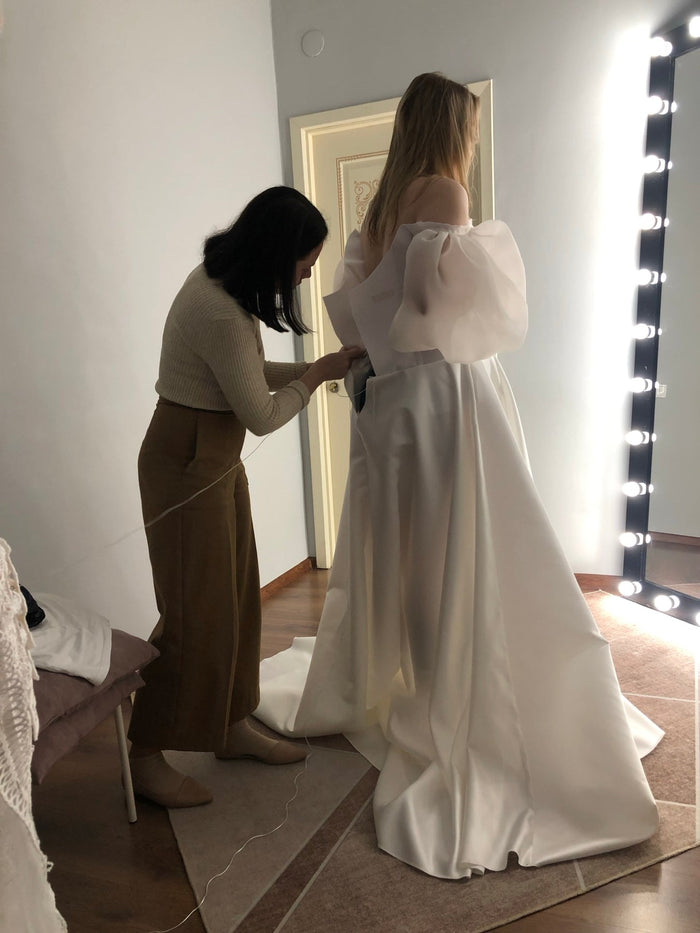
When a custom wedding dress is made to your measurements and shipped, it should arrive ready to wear. Any changes after that are small: a final nip if your body has shifted, a hem set in your exact shoes, a bustle demonstrated to your helper. This is normally light work for a local tailor, guided by the notes that come with the dress.
The important thing is knowing what is a safe local alteration and what should go back to the atelier. Taking in a side seam is routine. Re-cutting a neckline, moving boning, or shortening a beaded hem is not, and a good tailor will say so.
Key Takeaways
- A made-to-measure dress arrives ready to wear; alterations after delivery are usually minor.
- On arrival: hang it, steam it, try it on with your real undergarments and shoes, and check fit, length, and closure.
- Safe local alterations: taking in side seams, straps, and the waist a little; setting the final hem; pressing; fitting the bustle.
- Leave to the atelier: letting a dress out beyond its seam allowance, re-cutting necklines or armholes, moving structure, altering beaded or lace edges.
- Give your tailor the atelier's fitting notes and measurement sheet, and contact the atelier before any change you are unsure about.
What Should Arrive
With a dress ordered through our remote fitting process, you receive:
- The finished dress, made to the measurements confirmed at the last checkpoint.
- A measurement sheet showing what the dress was built to.
- Fitting notes: any allowance left for adjustment, and where.
- Bustle instructions, with photos, if the dress has a train.
- Care and pressing guidance.
First Checks on Arrival
Do this two to three weeks before the wedding, not the night before:
- Unpack and hang the dress so travel creases drop.
- Steam, do not iron, following the care notes. A handheld steamer at a distance is safest for satin and lace.
- Try it on with the undergarments and shoes you will wear on the day.
- Check: the closure does up smoothly, the bodice sits level, the straps lie flat, the hem clears the floor in your shoes, you can sit and raise your arms.
- Photograph front, side, and back, in case you need to send them to the atelier.
If it all checks out, the dress may need nothing more than a press before the day.
Safe Local Alterations
A competent bridal tailor can do these without involving the atelier:
- Taking in side seams, the waist, or straps by a small amount, using the seam allowance left for it.
- Setting the final hem in your exact wedding shoes, if the atelier left it long for that, matching the hem finish already there.
- Adjusting strap length and adding a bra loop.
- Pressing and steaming.
- Fitting and demonstrating the bustle to your helper.
- A small underarm or bust tweak within the existing structure.
What to Leave to the Atelier
Contact us first for any of these:
- Letting the dress out beyond the seam allowance provided.
- Re-cutting a neckline, armhole, or back. These change the balance of the whole bodice.
- Moving or removing boning or the internal corset layer.
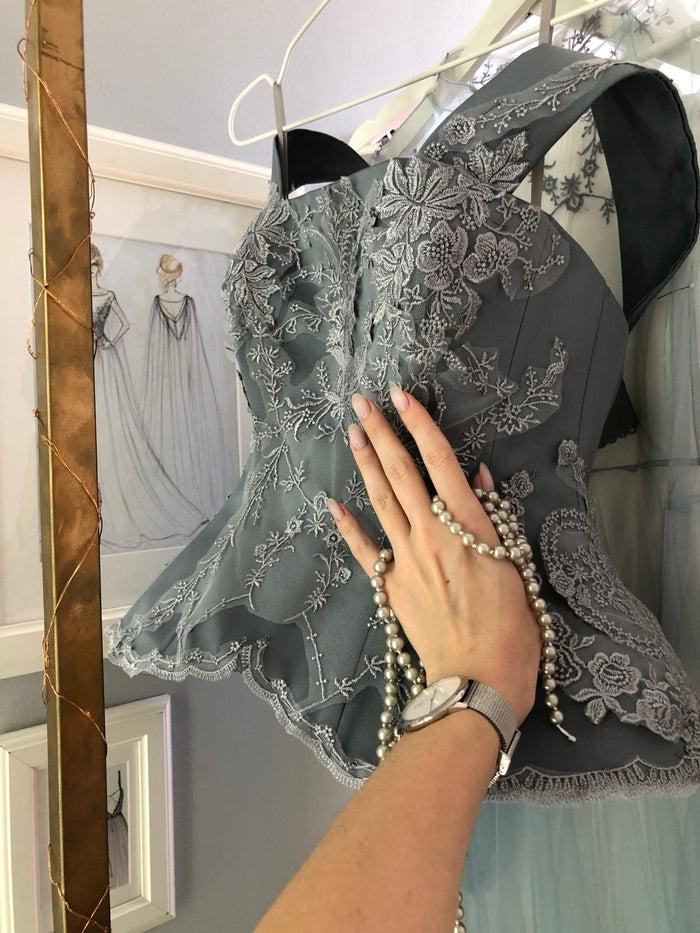
- Shortening a beaded, lace, or horsehair hem, where the edge finish has to be rebuilt.
- Altering 3D appliqué or embroidery placement.
- Anything you are unsure about. A quick photo to the atelier saves a costly mistake.
Choosing a Local Tailor
- Choose one who specializes in bridal, not general alterations. Wedding fabrics and construction are their own skill.
- Ask to see examples of bridal work and check reviews.
- Book them early; good bridal tailors fill up in wedding season.
- Bring the atelier's measurement sheet and notes to the first appointment.
Handing Over the Atelier's Notes
Give your tailor:
- The measurement sheet, so they can see what the dress was built to versus your body now.
- The fitting notes, so they know where allowance was left.
- The care and pressing guidance, so they use the right heat and method.
- Our contact details, so they can ask us directly if a change looks structural.
If Something Is Not Right
If the fit is off in a way that is not a minor tweak, stop and contact the atelier with photos and, if possible, fresh measurements. A dress made to measure and correctly confirmed at the last checkpoint rarely arrives wrong, but if it does, it is ours to put right, not something to have a local tailor rebuild. Our design process explains how the fit was locked in before shipping.
FAQ
Does a custom wedding dress need alterations when it arrives? Usually only minor ones: a small nip if your body has shifted since the last measurement, the final hem set in your exact shoes, and the bustle demonstrated. A made-to-measure dress confirmed at the last remote checkpoint should arrive ready to wear.
What alterations can a local tailor safely do? Taking in side seams, the waist, or straps by a small amount within the seam allowance; setting the final hem to match the existing finish; adjusting strap length; pressing and steaming; and fitting the bustle. These do not change the structure.
What should not be altered locally? Letting the dress out beyond its allowance, re-cutting necklines, armholes, or the back, moving boning or the corset layer, shortening a beaded, lace, or horsehair hem, and altering appliqué placement. Contact the atelier first for any of these.
When should I first try on the delivered dress? Two to three weeks before the wedding, not the night before. Hang it, steam it, and try it on with your real undergarments and shoes, so there is time to arrange a small alteration if you need one.
What should I give my local tailor? The atelier's measurement sheet, the fitting notes showing where allowance was left, the care and pressing guidance, and the atelier's contact details so they can check before any change that looks structural.
Ordering a dress to be delivered ready to wear? Start with a sketch consultation at Lutien Bridal.
About the author: Vlad Ivanov is the Director of Business Development at Lutien Bridal Atelier in France, home to the design team behind more than 1,000 custom wedding gowns delivered to brides across the US and Europe.