Atelier · France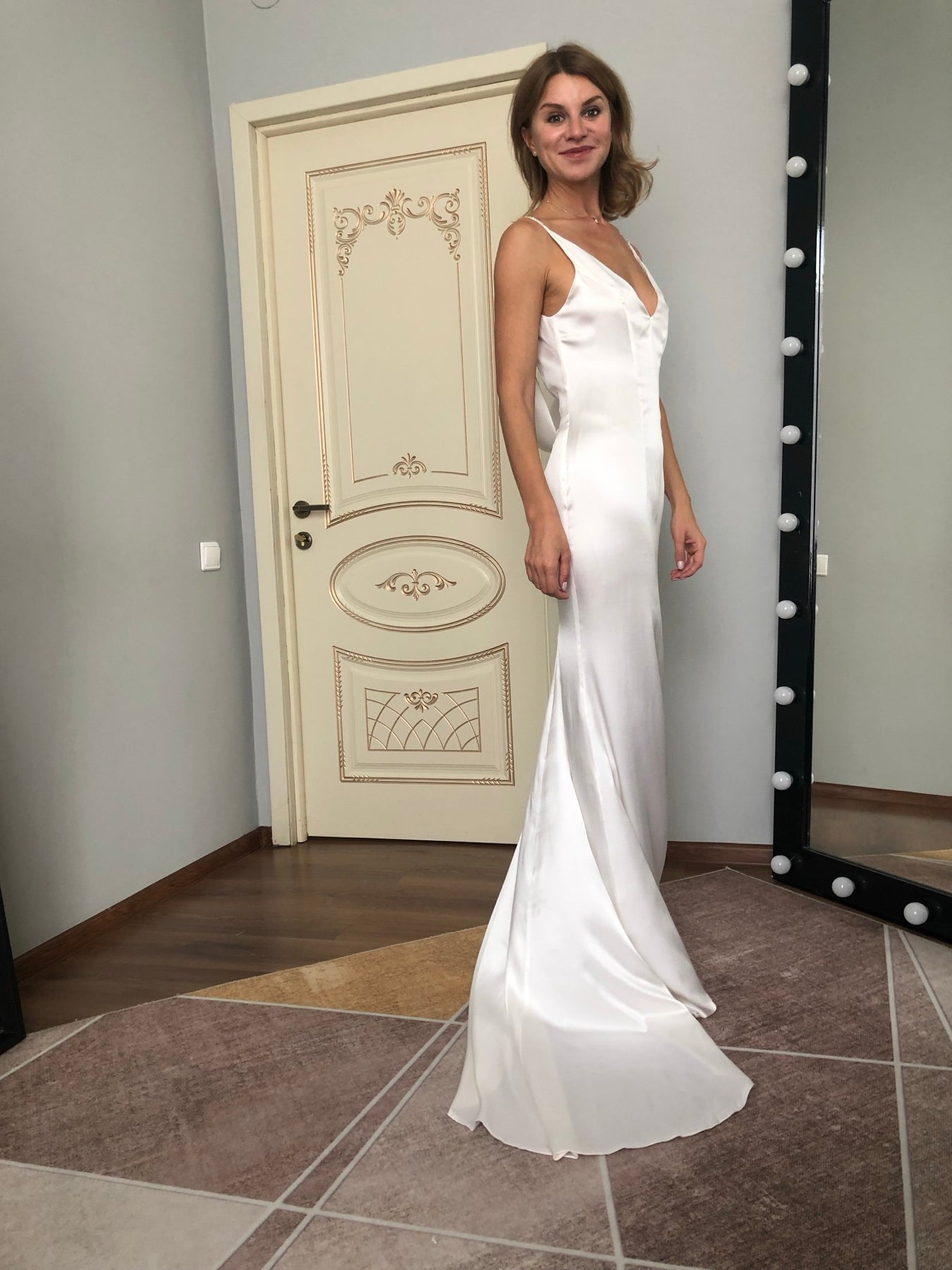

White, ivory, and champagne can look nearly identical in a small online swatch. In a finished wedding dress, they create distinctly different effects. White is crisp, ivory is softly warm, and champagne adds a visible golden or beige undertone.
The right choice isn't determined by a rigid rule about your complexion. It depends on the fabric, the layers beneath it, the light at your venue, and the feeling you want the dress to carry. This guide will help you compare the three colors without asking you to become a textile expert.
Key Takeaways
- White creates the coolest, clearest contrast and makes clean construction feel especially graphic.
- Ivory is warmer and softer, but it still reads unmistakably bridal.
- Champagne has a visible beige or golden base that can bring depth to lace, tulle, and embellishment.
- Fabric finish and layering can change a color as much as the shade name on a swatch.
- Compare physical fabric options in relevant lighting before approving your final palette.
White, Ivory, and Champagne at a Glance
The easiest way to compare these colors is by undertone. White has little visible warmth. Ivory introduces a cream undertone. Champagne moves farther into beige, gold, or blush-beige territory.
| Color | Visual character | Often works especially well with | Watch for |
|---|---|---|---|
| White | Crisp, cool, high-contrast | Clean satin, structured crepe, modern lines | Can look cooler under blue or fluorescent light |
| Ivory | Soft, warm, quietly luminous | Satin, crepe, chiffon, lace, most silhouettes | The amount of warmth varies between fabrics |
| Champagne | Golden, beige, or softly blush-toned | Layered tulle, lace, beading, dimensional details | Linings and overlays can shift the final effect |
These are useful categories, not universal formulas. One supplier's ivory may sit close to white, while another ivory may be noticeably creamy. The name helps you begin the conversation. The actual fabric makes the decision.
What Does a White Wedding Dress Look Like?
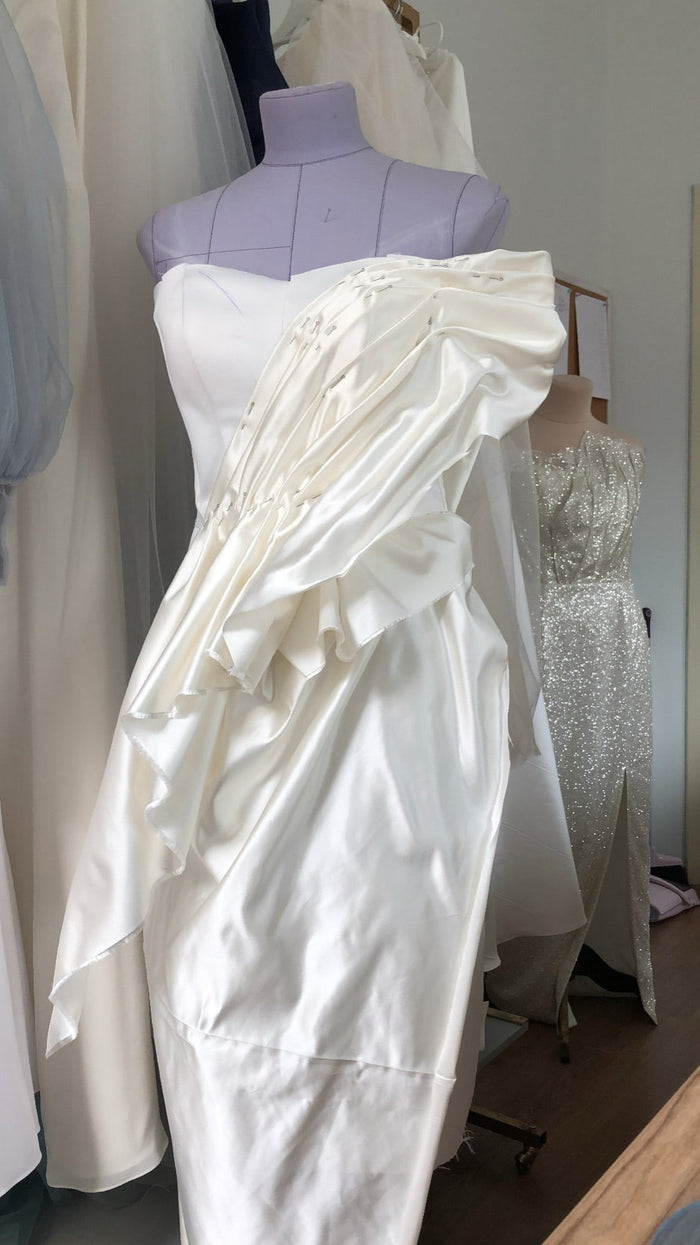
A white wedding dress creates the clearest and coolest effect of the three. It can make seam lines, folds, and architectural construction appear sharply defined. On satin, it may look luminous and polished. On matte crepe, the same color can feel more restrained and modern.
White is often a strong direction when you want a deliberately crisp dress. Think of a sculptural column, a tailored A-line, or a gown with strong graphic contrast between fabric and embellishment. It also keeps colored details distinct. Blue embroidery, black trim, or metallic beading will stand away from a white ground rather than blend into it.
The trade-off is sensitivity to light. Cool daylight can make white appear slightly blue, while warm indoor lighting can soften it. A phone screen may also make the shade look brighter than it does in person. That is why we don't approve a bridal color from an isolated digital square.
Choose white when: you want a crisp, intentional contrast and a cleaner, cooler overall palette.
What Does an Ivory Wedding Dress Look Like?
Ivory is a warm bridal neutral rather than a dark cream. It usually reads as soft white at first glance, with its warmth becoming clearer beside a pure white sample.
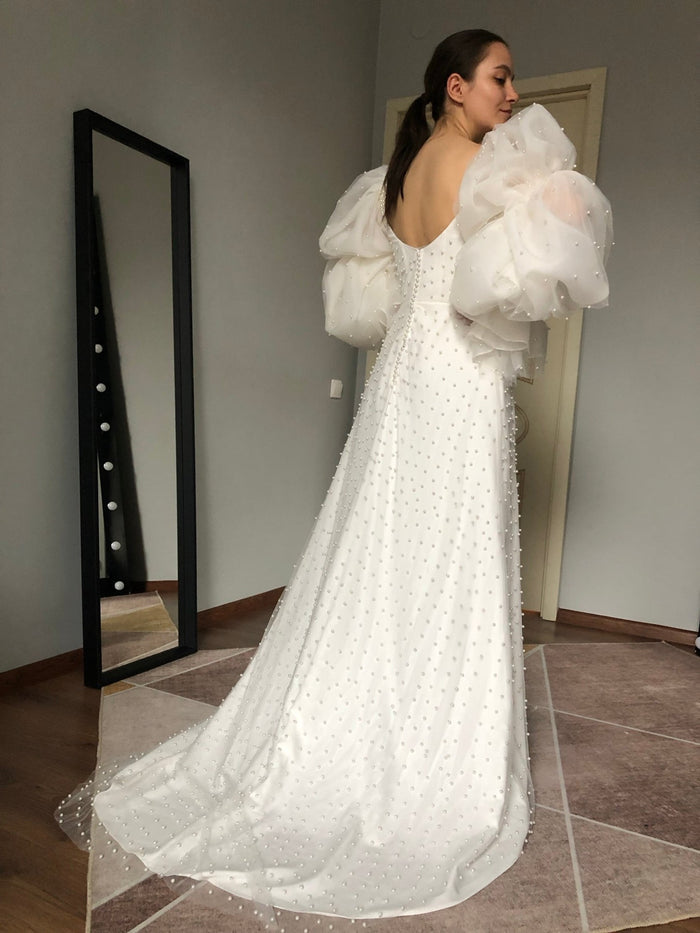
Its flexibility is the reason it works across so many designs. Ivory can soften a structured satin gown without weakening its shape. It can make lace feel integrated with its lining. In chiffon or tulle, it creates gentle depth as several translucent layers sit over one another.

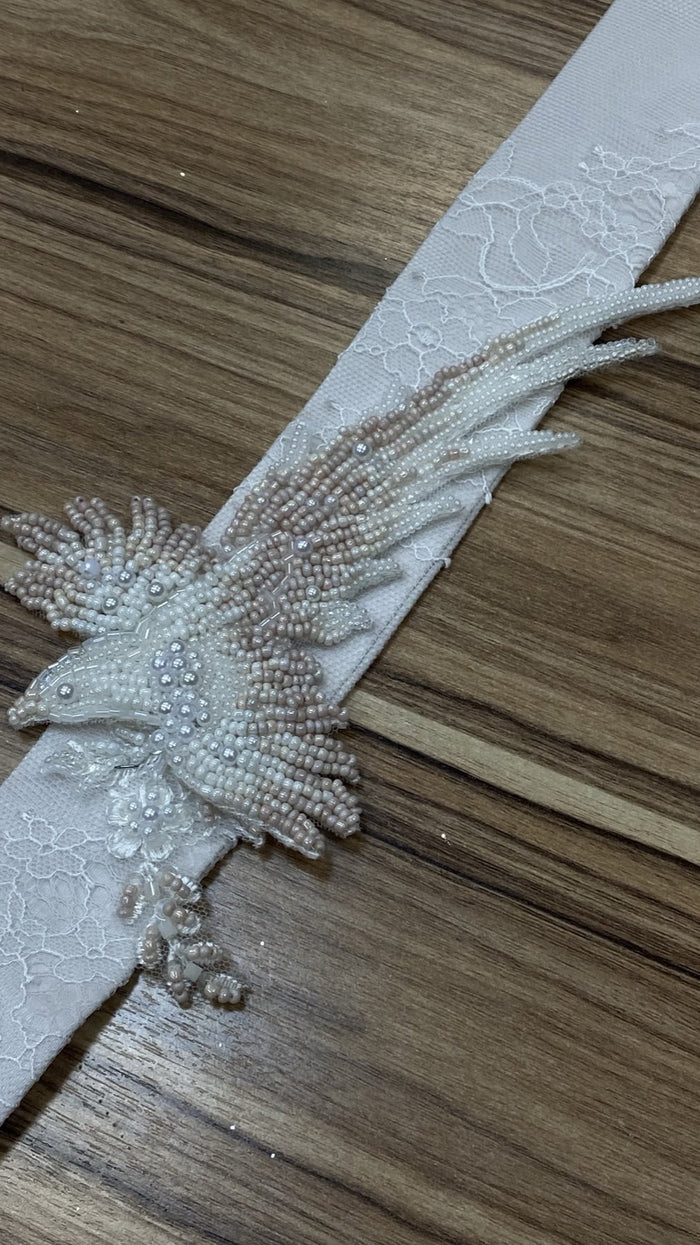
Ivory also pairs easily with pearls, clear crystals, pale gold, and restrained colored accents. It doesn't demand a romantic or traditional design. The same ivory can support a minimalist crepe column, a full satin skirt, or a heavily worked lace bodice.
If you are comparing materials too, our guide to wedding dress fabrics explains how satin, crepe, chiffon, lace, organza, and tulle behave.
Choose ivory when: you want a softer warmth while keeping the dress visually close to classic bridal white.
What Does a Champagne Wedding Dress Look Like?
Champagne is the most visibly warm option in this comparison. Its base may read as pale beige, muted gold, or soft blush-beige. The effect can be subtle under an ivory lace overlay or more pronounced when champagne fabric forms the visible surface of the gown.
Champagne is especially useful when the design depends on depth. Place ivory lace over a champagne lining, and the lace pattern becomes more legible. Add gold-toned beads or pearls, and they can feel connected to the ground color rather than placed on top of it. Layered tulle can create another result again, because every translucent layer modifies the tone beneath it.
This color doesn't have to mean vintage, bohemian, or heavily embellished. A clean champagne slip dress can feel pared back and contemporary. A champagne ballgown can be formal and architectural. Color influences mood, but silhouette and construction still lead the design.
Choose champagne when: you want warmth to be a visible part of the dress, or you want contrast beneath lace and embellishment.
Why Fabric Changes the Color You See
Color and fabric cannot be chosen independently. A reflective surface throws light back toward the viewer. A matte surface absorbs more of it. A transparent fabric blends with the layer beneath it.
Four construction details matter most:
- Surface finish: Satin can make white or ivory look brighter because its face reflects light. Crepe usually reads quieter and deeper.
- Transparency: Chiffon, organza, lace, and tulle allow the lining color to influence the finished shade.
- Layer count: Several ivory tulle layers can look richer than one layer held against a white background.
- Embellishment: Pearls, sequins, crystals, and metallic thread introduce their own undertones.
This is why a dress color should be evaluated as a material combination. A champagne lining under ivory lace is not simply champagne. It is a new palette produced by both layers.
How Lighting and Photography Shift Bridal Color
Lighting changes how every bridal neutral appears. Direct daylight reveals undertones clearly. Late-afternoon light adds warmth. Indoor bulbs can make ivory and champagne appear richer, while cool artificial light can pull white toward blue.
Photography adds another variable. Camera settings, editing, screen brightness, and the colors surrounding the dress all affect what you see. Even a reliable reference photo is better treated as a direction than an exact formula.
When you collect inspiration, include images from different angles and lighting conditions. Add a short note explaining what you like. It might be the soft warmth, the contrast under the lace, or the crisp white satin. Our guide to how to send useful dress references shows how to build a clear design brief.
Should Your Complexion Decide the Color?
Your complexion can inform the choice, but it should not dictate it. Advice that assigns white to one undertone and ivory to another often ignores the fabric, makeup, venue light, and the shade variation within each category.
A more useful test is comparative. Hold the actual fabrics near your face in natural light. Look at them again beside your planned accessories. Then step back and consider the whole design. A shade that seems warm in isolation may become balanced once lace, pearls, and lining are combined.
You also do not need to choose the shade that blends most gently with your skin. Contrast can be deliberate. If crisp white creates the graphic effect you want, that may matter more than a generalized color rule.
How to Coordinate the Dress With Veils and Accessories
Your veil does not need to come from the same fabric, but its visible undertone should relate to the dress. A cool white veil over a warm ivory gown may look brighter than expected. A champagne veil can deepen a layered look, while ivory often creates a softer transition.
Metal choices work the same way. Silver and clear crystals tend to preserve a cooler direction. Pale gold, warm pearls, and champagne beads reinforce warmth. None of these pairings is mandatory. The important point is to make the contrast deliberate.
Color is only one part of the overall proportion. If you are still deciding what shape the dress should take, use our complete wedding dress silhouette guide as your next step.
How We Choose a Custom Wedding Dress Color
We begin with what you want the dress to feel like, not with a fixed shade chart. You can send photographs, describe a mood, or tell us that every sample you have seen feels too yellow or too stark. You do not need the correct terminology.
We then separate the decisions: visible surface, lining, transparent layers, lace, and embellishment. A sketch establishes where each material sits. Fabric options show how those layers interact before production begins. The goal is not to force your idea into white, ivory, or champagne. It is to build the exact relationship between color and construction that your design needs.
Lutien Bridal custom gowns start at 1,490 euros, with an average order of 2,290 euros. The price is all-inclusive, and the final figure depends on fabric, embellishment, silhouette, and construction. Our custom wedding dress price guide explains those variables in detail.
If you want to prepare before writing, see what a design consultation should cover. The first conversation is where a color preference becomes a workable material plan.
Frequently Asked Questions
Is ivory wedding dress fabric yellow?
Ivory is warmer than pure white, but a bridal ivory should not automatically read as yellow. Its appearance depends on the specific fabric, lighting, and any layers beneath it. Compare physical options rather than relying on the color name alone.
Can I combine ivory and champagne in one dress?
Yes. An ivory lace or tulle layer over a champagne lining is a common design approach when you want visible depth. The final result depends on the transparency and number of layers.
Does a white veil work with an ivory dress?
It can, especially if you want a deliberate contrast. If you want the veil and dress to blend, compare them together in natural light before approving the pairing.
Which wedding dress color photographs best?
No single color always photographs best. White, ivory, and champagne can all photograph beautifully. Fabric finish, lighting, surroundings, and editing have as much influence as the shade name.
Do I need to know my exact shade before the consultation?
No. Bring references and describe what you like or dislike about each one. We can translate that preference into fabric and lining options during the design process.
Your Next Step
You do not need to arrive with a perfect color name. Bring the images, words, and details you already have. We will identify the pattern, sketch the design, and show how the materials can create the shade you want.
Start with a free sketch consultation at Lutien Bridal.
About the author: Vlad Ivanov is the Director of Business Development at Lutien Bridal Atelier in France. The atelier design team has produced more than 1,000 custom wedding gowns for brides in the US and Europe.