Atelier · France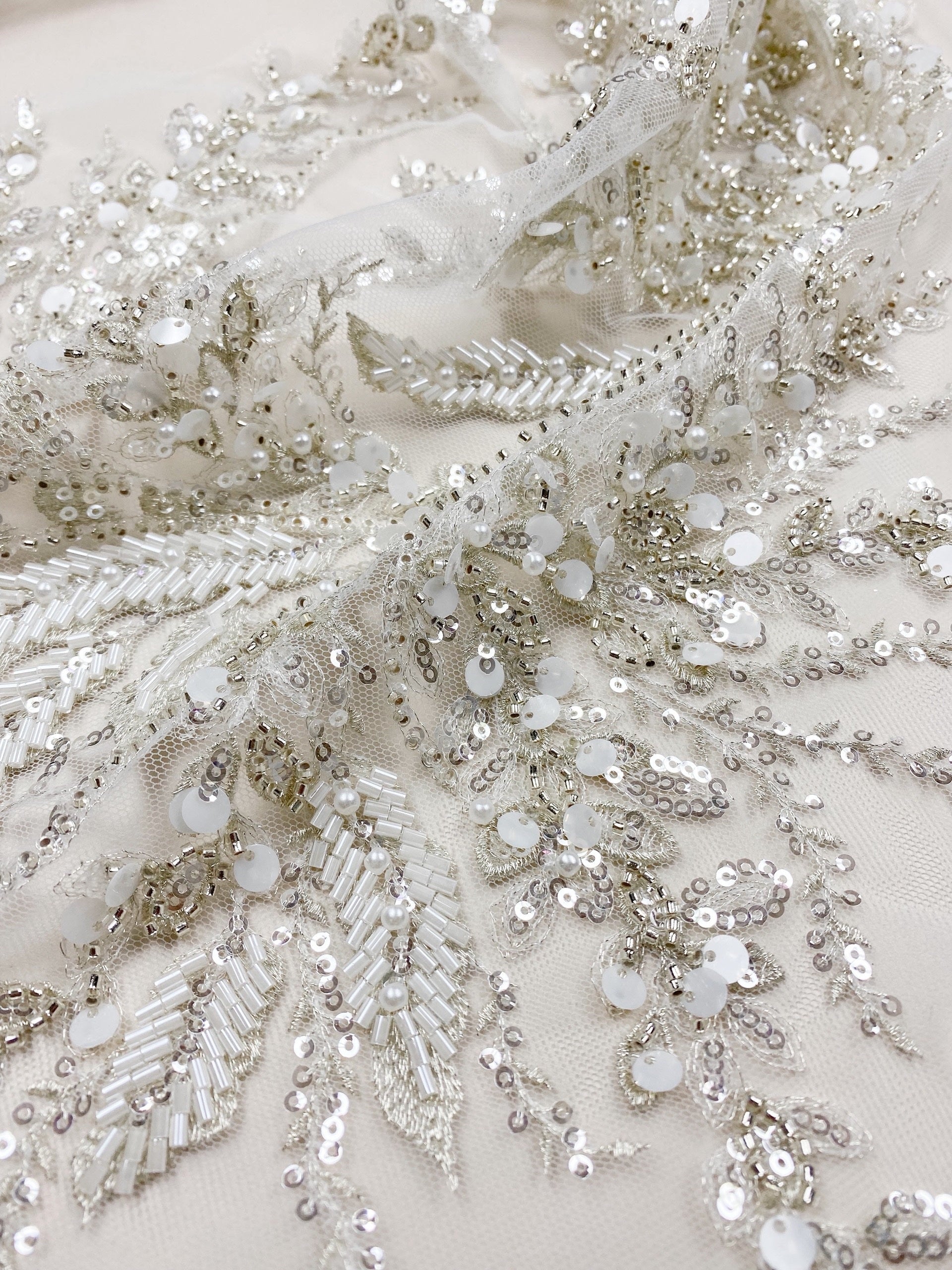

Key Takeaways
- "Hand-beaded" appears in listings regardless of whether the work is actually hand-applied, the phrase itself isn't verification.
- Hand-applied beadwork shows small, natural irregularities in spacing and density; machine or glue-applied work reads as uniformly perfect, almost printed.
- Check the back of the fabric where possible, individual hand-sewn threads look different from the backing of glued or machine-run appliqué.
- Machine and glued beading isn't inherently bad, it's a different, faster, less expensive technique. The problem is only when it's sold as hand work at a hand-work price.
- Ask directly how the embellishment is applied and by whom. A legitimate atelier answers specifically, not vaguely.
Table of Contents
- Why This Is Hard to Verify From a Photo
- What to Look For: Irregularity vs. Perfection
- Check the Back, Not Just the Front
- Machine Beading Isn't the Problem, Mislabeling It Is
- The Questions to Ask Before You Order
- FAQ
"Hand-beaded" sells. It also gets attached to dresses where the work is actually machine-run or glue-applied, because the phrase itself carries no verification. Here's how to actually check, before you pay for hand-craftsmanship you may not be getting.
Why This Is Hard to Verify From a Photo {#hard-to-verify}
At a glance, and especially in a compressed product photo, hand-applied and machine-applied beading can look similar, both put beads, sequins, or crystals onto fabric in a pattern. The differences are real but subtle, which is exactly why the claim is easy to make without evidence.
This isn't about accusing every listing of dishonesty. It's about knowing what to actually check, because the difference affects both durability and price: hand work takes far longer and costs more, for real reasons covered in our guide to what genuine hand embroidery costs and why. Embellishment is only one decision inside a larger order, and our complete guide to ordering a custom wedding dress online walks through the rest.
What to Look For: Irregularity vs. Perfection {#irregularity}
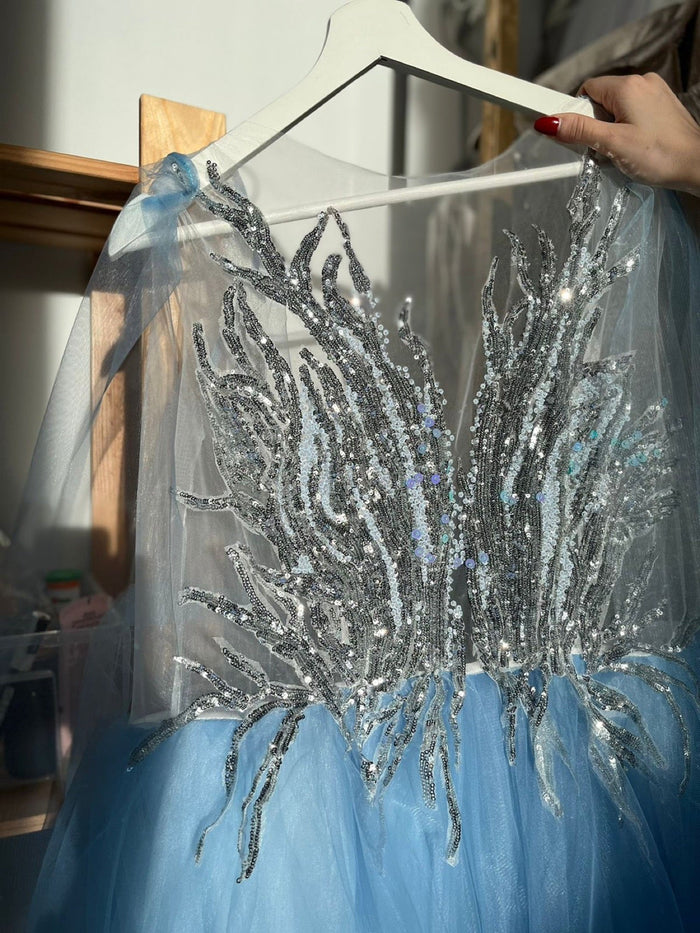
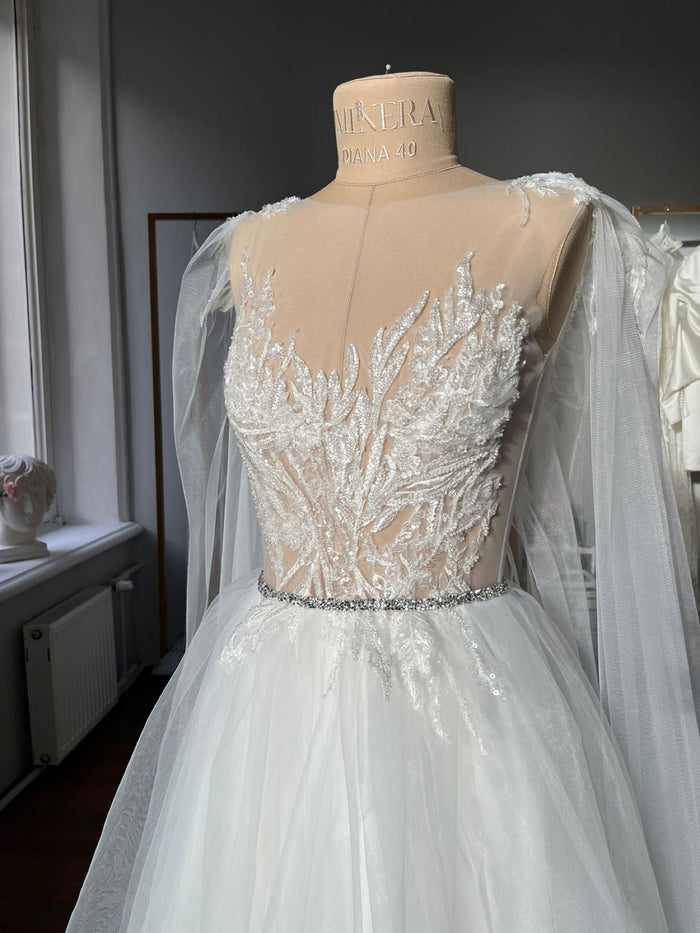
Genuine hand-applied beadwork has small, natural variation: slightly uneven spacing, minor differences in bead angle, a pattern that follows the fabric's actual curve rather than a rigid programmed grid. This isn't a flaw, it's a signature of individual placement.
Machine-run or glue-applied beading tends toward mechanical uniformity: identical spacing, identical angle, a pattern that looks closer to printed fabric than to stitched decoration. In close-up photos, this often reads as "too perfect", flatter and more repetitive than hand work.

Check the Back, Not Just the Front {#the-back}
If you can see the interior or backing of the fabric, in person, in a detailed photo, or by asking the seller directly, this is often the clearest tell. Hand-sewn beadwork shows individual thread paths on the reverse side, following the actual placement of each element. Glued appliqué shows adhesive residue or a stiff, coated backing. Machine-run beading on a pre-made trim shows a uniform manufactured tape or mesh backing, distinct from the garment's own fabric, whether that base is a fluid crepe or the satin covered in our fabric guide.

Machine Beading Isn't the Problem, Mislabeling It Is {#not-the-problem}
To be clear: machine-run and glue-applied beading aren't inherently poor techniques. They're faster, less expensive, and appropriate for a dress priced and marketed accordingly. Plenty of well-made dresses use them honestly, and the base cloth often matters more to the finished look than the beading method, which is why we start every project from the fabrics best suited to a custom gown.
The issue is specifically when this work is marketed as "hand-beaded" or "hand-embroidered" at a price that reflects genuine hand labor. That's a mismatch between what you're told and what you're paying for, not a judgment on the technique itself. If you are still deciding how much embellishment you want, our look at a simple versus an embellished wedding dress lays out the trade-offs, and our breakdown of what a custom wedding dress costs by coverage tier shows where the money goes.
The Questions to Ask Before You Order {#questions-to-ask}
Ask directly: is the beading hand-applied, machine-run, or glue-applied? Who does the hand work, and is it the same team from sketch to shipping? Can you see a close-up photo of the reverse side of a beaded panel?
A legitimate atelier answers these specifically. For a broader list of what to verify before ordering from any online atelier, see the red flags to watch for when buying a custom wedding dress online.
Start with a free sketch consultation
FAQ {#faq}
Is machine beading lower quality than hand beading?
Not inherently, it's a different technique, faster and less expensive, and appropriate when priced and marketed honestly. The concern is only when machine or glued work is sold as hand-applied at a hand-work price.
How can I tell the difference from a product photo alone?
Look for natural irregularity in spacing and angle, which suggests hand placement, versus mechanical uniformity, which suggests machine or glue application. It's not always conclusive from photos alone, which is why asking directly matters.
Does hand beading really take that much longer than machine beading?
Yes. Hand-applied beadwork is placed element by element, which is why coverage-based pricing and extended timelines exist for genuine hand work.
What should I do if I suspect a listing is mislabeling machine work as hand-beaded?
Ask the seller directly for a close-up of the reverse side of a beaded panel and a clear answer about the technique used. A legitimate seller will answer specifically rather than repeat the marketing language.
Do you ever use machine beading at Lutien Bridal?
No. All embellishment on our dresses, beading, sequins, crystals, lace appliqué, is applied by hand, which is reflected directly in our 10 to 12 week production timeline and pricing.
Guidance based on Lutien Bridal's experience building genuinely hand-applied embellishment from our atelier in France.