Atelier · France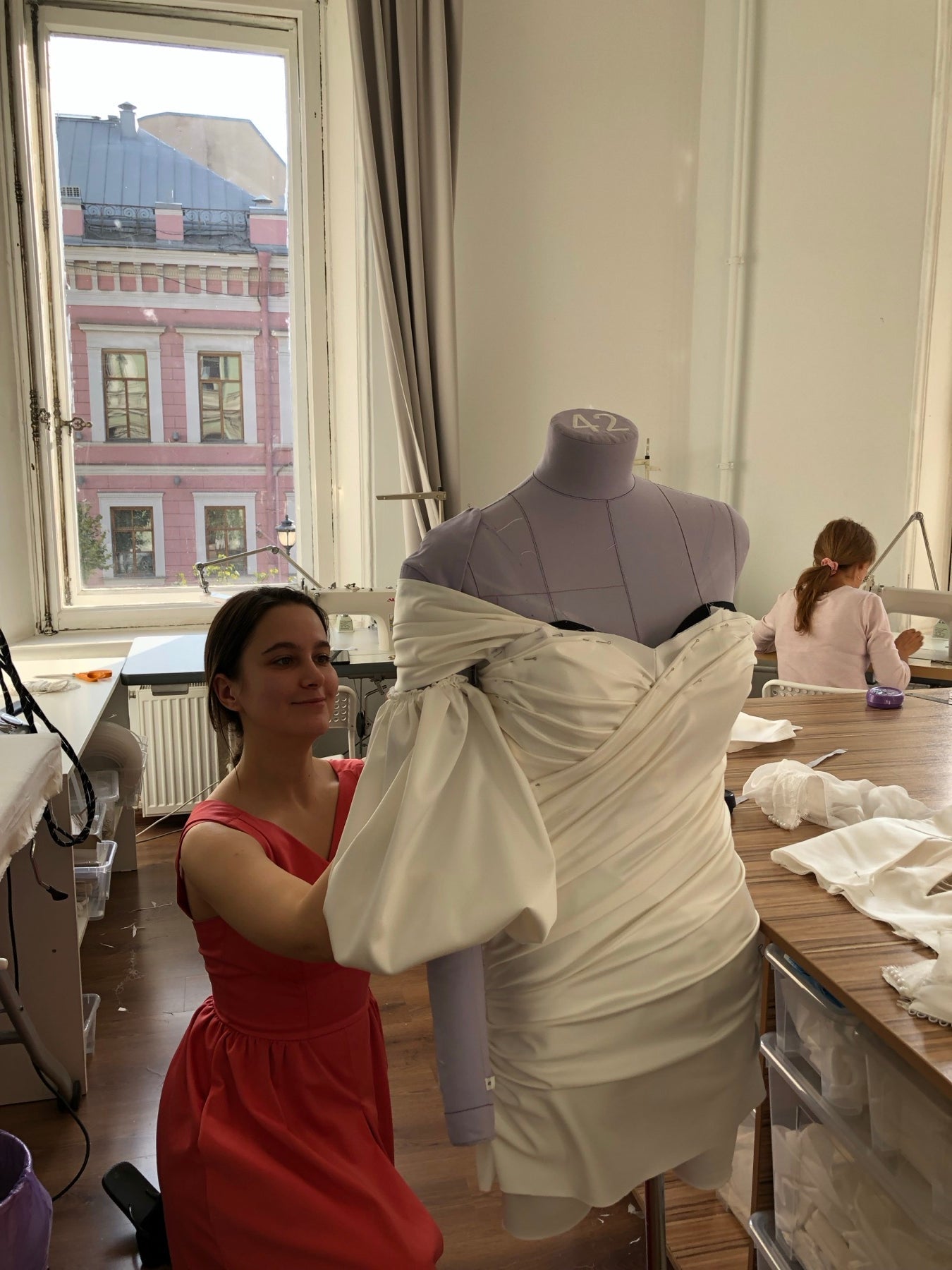

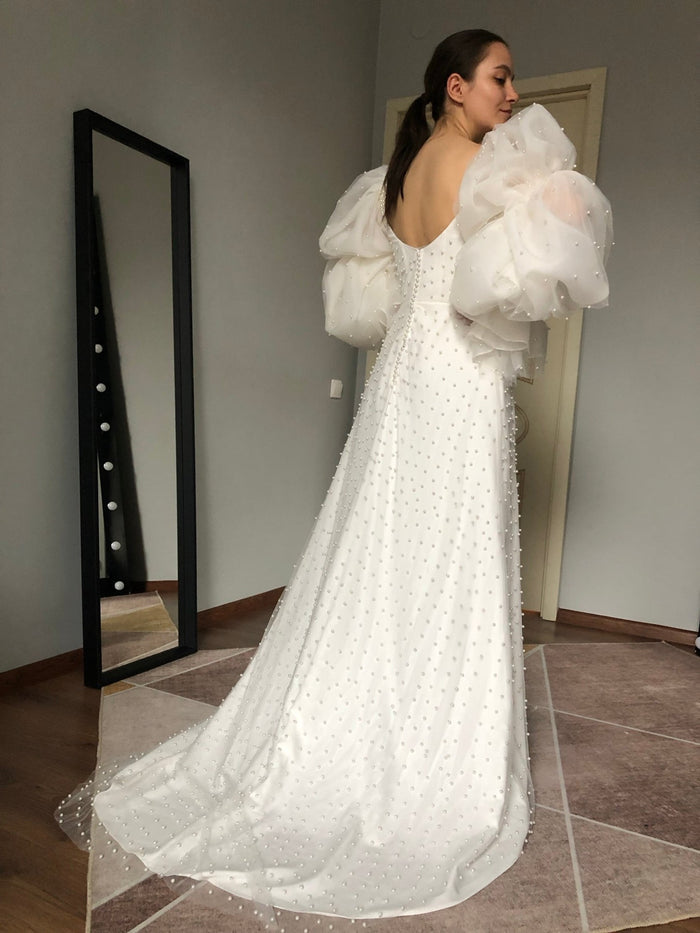
A puff sleeve is gathered into volume at the shoulder and again at a short cuff, sitting high and round on the upper arm. A bishop sleeve is fitted at the shoulder, full and billowing through the length of the arm, and gathered into a cuff at the wrist. Both are statement sleeves, and both need internal structure to hold their shape.
The choice comes down to where you want the volume: high and compact on the shoulder, or long and flowing down the arm. Either way, the sleeve is a separate construction problem from the bodice, and it is fitted for movement as carefully as it is styled.
Key Takeaways
- Puff sleeve: volume gathered at the shoulder and a short cuff, sitting high and round on the upper arm.
- Bishop sleeve: fitted at the shoulder, full down the whole arm, gathered into a wrist cuff.
- Volume is held with net, tulle, or light interfacing inside the sleeve head; without it the puff collapses.
- Both can be made detachable, attaching at the armhole with covered hooks or buttons, for a two-look dress.
- On a custom order the sleeve is fitted for full arm movement at a mockup, with your arms raised and crossed.
Puff vs Bishop
- Puff sleeve. Short. Gathered into the armhole seam at the top and into a band a few inches down. The volume is concentrated at the shoulder. Reads romantic, and balances a fuller hip or a ball gown skirt.
- Bishop sleeve. Long. Smooth over the shoulder, then increasing fullness down the arm to a gathered wrist cuff. Reads soft and ecclesiastical, and pairs beautifully with an empire waist or a fluid column.
- In between. A three-quarter bishop, a puff with a longer sheer lower sleeve, and a "juliet" (puff at the shoulder, fitted below) are all variations.
These sit alongside the other options in the sleeve styles guide.
How the Volume Is Held
A puff that keeps its shape has support inside the sleeve head:
- Net or crin gathered into the seam, springing the fabric up.
- Light interfacing on the sleeve cap.
- A separate lining sleeve in stiffer fabric that carries the shape while the outer fabric drapes over it.
A bishop sleeve needs less structure because the volume hangs rather than stands, but the wrist cuff is interfaced so it holds a clean band and the gathers stay even.
Sleeve Length and Cuff
- Puff: the band usually sits mid-bicep to just above the elbow. Higher is more compact and modern; lower is softer.
- Bishop: the cuff sits at the wrist bone. A pearl-button or covered-button cuff is a common finish.
- Both are measured down your arm to the exact point at a fitting, not to a size chart.
Detachable Sleeves
Either sleeve can be made to come off:
- Attachment. Covered hooks and bars, small buttons, or a fine zip set into the armhole seam, hidden under the bodice edge.
- Use. Full sleeves for the ceremony and portraits, bare or strapless for the reception, the same idea as a removable overskirt or a convertible design.
- Requirement. The bodice underneath is finished to stand on its own, with its own clean armhole edge.
Arm Movement
Statement sleeves can restrict lift if they are not fitted for it:
- Enough ease at the bicep and a correctly set sleeve cap so a raised arm does not drag the neckline or bodice down.
- A bishop sleeve allows more movement than a fitted long sleeve because the fullness gives room.
- A puff sleeve is short, so it rarely restricts the arm, but the armhole still has to be cut for reach.
Checked at a mockup with your arms up, forward, and crossed.
Fabrics for a Statement Sleeve
- Crisp fabrics (satin, mikado, taffeta) hold a puff with minimal internal support.
- Soft fabrics (crepe, chiffon) need net inside for a puff, and drape beautifully as a bishop.
- Sheer tulle or lace for a puff or bishop that adds shape without weight, often over a bare or illusion arm.
Fitting a Statement Sleeve Custom
Steps:
- Choose puff or bishop, and the volume level, sketched against your frame and skirt.
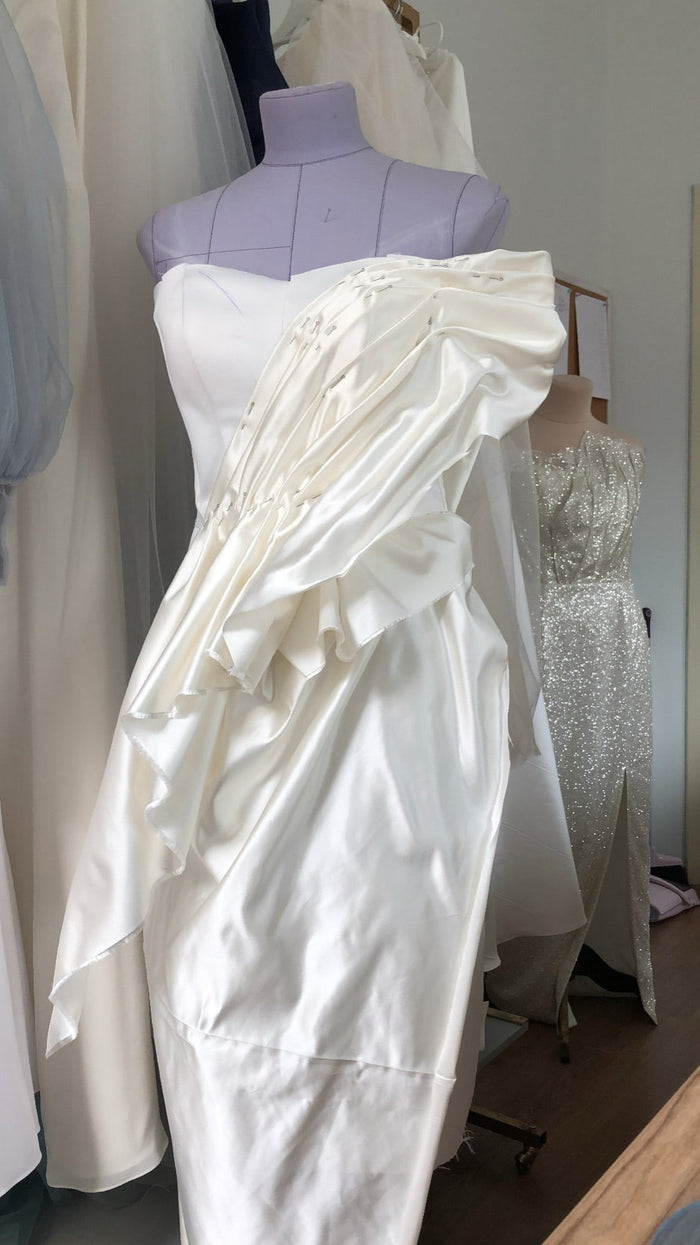
- Build the sleeve head support to hold the shape.
- Set length and cuff position on your arm.
- Movement test at a mockup, then decide fixed or detachable.
For a remote order the sleeve is built to your measurements and shown on a form in photos and video during the remote fitting process. Every dress is made over 10 to 12 weeks, with UPS shipping to the US in 3 to 5 days. A structured statement sleeve is hand-work; see the price breakdown.
FAQ
What is the difference between a puff sleeve and a bishop sleeve? A puff sleeve is short, with volume gathered at the shoulder and a short cuff, sitting high and round on the upper arm. A bishop sleeve is long, fitted at the shoulder and full down the arm to a gathered wrist cuff. Puff concentrates volume at the shoulder; bishop flows down the arm.
How does a puff sleeve keep its shape? With support inside the sleeve head: net or crin gathered into the seam, light interfacing on the cap, or a separate stiffer lining sleeve. Without internal structure the puff collapses within an hour.
Can statement sleeves be removed for the reception? Yes. Either sleeve can be made detachable, attaching at the armhole with covered hooks, buttons, or a fine zip hidden under the bodice edge. The bodice underneath is finished with its own clean armhole so it stands alone.
Do puff or bishop sleeves restrict arm movement? Not if fitted for it. A puff is short and rarely restricts the arm. A bishop allows more movement than a fitted long sleeve because the fullness gives room. The armhole is cut for reach and tested with arms raised at a mockup.
Which fabric holds a puff sleeve best? Crisp fabrics like satin, mikado, and taffeta hold a puff with minimal internal support. Soft fabrics like crepe and chiffon need net inside for a puff but drape beautifully as a bishop sleeve.
Want a statement sleeve built to hold its shape and let you move? Start with a sketch consultation at Lutien Bridal.
About the author: Vlad Ivanov is the Director of Business Development at Lutien Bridal Atelier in France, home to the design team behind more than 1,000 custom wedding gowns delivered to brides across the US and Europe.