Atelier · France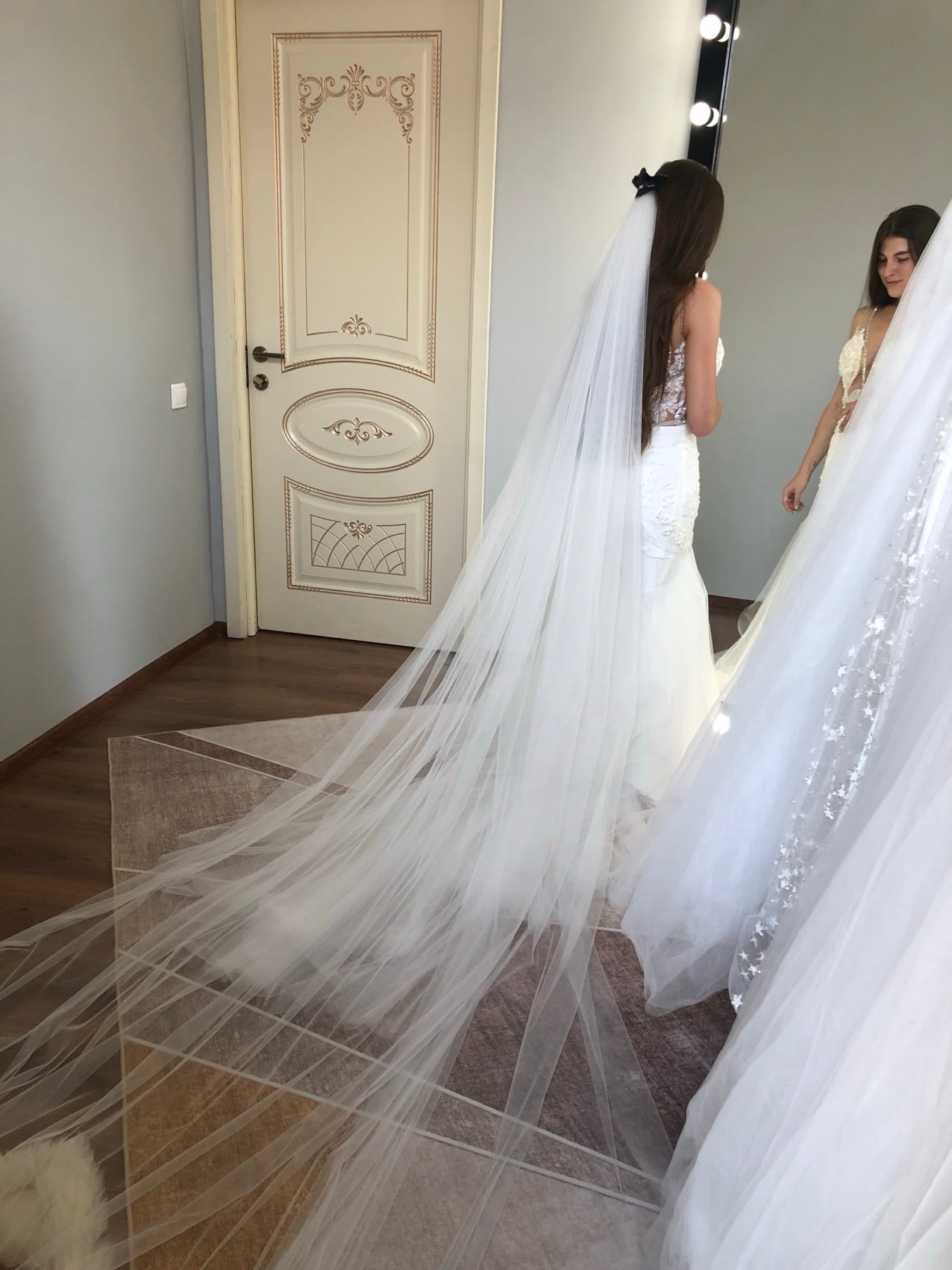

A spaghetti strap wedding dress has very fine shoulder straps, often a few millimeters wide, on an otherwise unstructured or lightly structured bodice. It reads delicate and undone, and it suits a soft slip, a bias-cut column, or a fluid A-line.
The design question is where the support comes from. A thin strap cannot hold up a heavy or structured dress on its own, and a strap tight enough to try will dig into your shoulder all day. On a well-made thin-strap dress the bodice carries the weight and the straps only stop it sliding.
Key Takeaways
- Spaghetti straps are very fine shoulder straps on a soft or lightly structured bodice.
- The straps are not the support. A boned or firmly fitted bodice holds the dress up; the straps just keep it from sliding.
- A thin strap that carries real weight digs into the shoulder. If it hurts, the bodice is not doing its job.
- Straps can be a single cord, a double or triple strand, or a fine chain; placement is set so they sit flat and do not slip off.
- On a custom order the bodice is fitted to stay up on its own, then the straps are placed and length-set on you.
What Spaghetti Straps Are
Fine straps, from a rouleau cord to a narrow flat strap, running from the front bodice over the shoulder to the back. They can be:
- Straight, front to back over the shoulder.
- Crossed at the back for a detail and a little more security.
- Adjustable, with a small covered slide hidden at the back.
They sit between a strapless design and a wider strap or off-the-shoulder band.
Where the Support Comes From
Not the straps. The bodice:
- Light boning at the side seams and center front to keep the top edge from folding down.
- A firm fit to the ribcage so the dress sits on the body.
- Built-in cups or a bra layer for bust support and shape.
- Sometimes an internal corselette or grip band so the dress stays put with the straps relaxed.
The straps are attached last and set to a length where they lie flat with no tension. On a correctly built dress you should be able to slip a finger under the strap easily.
What Thin Straps Can and Cannot Hold
- Can: a soft slip dress, a bias column, a fluid A-line, a lightly beaded overlay.
- Struggle with: a heavy satin skirt, a full ball gown, a densely beaded bodice, or a long structured train, unless the bodice is doing all the work and the straps are genuinely decorative.
If a design needs the straps to hold weight, we either add bodice structure or widen the straps.
Stopping Straps Digging or Slipping
- Bodice first. If the straps carry no load, they cannot dig in. This is the main fix.
- Placement. Set toward the neck side of the shoulder, not the outer edge, so they do not slide off when you move your arms.
- A slight cross or a back detail adds security without widening the strap.
- A small hidden loop at the back to clip a bra strap to, if you wear one, so nothing shows or shifts.
- Length checked seated and with arms raised, because a strap that is fine standing can pull when you lift your arms.
Strap Styles
- Single rouleau cord. The classic spaghetti strap, a thin tube of dress fabric.
- Double or triple strand. Two or three fine cords side by side, a delicate detail.
- Fine chain or crystal strap. A jewelry-like strap on a plain bodice, matched to any beading on the dress.
- Strap into a low back. Fine straps that continue into a backless or crossed-back design.
Fabrics and Silhouettes
- Crepe and silk for a soft slip or bias column, the natural home of the thin strap.
- Light lace over a slip lining.
- Fluid A-line in chiffon or georgette.
- Pairs well with a minimalist design where the strap is the only detail up top.
Fitting a Thin-Strap Dress Custom
Steps:
- Fit the bodice to stay up on its own, boned and firm, with the straps off.
- Add bust support sized to you, built in.
- Place the straps toward the neck side of the shoulder and set the length so they lie flat.
- Movement test at a mockup: arms raised, seated, dancing.
For a remote order the bodice and strap placement are fitted on a form to your measurements and confirmed with photos and video during the remote fitting process. Every dress is made over 10 to 12 weeks, with UPS shipping to the US in 3 to 5 days. See the price breakdown for what affects the cost.
FAQ
Do spaghetti straps actually hold the dress up? No. On a well-made thin-strap dress the bodice holds the dress up, boned and firmly fitted to the ribcage, often over an internal grip layer. The straps only stop it sliding. If the straps are carrying weight, they will dig into your shoulder.
Why do my dress straps keep slipping off my shoulders? Usually because they are set too far toward the outer edge of the shoulder. Placed toward the neck side, and with a slight cross or back detail, they stay put. A custom dress sets the placement on your body.
Can a spaghetti strap dress have a full skirt or a train? Only if the bodice does all the support work and the straps are genuinely decorative. A heavy satin skirt, a full ball gown, or a long structured train usually needs a firmer bodice or wider straps.
Will thin straps hurt after a few hours? Not if the bodice is holding the dress and the straps carry no load. Strap pain is the sign that the bodice is under-built. It is fixed by adding bodice structure, not by tightening the straps.
Can I wear a bra with a spaghetti strap dress? Built-in cups or a bra layer are usually made into the bodice so you do not need one. If you prefer your own, a small hidden loop can be added at the back to clip the bra strap to so nothing shows or shifts.
Want a fine-strap dress that stays up without digging in? Start with a sketch consultation at Lutien Bridal.
About the author: Vlad Ivanov is the Director of Business Development at Lutien Bridal Atelier in France, home to the design team behind more than 1,000 custom wedding gowns delivered to brides across the US and Europe.