Atelier · France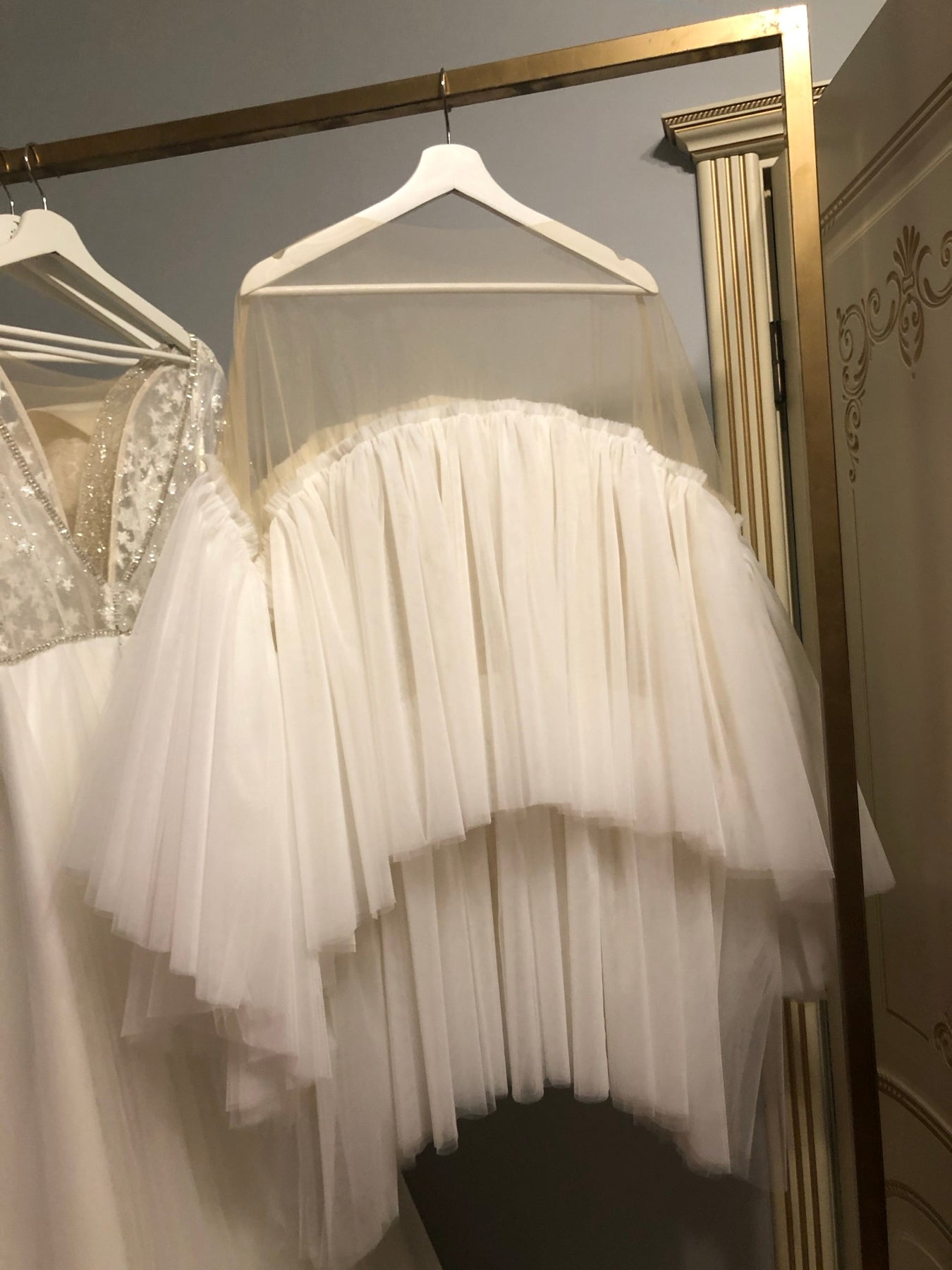

A tiered skirt is built from horizontal bands of fabric, each gathered onto the one above, so the skirt grows fuller toward the hem. A ruffled skirt does the same with softer, more frequent frills. Both create volume and a lot of movement, and they read romantic and a little undone rather than structured.
The design decisions are how many tiers, how deep each one is, and which fabric, because those together set how full the skirt looks, how much it weighs, and how much it moves when you walk.
Key Takeaways
- A tiered skirt is horizontal bands of fabric, each gathered onto the one above, growing fuller toward the hem.
- Fewer, deeper tiers read structured and modern; more, shorter tiers read soft and romantic.
- Tulle and organza give volume with almost no weight; satin and crepe tiers are heavier and fall closer to the body.
- Volume comes from the gathering ratio and the fabric, not from a stiff underskirt, so a tiered skirt can move a lot.
- On a custom order the tier count, depth, and gathering are set to your height so the proportions suit you.
Tiered vs Ruffled
- Tiered. A small number of defined horizontal bands, each visibly deeper or fuller than the last. The tier lines are part of the design.
- Ruffled. More frequent, softer frills, sometimes overlapping, so the surface looks textured rather than banded.
- Cascading ruffle. A single ruffle that spirals or runs diagonally down the skirt, covered in the cascading ruffle guide.
How a Tiered Skirt Is Built
Each tier is a strip of fabric cut wider than the tier above it, gathered evenly along its top edge, and joined to the hem of the tier above. The gathering ratio (how much wider the strip is than what it attaches to) sets the fullness: a 1.5:1 ratio is gentle, 2:1 is full, 3:1 is very full.
The skirt hangs from the bodice waist seam, with a lining that is usually smooth and slightly shorter than the outer tiers.
Number and Depth of Tiers
- Two or three deep tiers. Modern, architectural, each band clearly visible. Works in satin or mikado.
- Four to six medium tiers. The classic tiered look, balanced between structure and softness.
- Many shallow tiers or ruffles. Very soft and romantic, best in tulle or chiffon.
Tier depth is often graded, shorter at the top and deeper toward the hem, so the skirt widens gradually.
Fabrics and How They Move
- Tulle and organza. Maximum volume, minimum weight, lots of bounce. The skirt floats.
- Chiffon and georgette. Soft, fluid ruffles that ripple rather than bounce.
- Satin and crepe. Heavier tiers that fall closer to the body and swing rather than float. Fewer tiers.
- Lace tiers over tulle add texture at each band.
Volume Without Weight
A tiered tulle skirt gets its shape from the gathering and the springiness of the fabric, not from a heavy crinoline or boning. That means it can be full and still light enough to dance in, and it packs and travels better than a structured ball gown. A light underskirt can be added for extra lift if you want it.
Proportion and Height
Tier placement changes your proportions:
- On a petite frame, fewer tiers and a higher first tier keep the leg line long; too many horizontal bands can shorten it. See the petite bride guide.
- On a tall frame, more tiers fill the length and the horizontal lines are flattering. See the tall bride guide.
- The first tier is usually placed at the hip or upper thigh, not the waist, so the bodice-to-skirt transition stays clean.
Planning a Tiered Skirt Custom
Steps:
- Choose tiered or ruffled, and roughly how full, from reference images.
- Set the tier count and depth to your height, drawn on the sketch.
- Choose the fabric for the movement you want.
- Confirm on a mockup, walking and turning, and adjust the gathering.
For a remote order the skirt is built to your measurements and its movement shown on a form in photos and video during the remote fitting process. Every dress is made over 10 to 12 weeks, with UPS shipping to the US in 3 to 5 days. Many gathered tiers are hand-work; see the price breakdown.
FAQ
What is a tiered wedding dress skirt? A skirt built from horizontal bands of fabric, each cut wider than the one above and gathered onto it, so the skirt grows fuller toward the hem. Fewer, deeper tiers read structured; more, shorter tiers read soft and romantic.
Is a tiered skirt heavy? Not in tulle or organza. The volume comes from the gathering and the fabric's springiness, not a heavy underskirt, so a tiered tulle skirt can be very full and still light enough to dance in. Satin or crepe tiers are heavier and use fewer bands.
How many tiers should a wedding dress have? Two or three deep tiers for a modern, architectural look; four to six medium tiers for the classic tiered look; many shallow tiers for a very soft, romantic effect. The count is set to your height so the proportions suit you.
Where does the first tier sit? Usually at the hip or upper thigh rather than the waist, so the bodice-to-skirt transition stays clean and the horizontal tier lines start lower on the body.
Do tiered skirts suit petite brides? Yes, with fewer tiers and a higher first tier so the leg line stays long. Too many horizontal bands can visually shorten a petite frame, so the tier count and placement are adjusted to your proportions.
Want a full, moving tiered skirt scaled to your height? Start with a sketch consultation at Lutien Bridal.
About the author: Vlad Ivanov is the Director of Business Development at Lutien Bridal Atelier in France, home to the design team behind more than 1,000 custom wedding gowns delivered to brides across the US and Europe.