Atelier · France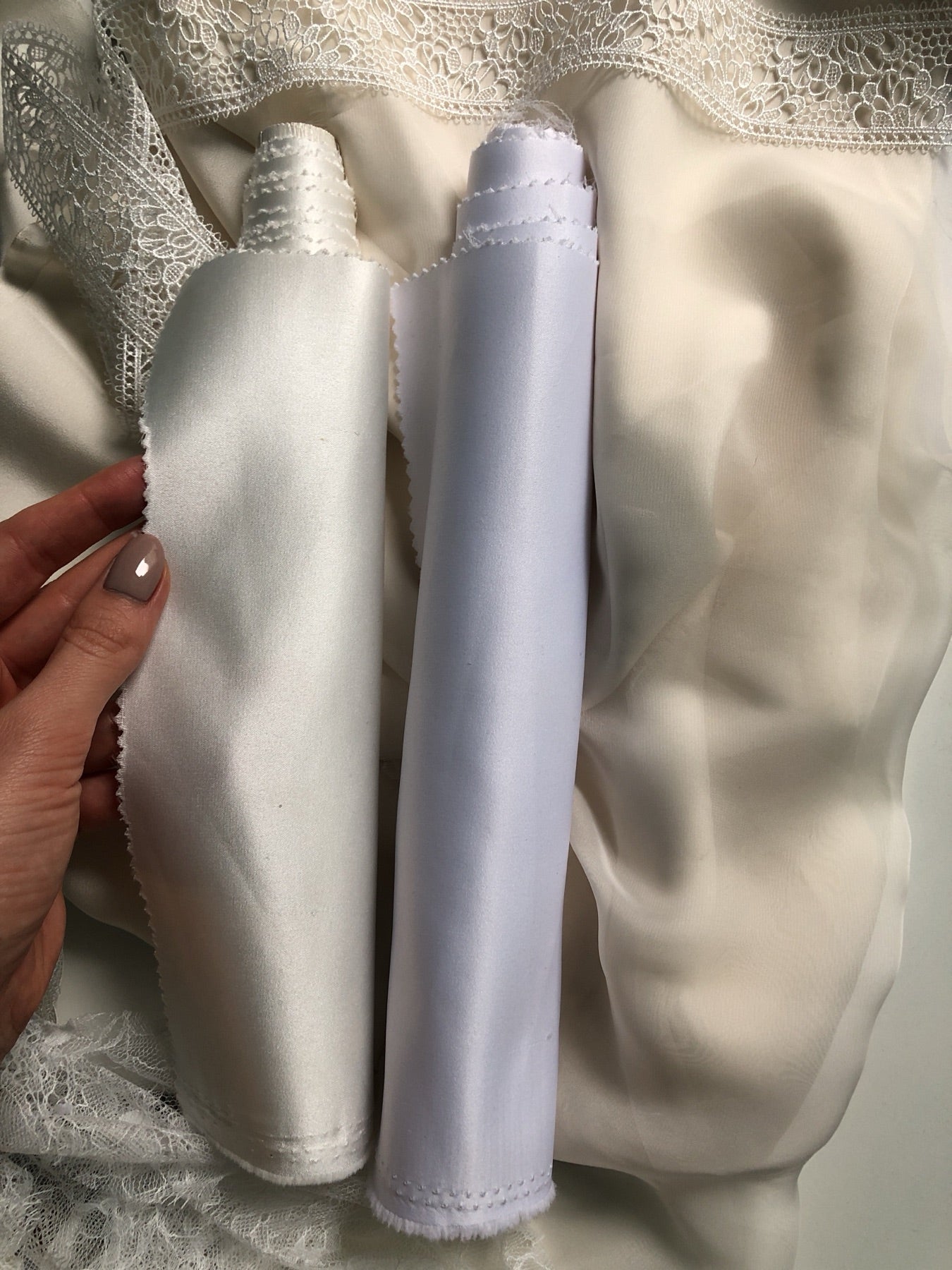

Natural silk is a protein fiber spun by silkworms. Artificial silk is a group of manufactured fibers, mainly polyester and viscose, engineered to imitate silk's look and handle. Both can be woven into satin, crepe, chiffon, and organza, so the same fabric name can describe either one.
The choice affects how the dress looks under different light, how it feels through a long day, how it needs to be cared for, and what it costs. It does not decide whether the dress is well made. A skilled atelier builds a beautiful gown in either fiber. This guide explains the real differences so you can choose deliberately.
Key Takeaways
- Natural silk has a soft, shifting sheen and a slightly irregular surface. Artificial silk often has a brighter, more uniform shine.
- Natural silk usually feels cooler and more breathable against the skin over a long day. Some artificial silks trap warmth.
- Artificial silk resists wrinkles and water marks better and is more forgiving to travel with.
- Natural silk costs significantly more per meter, which is a large part of the price difference between gowns.
- The best choice depends on the design, the venue climate, your budget, and how the dress will travel. We test both against your specific gown before deciding.
What Each Term Means
Natural silk is a single natural fiber. In bridal it usually appears as silk satin, silk crepe, silk chiffon, silk organza, or silk mikado (a heavier blend).
Artificial silk is our term for manufactured fibers made to perform like silk. The two most common in bridal are polyester, which is durable and holds structure and color well, and viscose (also called rayon), which drapes softly and feels closer to natural silk but wrinkles more. We use "artificial silk" rather than "faux silk" because it describes the fabric accurately without implying it is a lesser copy.
A fabric labeled "satin" or "crepe" tells you the weave and finish, not the fiber. Always confirm the fiber content, because that is what determines the differences below. Our fabric guide for custom gowns covers the weaves in detail.
Appearance: Sheen and Color
The clearest visual difference is the quality of the shine.
- Natural silk reflects light unevenly because the fiber surface is slightly irregular. The sheen shifts as you move and photographs with depth rather than a hard highlight. Colors read as soft and slightly warm.
- Artificial silk, especially polyester satin, tends to reflect light more uniformly. The shine is brighter and more consistent, which some brides love and others find too glossy. Viscose sits between the two.
Neither is better. A high-shine polyester duchess satin is the right call for a sculptural, formal gown. A soft silk crepe is right for a dress meant to look understated. The question is what effect your design wants. Our article on how we select fabrics for each order explains how we test sheen against your skin tone and your venue lighting.

Feel and Temperature
This matters most for a long wedding day, especially outdoors or in a warm season.
In our fittings, natural silk generally feels cooler against the skin and moves air more readily. Brides often describe it as lighter to wear even at the same fabric weight. Polyester, by contrast, can hold warmth, which is noticeable during a summer ceremony or a long reception. Viscose tends to feel cooler than polyester and closer to silk.
If your wedding is in a hot climate, a garden setting, or a destination location, we weigh this heavily. A lining choice can also change how warm any outer fabric feels, so the fiber is not the only lever.
Drape and Structure
Both fibers can be woven for softness or structure, so drape is more about the specific fabric than the fiber category. That said:
| Fabric | Natural silk version | Artificial silk version |
|---|---|---|
| Crepe | Fluid, matte, falls close to the body with soft movement | Similar drape in viscose; polyester crepe can feel slightly firmer |
| Satin | Liquid drape with a soft sheen; heavier silk satins sculpt well | Polyester satin holds a crisper edge and more body; strong for structured shapes |
| Chiffon | Very light, drifts and floats | Polyester chiffon is light but can feel wirier |
| Organza | Crisp with a soft hand | Polyester organza is crisp and holds a sharper pleat |
For a fluid sheath or column, a silk or viscose crepe gives the most natural fall. For a structured ball gown, a firm polyester satin or a silk mikado both work well.
Care, Wrinkles, and Travel
Artificial silk is the more practical fiber in daily handling.
- Wrinkles. Polyester resists creasing and recovers quickly. Natural silk and viscose crease more and may need steaming before the ceremony.
- Water marks. A drop of water can leave a temporary ring on natural silk satin that needs steaming to clear. Polyester is largely unaffected.
- Travel. For a dress that flies to the wedding, polyester survives a garment bag better. Natural silk needs more careful packing and a plan to steam on arrival. Our destination wedding dress guide covers packing either fiber.
- Cleaning and storage. Both should be professionally cleaned. Natural silk is more sensitive to light and humidity in long-term storage, which our heirloom preservation guide addresses.
Price
Natural silk costs considerably more per meter than artificial silk, and a wedding dress uses several meters. This is one of the largest single factors in why one custom gown costs more than another of the same design.
Choosing artificial silk for the main fabric, or for the lining and understructure while keeping natural silk where it shows, is a legitimate way to control the budget without changing the silhouette. Our price breakdown explains where fabric sits among the cost drivers. At Lutien Bridal, our higher tiers use natural silk, and we are transparent about which fabric a given quote assumes.
How We Choose for Your Dress
We do not pick the fiber first. We start from the design, the venue, and the budget, then test fabrics against all three:
- The effect. Soft and understated points toward silk or viscose. Sculptural and high-shine points toward polyester satin.
- The climate. A warm-weather or outdoor wedding weights the choice toward natural silk or viscose for comfort.
- The journey. A dress that travels far leans toward a wrinkle-resistant fiber, or a plan to steam natural silk on site.
- The budget. Fabric is adjustable. We can move natural silk to where it is seen and use artificial silk elsewhere.
You see and handle the actual candidate fabrics during the design process, described in our sketch-to-dress article, before anything is ordered. Every dress is then made to your measurements over 10 to 12 weeks, with UPS shipping to the US in 3 to 5 days.
FAQ
Is a natural silk wedding dress worth the extra cost? It depends on what you value. Natural silk gives a softer, shifting sheen and generally feels cooler and lighter to wear. If those qualities matter to you and the budget allows, many brides find it worth it. A well-made artificial silk gown still looks and photographs beautifully.
What is artificial silk made of? Most often polyester or viscose (rayon). Polyester is durable, wrinkle-resistant, and holds structure. Viscose drapes more softly and feels closer to natural silk but creases more. We use "artificial silk" rather than "faux silk" because it describes the fabric without implying it is inferior.
Does artificial silk look cheap? Not inherently. A poor-quality synthetic with a harsh, plasticky shine can. A good polyester or viscose satin, cut and constructed well, reads as a considered choice. The construction and fit matter more to how a dress looks than the fiber alone.
Which is better for a summer or outdoor wedding? Natural silk or viscose. Both tend to feel cooler and more breathable than polyester over a long, warm day. Lining choice also affects warmth, so the outer fiber is not the only factor.
Can one dress use both natural and artificial silk? Yes, and it is common. Natural silk can be used where it is visible, with artificial silk for linings, underskirts, and structure. This keeps the look while managing the cost, and we tell you exactly which fabric each part of the quote assumes.
Want to compare fabrics against your design, your venue, and your budget? Start with a free sketch consultation at Lutien Bridal.
About the author: Vlad Ivanov is the Director of Business Development at Lutien Bridal Atelier in Ansignan, France, home to the design team behind more than 1,000 custom wedding gowns delivered to brides across the US and Europe.