Atelier · France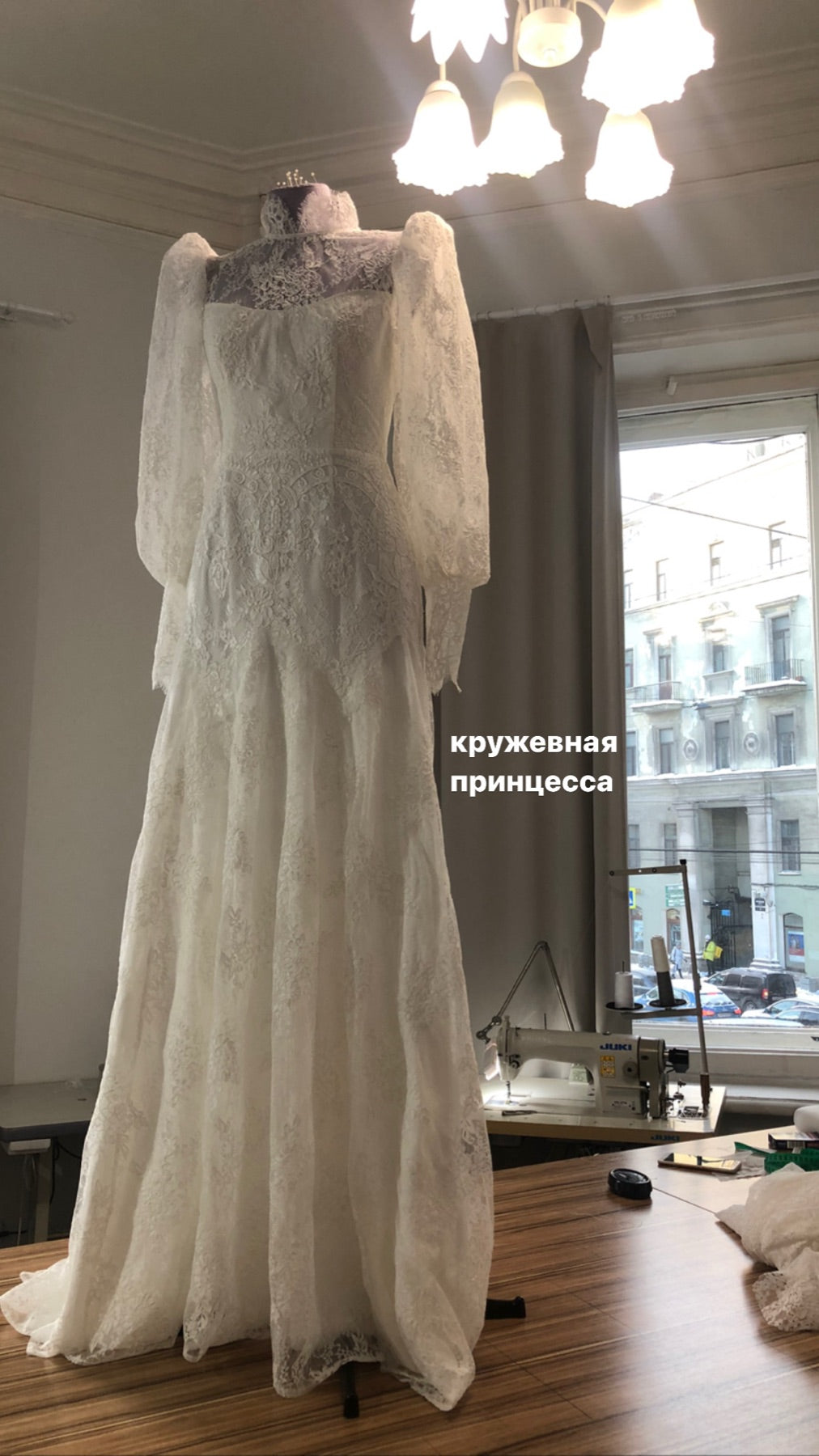

A winter wedding dress does not have to be a heavy dress. The goal is warmth without bulk: fabrics with more body, more coverage through sleeves and necklines, an invisible layer against the skin, and a cover-up that belongs to the look rather than being borrowed at the last minute.
Custom is well suited to this, because the warmth is planned into the dress from the start rather than solved on the day with a coat that does not match.
Key Takeaways
- Heavier fabrics like mikado, crepe, and velvet hold warmth better than chiffon or fine tulle.
- Long sleeves, a higher neckline, and a closed back cut the amount of exposed skin significantly.
- A silk or thermal base layer adds warmth invisibly under the gown.
- Plan the cover-up as part of the design: a cape, a bolero, a faux-fur stole, or a coat in a matching fabric.
- The venue matters most. An indoor reception with a cold outdoor photo session is a different problem from an outdoor ceremony.
Start With the Venue and the Timeline
Before fabric, map the day. How long are you outside, and when? A five-minute walk to the car is different from a thirty-minute outdoor ceremony or a golden-hour photo session in the cold.
- Indoor ceremony and reception, brief outdoor moments. The dress can be almost anything. Solve the cold with a cover-up for the transitions.
- Outdoor ceremony. The dress itself needs to work: heavier fabric, sleeves, a base layer, and a cover-up you can keep on.
- Long outdoor photo session. Plan a warm layer that comes on and off quickly between shots.
Fabrics That Hold Warmth
Weight and weave affect how a fabric holds heat.
| Fabric | Warmth | Notes |
|---|---|---|
| Mikado | High | A heavy structured blend. Holds a sculptural shape and blocks wind well. |
| Crepe | Medium to high | Dense and matte. Our crepe guide covers how it behaves. |
| Velvet | High | Warm, rich, and seasonal. Best in a fitted or column shape. |
| Duchess satin | Medium to high | Heavy satin with body. Formal and wind-resistant. |
| Lace over a lined base | Medium | The lining does the work; lace alone is not warm. |
| Chiffon, georgette, fine tulle | Low | Beautiful but cold. Fine for indoors, not for an outdoor winter ceremony on their own. |
Our fabric guide for custom gowns has the full comparison. For winter, a heavier outer fabric plus a warm lining is the core of the plan.
Coverage: Sleeves, Necklines, Backs
Reducing exposed skin is the simplest warmth lever.
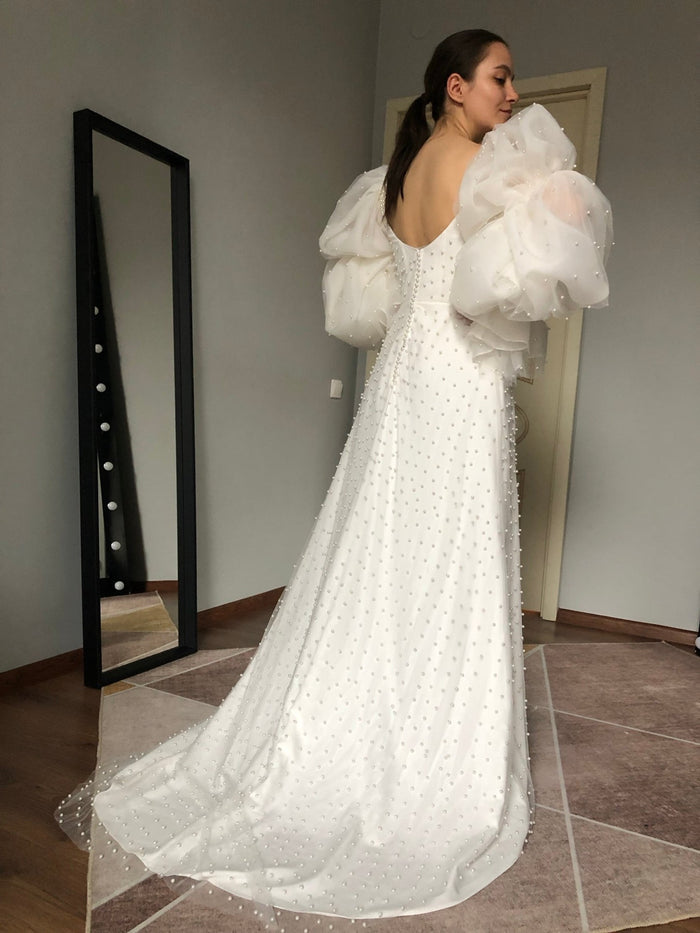
- Long sleeves. Bishop, fitted, or a lined lace sleeve. Our sleeve styles guide covers the options. A lined sleeve is much warmer than a sheer one.
- A higher neckline. A bateau, high round, or modest V keeps the chest and collarbones covered. See our necklines guide.
- A closed or high back rather than a deep open back, which is a significant source of heat loss.
- A longer, fuller skirt traps more air around the legs than a fitted or short one.
You do not have to cover everything. A long-sleeve dress with a modest V and a closed back is warm enough for most indoor winter weddings without feeling heavy.
The Invisible Layer
A thin base layer adds warmth that no one sees.
- A silk or merino thermal top and leggings under the gown, in a colour close to your skin, add a surprising amount of warmth for almost no bulk.
- A fuller lining in the dress itself, chosen for warmth rather than the lightest option.
- Tights in a sheer nude, which also help with shoes.
We build the dress to sit correctly over whatever base layer you choose, which is why we ask you to bring it to fittings, the same rule as for your undergarments.
Cover-Ups That Match the Dress
A cover-up designed with the gown looks intentional. A borrowed coat rarely does.
- A cape or capelet in a matching or coordinating fabric, attached or separate. Covered in our cape wedding dress guide.
- A bolero or shrug in lace, satin, or a fine wool crepe, for the ceremony and photos.
- A faux-fur or velvet stole, warm and easy to remove for the reception.
- A tailored coat in ivory wool or a matching satin, made to sit over the gown.
Any of these can be part of the custom order, so the colour and fabric are right.
Practical Winter Details
- Hems and salt. Snow, slush, and road salt stain a hem. A shorter or detachable train, and a hem finish that can be cleaned, both help.
- Static. Dry winter air and synthetic linings create static cling. A natural-fibre lining reduces it.
- Shoes. Have a warm, closed pair for outdoors and change into your ceremony shoes inside.
- The car. Getting a full skirt and a cover-up into a car is easier with a shorter train and a cover-up that unclips.
Planning a Winter Dress as a Custom Order
The decisions:
- The exposure map. How long outside, and when.
- Outer fabric and lining, weighted toward warmth.
- Coverage: sleeves, neckline, and back.
- The base layer the dress is fitted over.
- The cover-up, designed with the gown.
We start with a conversation about the venue and the day's structure, then translate it into a sketch you approve before any fabric is cut. Our design process walks through each stage. Every dress is made to your measurements over 10 to 12 weeks, with UPS shipping to the US in 3 to 5 days, from a starting price of 1,490 euros. Our price breakdown explains what changes the cost.
FAQ
What is the warmest wedding dress fabric? Mikado, velvet, and heavy duchess satin hold warmth and block wind better than lightweight fabrics. A lined lace or crepe dress is moderately warm. Chiffon, georgette, and fine tulle are cold on their own and are better kept for indoor winter weddings.
Do I need long sleeves for a winter wedding? They help, but they are not required for an indoor ceremony. Long sleeves, a higher neckline, and a closed back together cut a lot of exposed skin. A lined sleeve is much warmer than a sheer one.
Can I wear thermals under a wedding dress? Yes. A thin silk or merino base layer in a skin-tone colour adds real warmth with almost no bulk. Bring it to your fittings so the dress is fitted to sit over it.
What should I wear over a wedding dress in winter? A cape, a bolero, a faux-fur or velvet stole, or a tailored ivory coat. Design it with the gown so the fabric and colour match, rather than borrowing a coat on the day.
Will a winter wedding dress be heavy and uncomfortable? Not if it is planned. Warmth comes from a heavier outer fabric, a warm lining, more coverage, and an invisible base layer, not from piling on weight. A long-sleeve lined dress in crepe or mikado feels substantial, not heavy.
Planning a cold-weather wedding? Start with a sketch consultation at Lutien Bridal.
About the author: Vlad Ivanov is the Director of Business Development at Lutien Bridal Atelier in France, home to the design team behind more than 1,000 custom wedding gowns delivered to brides across the US and Europe.