Atelier · France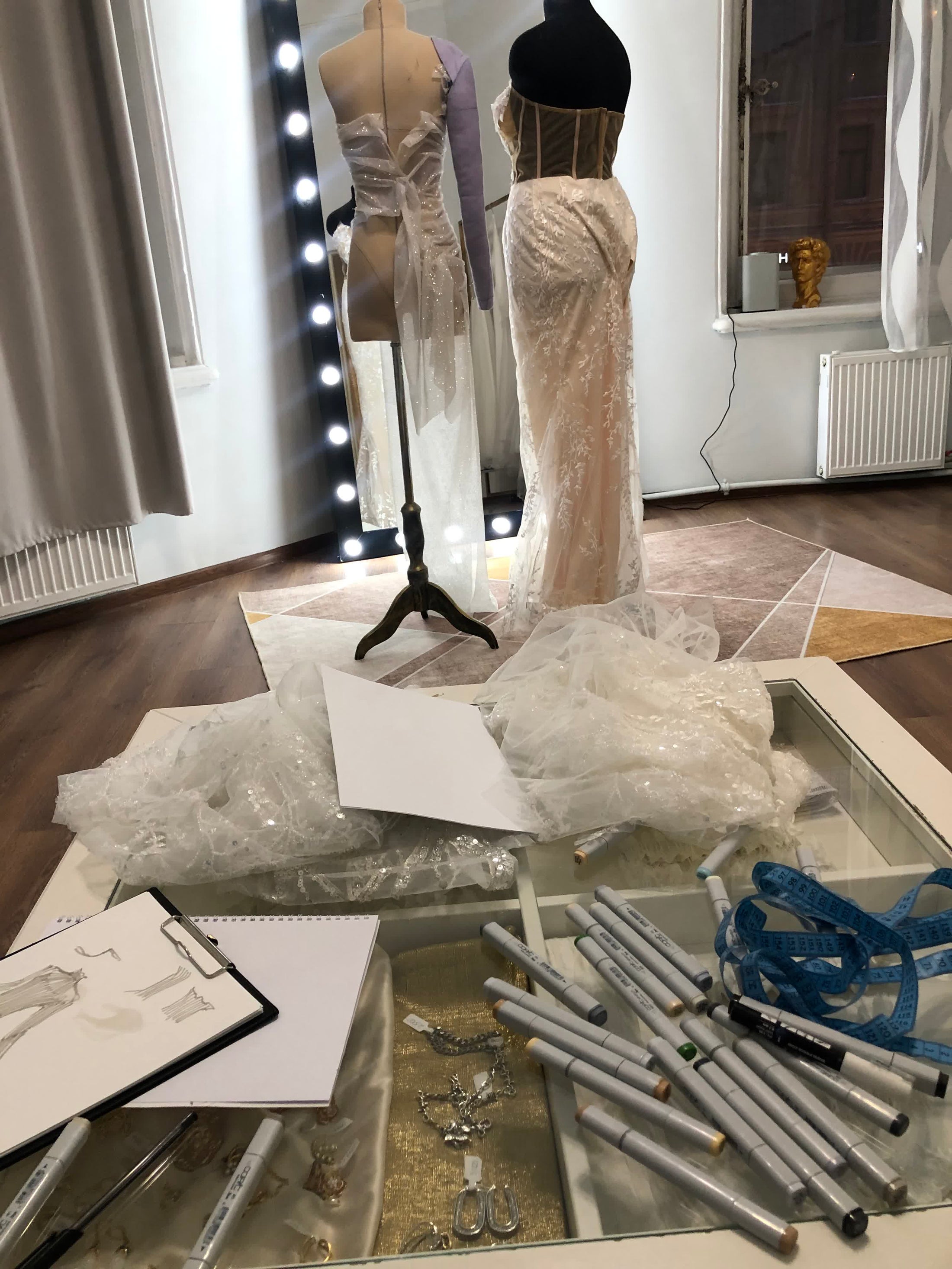

Key Takeaways
- We cap how many dresses we take on each season. It is a capacity decision, not a marketing tactic. Every order gets a personal designer and hands-on attention from the same small team.
- Each dress moves through sketch, fabric sourcing, pattern, construction, and finishing as one project, not a batch, and that is what a 10 to 12 week timeline actually depends on.
- Taking on more orders than the atelier can carry at once is what forces rush work, missed timelines, and the errors that come from hurrying hand construction.
- The cap protects the brides already in the queue as much as the ones considering ordering. Their dress does not get pushed back because we said yes to someone else.
- When we are full for a season, we say so directly, rather than accepting an order we cannot deliver on time.
Table of Contents
- What "Limited" Actually Means Here
- Why More Orders Would Break the Timeline
- One Designer, One Dress at a Time
- What Happens When We're Full
- FAQ
Growth is usually treated as the obvious goal for a small business. Take more orders, hire more hands, scale the workshop. We have chosen not to do that past a certain point, and it is worth explaining why, because it is not the answer most brides expect from an atelier that wants their business.
This is not a scarcity tactic. It is a direct consequence of our made-to-order, slow-fashion approach to building every dress, and of what breaks if we take on more than we can actually carry.
What "Limited" Actually Means Here {#what-it-means}
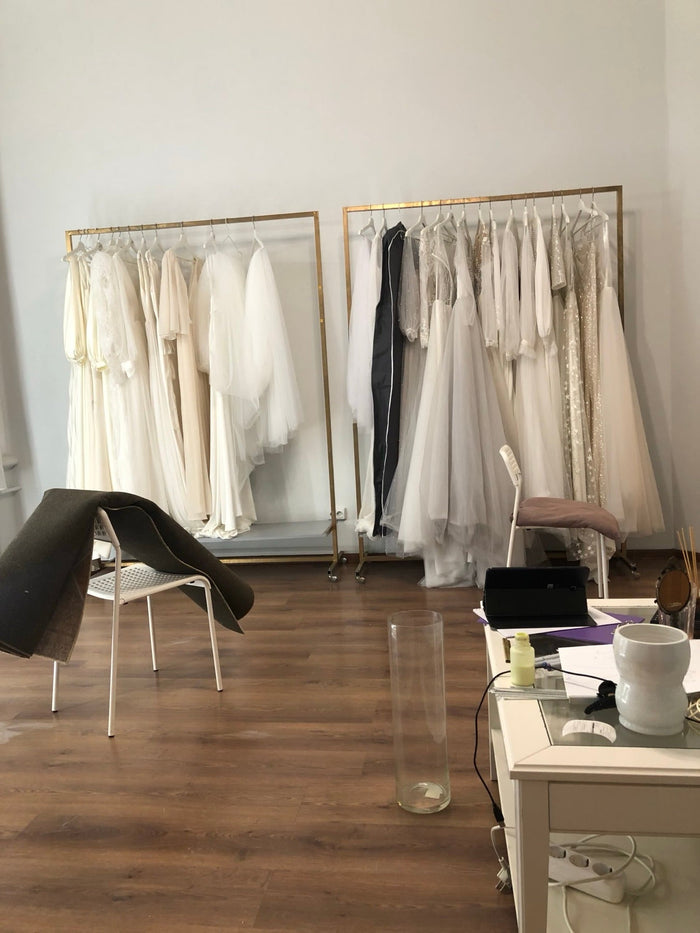
We set a maximum number of orders we accept per season, based on how many dresses our team can carry through sketch, sourcing, construction, and finishing at the same standard, on the timeline we quote.
That number is not a fixed public figure. It moves slightly with how complex the current queue is. A season carrying several corset-and-embroidery gowns takes more hours per dress than a season of simpler silhouettes, so the cap adjusts accordingly. What does not move is the standard: every dress gets the same sketch approval process, the same hand construction, the same production photos at every stage.
For how a full order runs from first sketch to delivery, our complete guide to ordering a custom wedding dress online walks through every stage.

Why More Orders Would Break the Timeline {#timeline}
Our production timeline is 10 to 12 weeks from payment to a completed dress, and it is built on real, non-negotiable steps: fabric sourcing, pattern drafting, construction, and finishing. Hand embroidery from the waist to the hem takes 2–3 months, with the complete production schedule confirmed for the specific design, as explained in our guide to hand embroidery on a wedding dress.
None of these steps compress just because more orders arrive in the same week. Fabric still has to be sourced from the same suppliers. A corset bodice still has to be boned and fitted with the same precision, whether it is the fifth dress in the queue or the fiftieth. The moment order volume outpaces what the team can carry at that standard, one of two things happens: timelines slip for everyone already waiting, or the work gets rushed to keep up.
We recommend brides reach out about 10 months before their wedding date. That window exists because it accounts for both the production timeline and the realistic wait before a spot in the queue opens.
One Designer, One Dress at a Time {#one-designer}
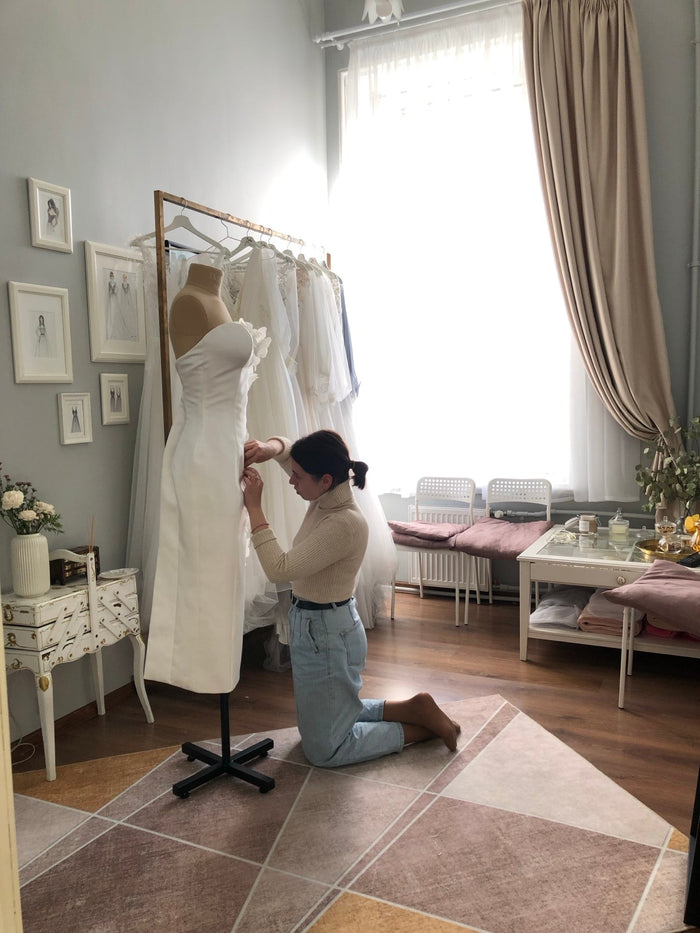
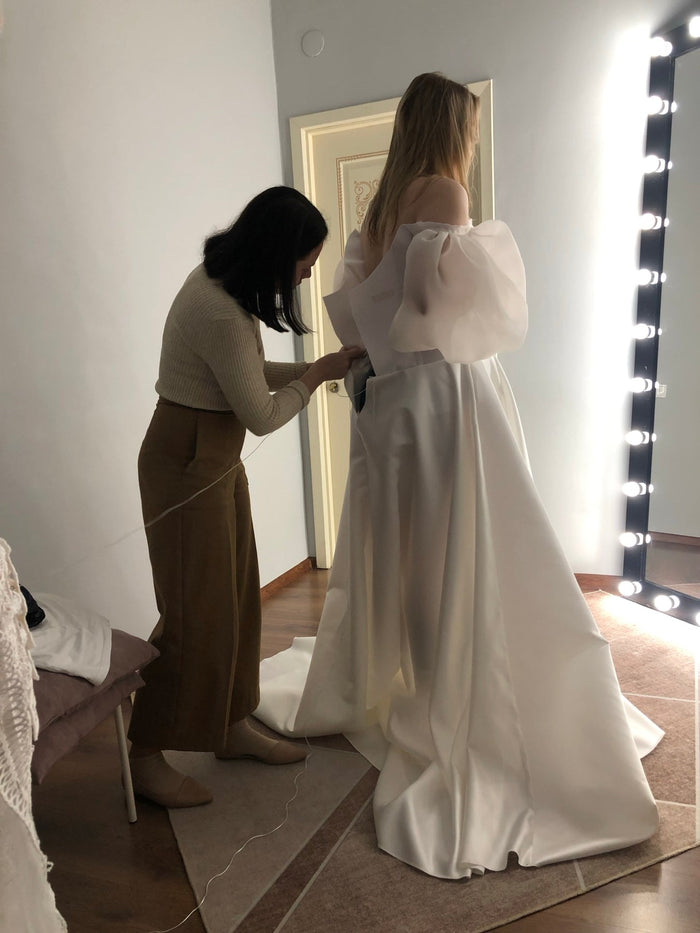
Every dress at Lutien Bridal moves through the same design consultation: your references, your measurements, a sketch built for you specifically, and your approval before anything is cut. That process, and the fitting checkpoints that follow, depend on real attention from the same people who will build the dress.

Scaling past a certain point usually means handing design decisions to whoever is available, or standardizing sketches into templates to move faster. We have watched that happen at larger operations. It is how a "custom" dress starts drifting back toward something closer to mass production, only slower and more expensive.

Keeping the order count capped is how we keep the sketch, the fitting checkpoints, and the hand construction (corset boning, hand embroidery, every seam) attached to real oversight from start to finish, on every single order. It is the same reason how a custom wedding dress is made here stays hands-on rather than handed off.
What Happens When We're Full {#when-full}
When we have reached capacity for a season, we tell you directly, rather than accepting an order we know we cannot deliver on the timeline we quote. That is a deliberate choice: an honest "not right now" is better than a promise we cannot keep.
If your wedding date does not leave enough room for the current queue, we will tell you that clearly too, and, where it is genuinely workable, what your options are. We do not begin any order inside three months of the wedding date. Between three and five months out, a date that still fits the queue carries a rush surcharge (about €500 at five months, €700 at four months, €1,000 at three months); at six months or more there is no surcharge. For how timeline and wedding date connect, see our custom wedding dress timeline.
The goal is not to create urgency. It is to make sure that every "yes" we give is a promise we can actually keep, for you and for the bride whose dress is already in production ahead of yours. If you already have a date, check it with the atelier before the season fills.
Start with a free sketch consultation
FAQ {#faq}
Is the order limit a marketing tactic to create urgency?
No. It is a direct function of production capacity: how many dresses our team can carry through sketch, sourcing, construction, and finishing at the same standard, on the timeline we quote. We would rather tell a bride we are full than accept an order we cannot deliver correctly and on time.
How do I know if there's room in the current queue for my wedding date?
Reach out with your wedding date and we will tell you directly whether the timeline works. We recommend contacting us about 10 months out, since that window accounts for both production time and the realistic wait for an open queue spot.
Does a limited order count mean lower quality control, or higher?
Higher. The cap exists specifically to keep every dress attached to the same design consultation, sketch approval, and hand construction, not spread thinner across more orders than the team can actually oversee closely.
What happens if I order and then my wedding date changes?
Tell us as soon as you know. Depending on where your dress is in production, we will work with you on the new timeline. This is easier to manage the earlier you tell us, which is one more reason the queue stays realistic rather than overbooked.
Does taking fewer orders mean higher prices?
Not directly. Pricing is driven by construction complexity, embellishment, and fabric, not by how many orders we accept. See what determines the cost of a custom gown for starting prices by category.
This reflects how Lutien Bridal has operated since founding, across 1,000+ completed custom orders from our atelier in France.