Atelier · France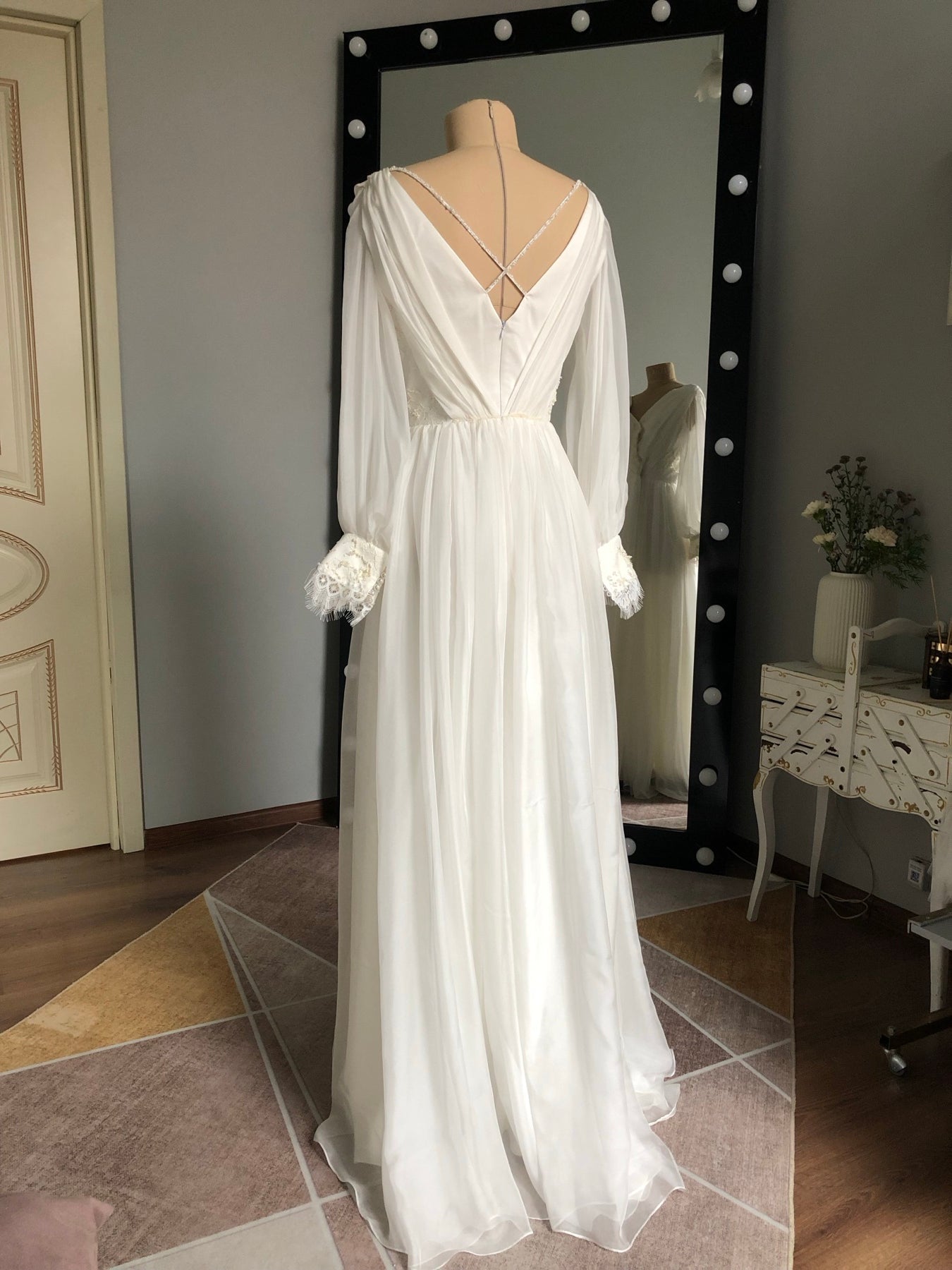

A two-piece wedding dress is a separate top and skirt, designed together and worn as one look. From a few steps away it can read as a single gown. Up close, there is a defined break at the waist, and sometimes a sliver of skin.
Separates suit a bride whose vision does not resolve into one silhouette: a structured bodice with a soft skirt, a modern crop with a traditional train, a fitted top with a full ball-gown skirt for the ceremony and a slim skirt for the reception. Custom is where this works best, because the two pieces are drafted to meet cleanly at your waist.
Key Takeaways
- A two-piece is a separate top and skirt, designed and fitted as a coordinated set.
- It suits a mixed vision, a defined waist, and brides who want more than one configuration.
- The waistline is the engineering challenge: the pieces must align, stay put, and not gape when you move.
- It can be worn as an exposed midriff, a slim band of skin, or fully closed with a bodysuit or built-in lining.
- As a custom order, each piece is drafted to your measurements so the set reads as one dress.
What "Two-Piece" Actually Means
The term covers a range:
- A crop top and skirt with a visible band of midriff between them.
- A top and skirt that meet edge to edge with no gap, reading almost like a gown with a waist seam.
- A bodysuit and skirt, where the top extends into fitted briefs, so the midriff can be sheer or closed without a separate layer.
- A corset or bustier with a separate skirt, a structured version often used with a full skirt.
All of them are designed as one look. The pieces are not bought separately and combined; they are patterned together so the proportions, the fabrics, and the details line up.
Why a Bride Chooses Separates
Separates make sense when:
- Your references do not agree. A structured lace bodice from one image, a plain flowing skirt from another. Separates let both exist in one look. This is the same problem our guide to turning a Pinterest board into a dress addresses.
- You want a defined waist without a single fitted silhouette like a mermaid. The break at the waist creates the definition.
- You want more than one look from the pieces, covered below.
- You want a modern, fashion-led effect. A crop and skirt reads as contemporary in a way a full gown does not.
- You plan to re-wear part of it. A well-made bridal skirt or a beaded top can have a life after the wedding.
The Waistline Is the Real Work
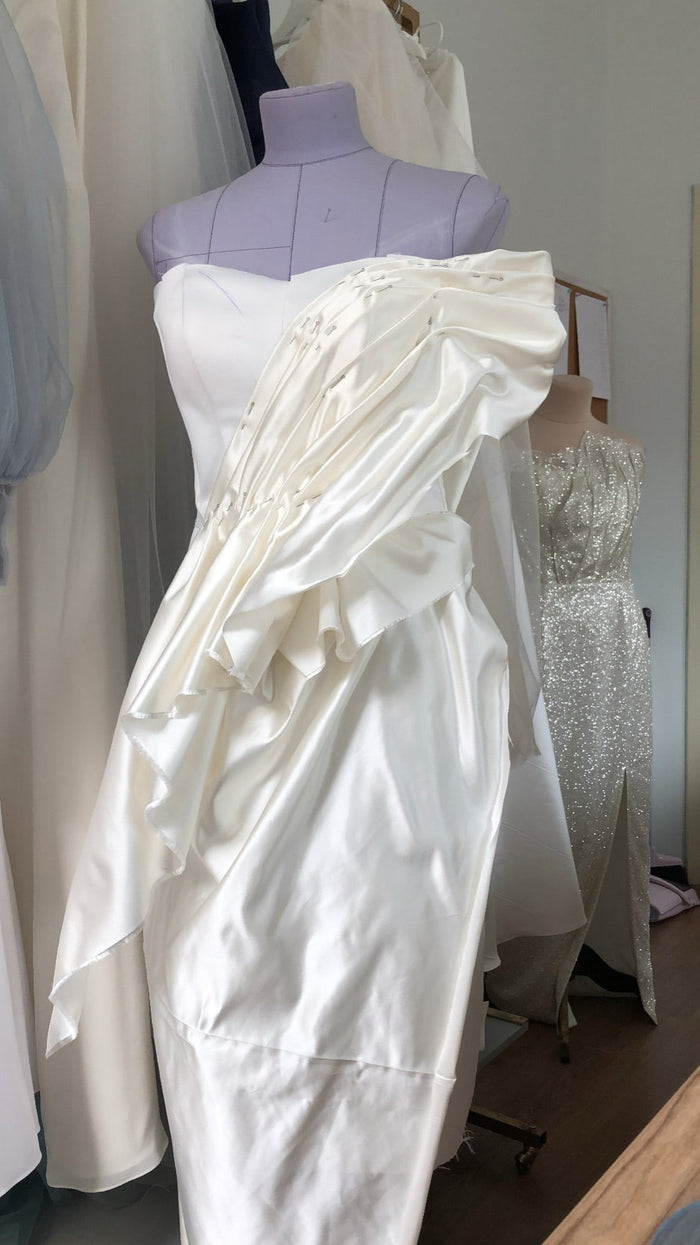
On a one-piece gown, the waist is a seam and the construction holds it in place. On separates, two independent garments have to meet at the waist and stay there through a full day of movement.
What we build in:
- An inner anchor. The top has a fitted inner band or a light boned structure so it does not ride up. The skirt has a firm waistband, sometimes with a hidden hook to the top.
- Matched circumference. Both pieces are drafted to the same waist measurement so there is no step between them.
- Coverage planning. If a band of skin is intended, its height is set on your body. If none is, the pieces overlap slightly and are secured so they cannot separate when you raise your arms.
- Closure logic. Each piece closes independently, which is part of why separates can be easier to get in and out of than a long back-zip gown.
We confirm all of this on a mockup, with you moving, before the real fabric is cut.
How Much Skin Is a Choice
The midriff is a dial, not a fixed feature.
- Exposed. A clear band of skin between the top and skirt.
- Sheer. The gap is filled with skin-tone tulle or a sheer panel, often with lace or beading across it, so the two pieces read as connected.
- Closed. A bodysuit or a lining bridges the gap entirely, so from the outside it looks like a two-piece but functions like a gown.
You can also change your mind between the ceremony and the reception, for example a closed panel for a religious ceremony and an exposed midriff after.
Separates as a Ceremony-to-Reception Plan
Separates are a natural fit for a two-look wedding:
- A fitted top with a full ceremony skirt, swapped for a slim reception skirt.
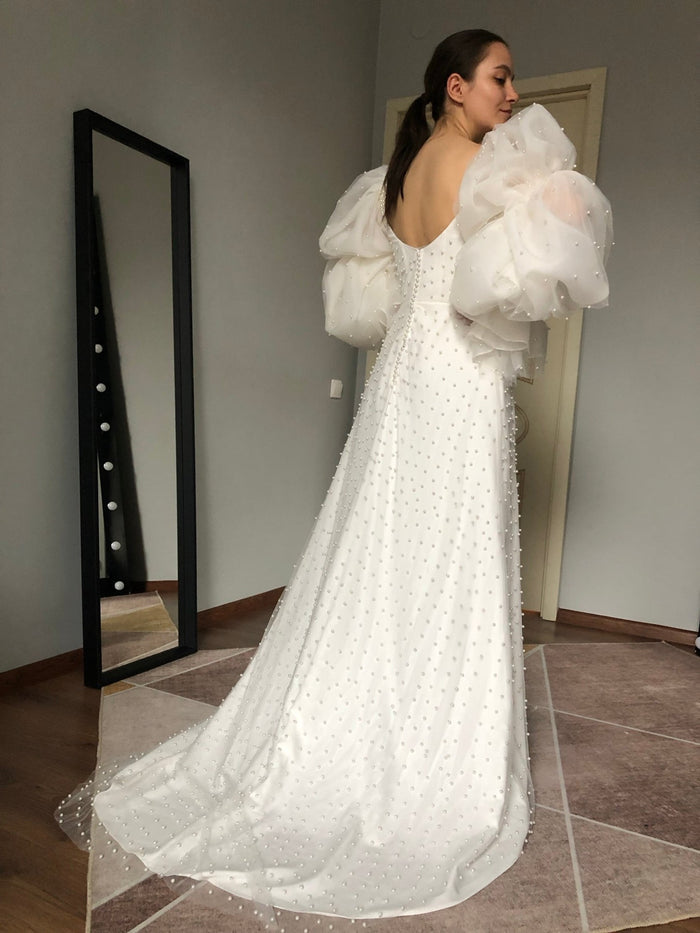
- A beaded bodice worn with a detachable overskirt for the ceremony, removed for dancing. This is the same engineering as a detachable train.
- A structured corset kept for the whole night, with the skirt changed around it.
Building this from the start is far cleaner than trying to adapt a finished gown. The shared waistband is designed once, and every skirt is made to attach to it.
Fabric and Detail Across Two Pieces
Two pieces means two fabric decisions that have to work together.
- A lace or beaded top with a plain satin or crepe skirt keeps one focal point.
- A plain top with a textured or pleated skirt moves the interest downward.
- Matching the exact white or ivory across both fabrics is essential, and is done by comparing physical samples, as our fabric guide explains.
Our article on simple versus embellished covers how to keep the balance so the two pieces do not compete.
Planning a Custom Two-Piece
The decisions:
- The break. Exposed, sheer, or closed, with the band height set on your body.
- The top. Crop, bodysuit, corset, or bustier, and its structure.
- The skirt or skirts. One shape, or a ceremony and reception pair.
- The waistband. How the pieces anchor to each other and how each closes.
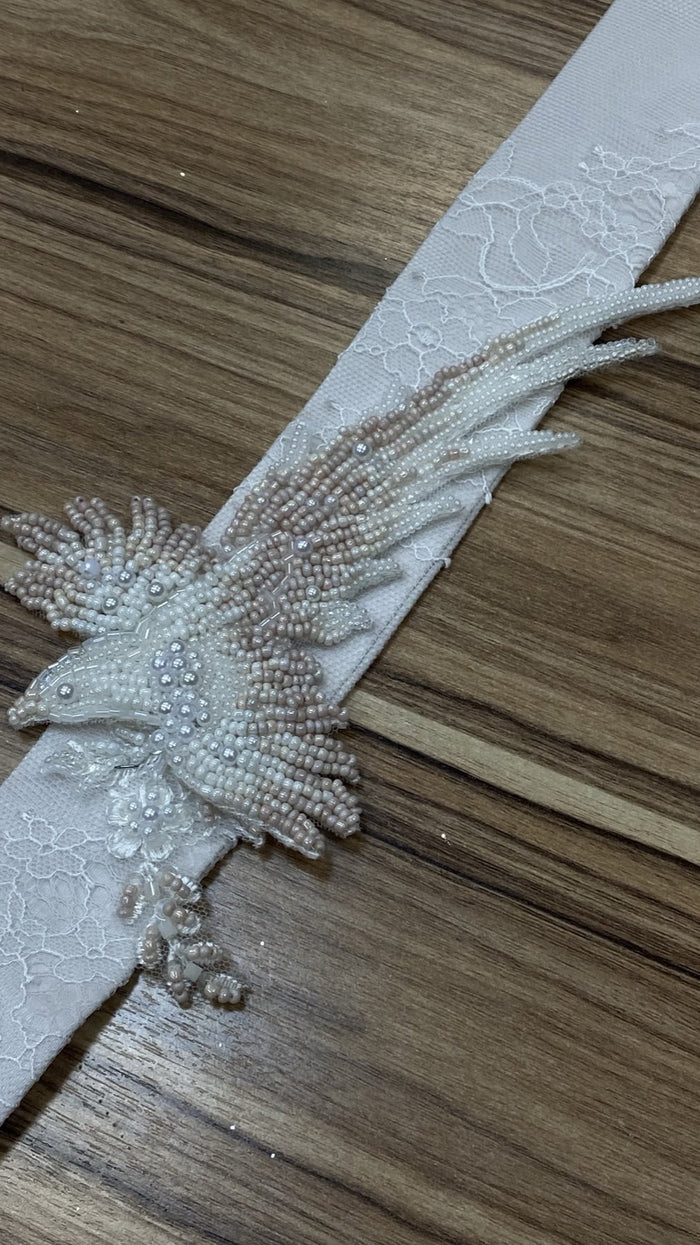
- Fabric and detail across both pieces, matched for colour and balance.
We start with a conversation about the vision you are trying to reconcile, then translate it into a sketch you approve before any fabric is cut. Our design process walks through each stage. Every set is made to your measurements over 10 to 12 weeks, with UPS shipping to the US in 3 to 5 days, from a starting price of 1,490 euros. Our price breakdown explains what changes the cost.
FAQ
Does a two-piece wedding dress always show your stomach? No. The midriff is a design choice. It can be an exposed band of skin, a sheer panel, or fully closed with a bodysuit or lining so it looks like a two-piece but functions like a gown. You can also change the coverage between the ceremony and the reception.
Will the top ride up when I raise my arms? Not if it is built correctly. A custom two-piece top has an inner band or light boning to hold it down, and the two pieces are drafted to the same waist measurement, sometimes with a hidden hook connecting them. This is checked with you moving during a fitting.
Is a two-piece wedding dress less formal? It reads as more modern and fashion-led, but not necessarily less formal. A structured beaded bodice with a full silk skirt and a long train is a formal look. The two-piece construction is about proportion and versatility, not dress code.
Can I wear the pieces again after the wedding? Sometimes. A plain or lightly beaded top and a well-cut skirt can be re-worn separately more easily than a full gown. If re-wear matters to you, tell us at the design stage so we can plan the pieces with that in mind.
Is a two-piece easier to get in and out of? Often yes. Each piece closes independently, so there is no single long back zip to manage. This also makes bathroom breaks and the reception change simpler.
Trying to reconcile two visions into one look? Start with a sketch consultation at Lutien Bridal.
About the author: Vlad Ivanov is the Director of Business Development at Lutien Bridal Atelier in France, home to the design team behind more than 1,000 custom wedding gowns delivered to brides across the US and Europe.