Atelier · France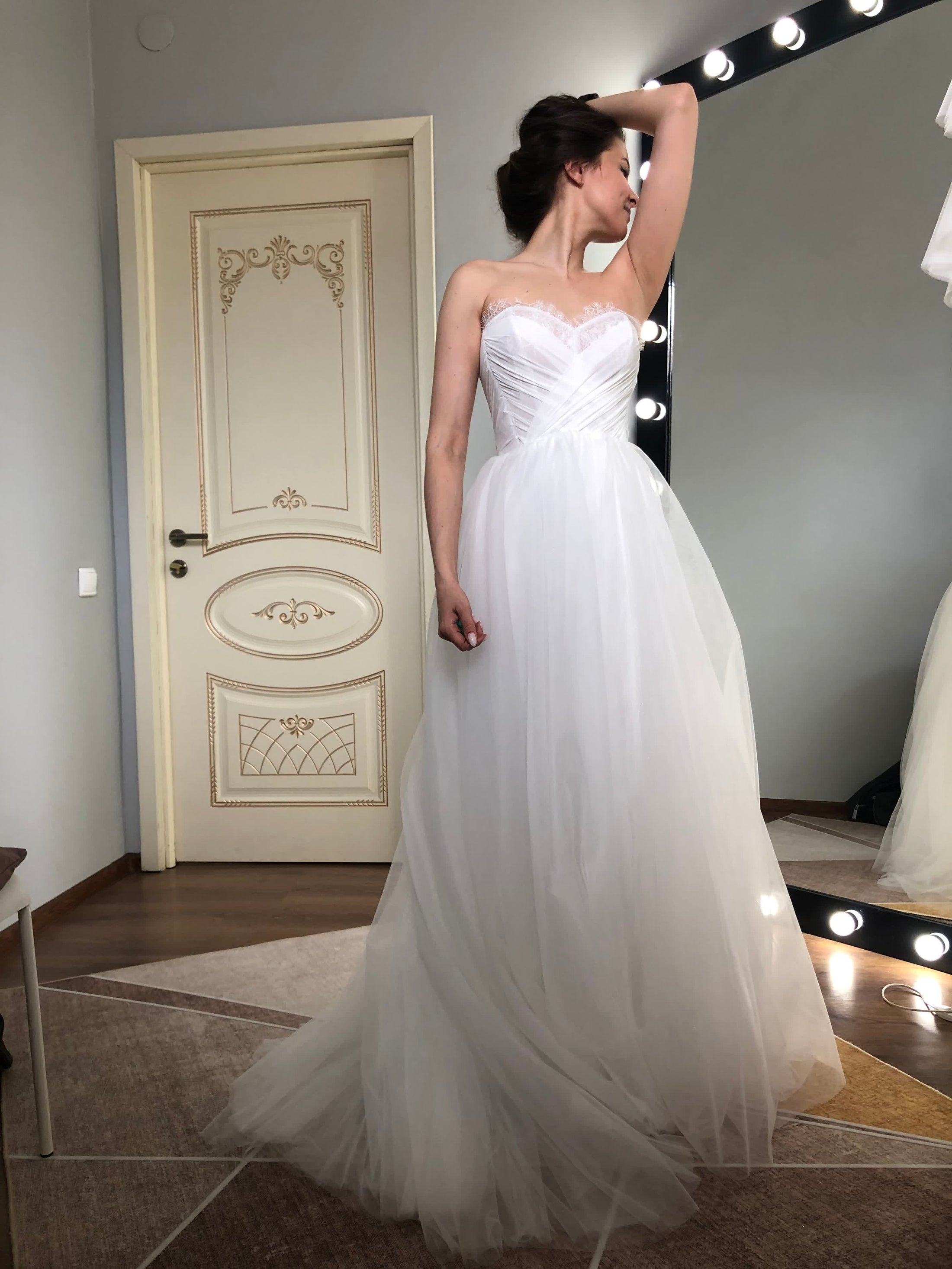

Key Takeaways
- A corset bodice holds a gown's shape and supports the weight of the skirt, the fit isn't corrected afterward with pins, it's built into the pattern from the start.
- In a remote custom order, there's no in-person alteration appointment. The corset has to be right from your measurements the first time.
- Bust, waist, and hip measurements, taken while breathing normally, not exhaling fully, determine where the boning channels sit and how much structure each panel needs.
- Lace-up, zip, and hybrid closures each affect adjustability, comfort, and how the corset sits under a fitted bodice.
- At Lutien Bridal, you see the internal construction, boning, panel structure, in production photos before the dress ships.
Table of Contents
- What a Corset Bodice Actually Does
- Why Remote Custom Ordering Raises the Stakes
- The Measurements That Determine Corset Fit
- Closure Types: Lace-Up, Zip, and Hybrid
- Wearing a Corset Bodice for 12 Hours
- How Corset Construction Interacts With Other Design Choices
- FAQ
A corset bodice does two jobs at once: it holds the dress's shape, and it holds you in place inside it. Done correctly, you stop thinking about it within the first hour. Done poorly, it's the thing you notice at every photo and every dance.
This guide covers how corset construction actually works in a custom gown, why it matters more in a remote ordering process than a boutique one, and what determines whether it fits the way it should.
What a Corset Bodice Actually Does {#what-it-does}
A corset bodice is built from separate fabric panels reinforced with boning, rigid strips sewn into channels within the lining, that hold their shape independently of the body underneath. This is different from a soft bodice, which relies on the fabric alone and shifts as you move.
The structure does real work. It supports the weight of a full skirt or a long train, keeps a strapless or backless neckline from slipping, and creates the smooth, close fit that makes a fitted silhouette read as intentional rather than loose. For how bodice structure specifically carries the weight of a long train, see our guide on the extra long train wedding dress.
Boning itself comes in two common types: spiral steel, which flexes slightly with the body, and flat steel, which stays rigid. Most corset bodices use a combination, placed according to the silhouette and your measurements. We cover boning types in more depth in our guide to the backless wedding dress, where the corset does the added work of holding the gown without any back panel at all.

Why Remote Custom Ordering Raises the Stakes {#remote-order}
At a traditional boutique, a corset bodice is a starting point that gets corrected. You try on a sample, a seamstress pins the excess, and alterations bring it in line with your body over one or more follow-up visits.
That correction step doesn't exist in a remote custom order. The bodice is drafted directly from your measurements and built once. There's no fitting appointment where a seamstress adjusts the lacing by feel. The pattern has to be right before the boning is ever sewn in.
This is also why we send production photos of the internal bodice construction, not just the finished exterior, you see the boning and panel structure while there's still time to raise a concern. For the full sequence of checkpoints in a remote order, see what happens during a remote fitting.
The Measurements That Determine Corset Fit {#measurements}
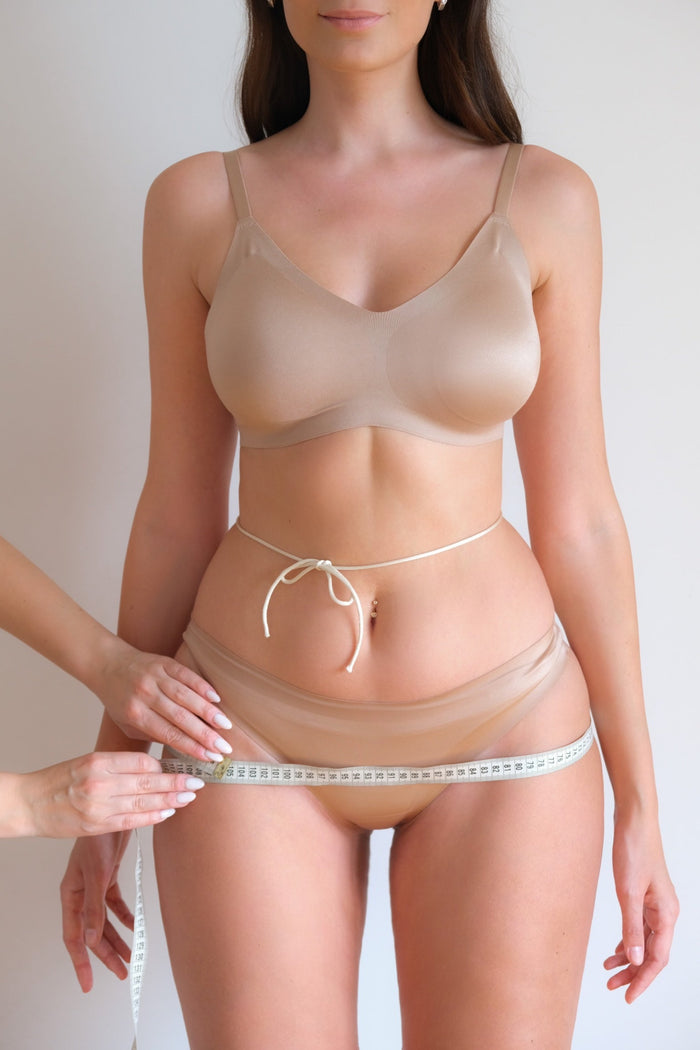
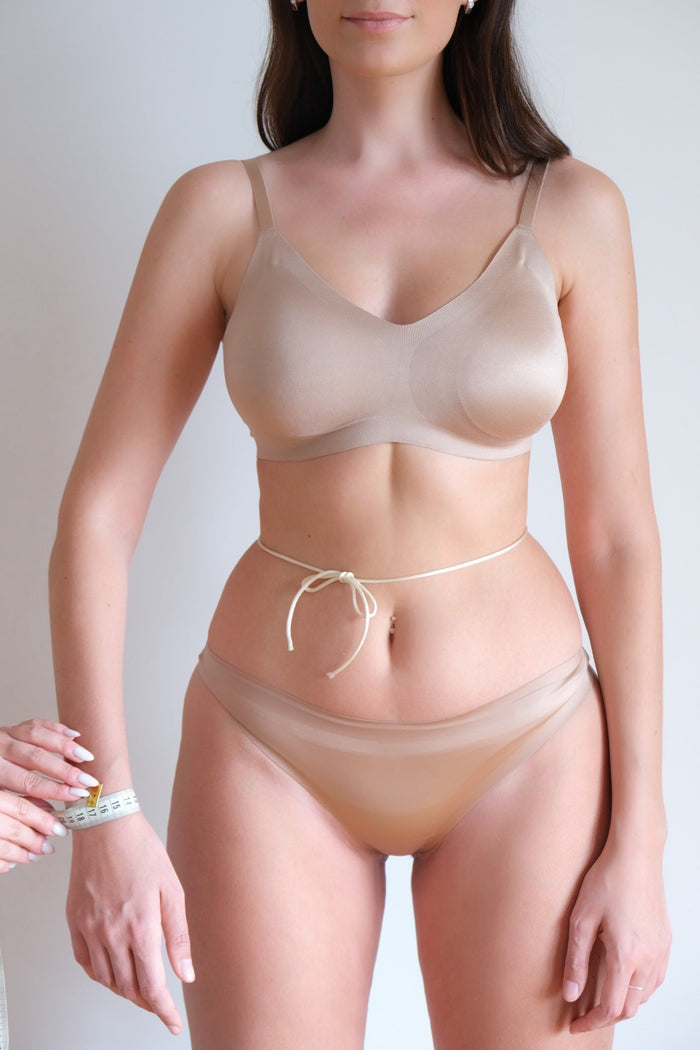
Three measurements drive corset construction directly: bust, natural waist, and hips. Each one determines where a boning channel sits and how much structure a given panel needs to hold.
Bust sets the top edge of the bodice and how the upper boning channels are placed to support without gapping. Natural waist, the narrowest point of your torso, not your pants waistband, is where the corset's tightest point sits and where the skirt begins. Hips determine how the lower panels flare into the skirt seam.
One detail matters more for a corset than for almost any other part of the dress: take these measurements while breathing normally, not after exhaling fully. A corset built to a fully-exhaled waist measurement will feel restrictive from the moment you put it on, not because the construction is wrong, but because the number it was built to was never your resting waist to begin with.
For the complete measurement process, our guide on how to measure yourself for a wedding dress at home walks through each step with photos.

Closure Types: Lace-Up, Zip, and Hybrid {#closures}
How a corset bodice closes affects both fit tolerance and how it feels to wear.
Lace-up back. Laces run through eyelets, with a modesty panel underneath so no skin shows through the gap. This closure has the most built-in adjustability, a few inches of give either way, which makes it forgiving of small measurement changes between ordering and the wedding day.
Zip closure. A concealed zipper gives a cleaner line and a faster close, but almost no adjustability once installed. This closure depends on precise measurements from the start, since there's no lacing to compensate for a small shift in fit.
Hybrid. A zipper for the main closure with a short lacing section at the top or bottom for fine adjustment. This is what we recommend for most corset bodices, it combines the clean line of a zip with a small margin of adjustability where it matters most.
We discuss closure type during the design consultation, based on your silhouette, your back detail, and how much adjustability you want built in.
Wearing a Corset Bodice for 12 Hours {#wearing}
A wedding day runs long, ceremony, photos, dinner, dancing, often 10 to 12 hours in the dress. A well-built corset bodice is designed to hold up across all of it without becoming the thing you're managing by hour six.
Breathability matters here as much as structure. Boning channels are lined, not left to sit directly against skin, and the fabric choice under a corset bodice affects how it breathes across a long day. Structured fabrics like duchess satin hold heat more than lighter linings underneath.
Movement is the other real test. A corset bodice built correctly still allows you to sit, reach, and dance. Where it restricts you, that's a construction question we resolve at the sketch and measurement stage, not something to discover for the first time at the reception.
How Corset Construction Interacts With Other Design Choices {#interactions}
A corset bodice rarely stands alone as a design decision, it interacts with nearly everything else in the gown.
Trains. The bodice's boning and panel structure carry the weight of a train through the waist seam. A heavier or longer train needs additional internal support planned into the corset from the start, not added afterward.
Embellishment. Hand embroidery or beading placed across a corset bodice follows the panel seams and boning channels, the embellishment is applied to the finished, structured bodice, so the two are planned together. See our guide on hand embroidery on a wedding dress for how that process works.
Neckline and back. Strapless, sweetheart, and backless necklines all depend on the corset to hold the gown up without straps. The less coverage a neckline has, the more structural work the bodice underneath is doing.

None of these decisions happen in isolation. During the design consultation, we plan the bodice structure, closure, embellishment, and skirt together, so the finished dress works as one built system, not separate pieces assembled at the end.
Start with a free sketch consultation at Lutien Bridal →
FAQ {#faq}
Does a corset bodice mean I can't breathe or eat during the reception?
No. A well-built corset bodice is fitted to your resting measurements, taken while breathing normally, not an exhaled or compressed waist. It holds structure without restricting normal breathing, sitting, or eating across a full-day event.
Can a corset bodice be adjusted if my measurements change before the wedding?
A lace-up or hybrid closure has a small built-in margin, typically a few inches. A pure zip closure has little to none. If you expect measurement changes, mention this during the consultation so we can recommend the closure type with the right margin for you.
How do I know if a dress design needs a corset bodice?
Strapless, sweetheart, backless, and most fitted silhouettes need a corset bodice to hold their shape without straps. If your design has full coverage straps and a soft bodice, less internal structure is needed. We assess this during your consultation based on your sketch.
Will I be able to see the corset construction before the dress ships?
Yes. As the bodice takes shape during production, you receive photos showing the internal boning and panel construction, not just the exterior. This is your checkpoint to raise any concern before the dress is finished.
Is a corset bodice more expensive than a soft bodice?
Corset construction falls under our complex construction pricing tier, since it requires additional boning, panel work, and fitting precision beyond a simple silhouette. See our full price breakdown for exact starting prices by construction type.
All construction and fit details in this guide are based on Lutien Bridal's experience completing 1,000+ custom orders from our atelier in Ansignan, France.