Atelier · France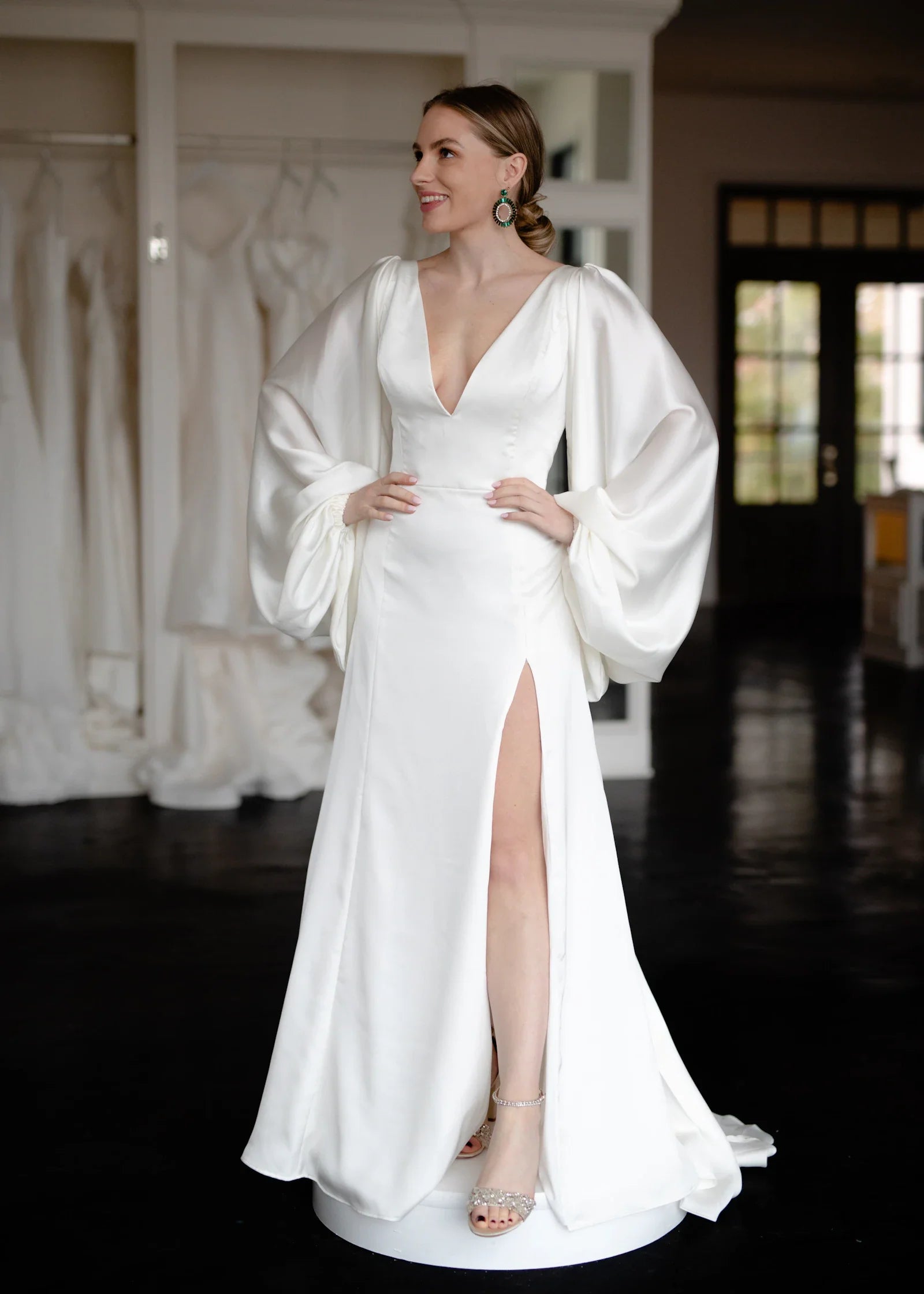

Key Takeaways
- A remote fitting is not a single appointment, it's a structured sequence of five checkpoints spread across the production timeline.
- You don't try on the dress for fit. The dress is built to your exact measurements from the start, not adjusted after.
- The first checkpoint is visual: you approve a custom sketch before any fabric is cut or ordered.
- You receive photos at every production stage. Nothing proceeds without your sign-off.
- The final approval, a full photo session of the completed dress, happens before the dress ships. You see it first.
Most brides picture a fitting as walking into a studio, stepping into a sample gown, and watching a seamstress pin adjustments around them. When you order a custom dress from a remote atelier, that visit never happens, and that's the entire point.
At a boutique, the fitting is a correction process: a dress made for an average body gets adjusted to yours. At a remote custom atelier, there's nothing to correct. The dress is drafted to your measurements before production begins. The fit is built in, not pinned on afterward.
What replaces the studio visit is a series of five structured checkpoints. Each one is a decision point. You see exactly what we're doing and confirm it before we move forward. Here's what each step looks like in practice.
How to take your own measurements before you start →
Table of Contents
- Step 1: Measurements and References
- Step 2: The Custom Sketch
- Step 3: The Design Agreement
- Step 4: Production Updates
- Step 5: Final Approval Before Shipping
- Remote vs. Traditional: What Actually Changes
- FAQ
Step 1: Measurements and References
The process starts before we draw anything. You send us your measurements and as much of your vision as you have at this stage. The vision doesn't need to be precise, a Pinterest board, a few reference photos, a written description of how you want to feel in the dress all work equally well.
What we ask for:
- Bust, waist, hips, and hollow-to-hem (taken in your wedding shoes)
- High bust and shoulder width for any fitted bodice
- Arm circumference for sleeved styles
- References: photos of dresses you love, specific details you want, details you definitely don't want
- Your wedding date and location
You don't need to know the terminology. You don't need to identify your silhouette or name your neckline style. If you can describe how you want to feel, the weight of the fabric, how much structure you want, whether you want to feel dramatic or understated, we translate that into construction decisions.
What happens with your measurements:
We review every measurement set for internal consistency before we start sketching. A hollow-to-hem that doesn't align with your stated height, or proportions that suggest an error in technique, gets flagged before we build a pattern around incorrect numbers. Small problems caught here are free to fix. The same problems discovered in a completed pattern cost time and rework.
We also read your references as a set, not each image individually, but what they have in common. The shapes that recur, the structural details that appear in three different photos, the necklines you've never saved. That pattern is usually more accurate than any single image.
The complete guide to ordering a custom wedding dress online →
Step 2: The Custom Sketch
This is your first real fitting, not of fabric, but of form.
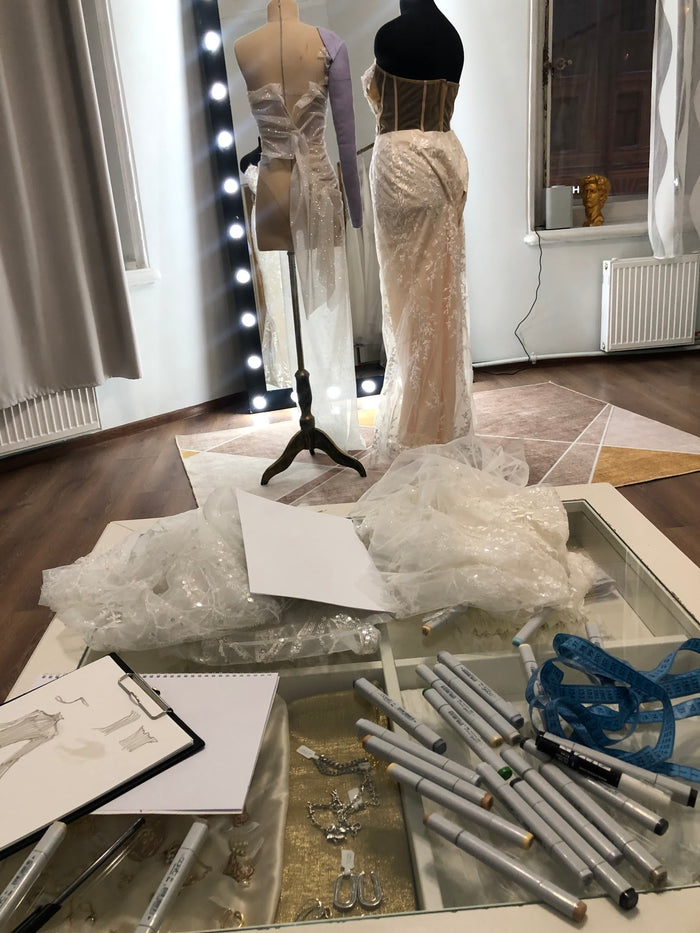
We draw a custom sketch based on your measurements and references. Not a stock illustration adapted with your initials. A working drawing of the specific dress we intend to build: silhouette, neckline, back treatment, sleeve design, and any structural details like boning placement or skirt layering.
You review it. If the neckline sits differently than you imagined, if the skirt has more volume than you wanted, if you realize looking at the drawing that something is missing, we revise. We go back and forth until the sketch reflects exactly what you have in mind.
What you're actually signing off on:
The silhouette and proportions as a whole. The specific neckline and back design. How sleeves connect to the bodice. Placement and scope of any embellishments: where embroidery goes, what areas have beading, how lace is applied. Every structural decision that affects both the look and the fit of the finished dress.
Why this checkpoint matters:
Nothing goes to production until you approve the sketch. No fabric is ordered. No pattern is started. This is the only point in the process where design changes cost nothing and take hours rather than weeks.
Once production begins and fabric has been cut, design changes require additional charges and extend the timeline. At the sketch stage: no cost, no delay, unlimited revisions until it's right.
If you're unsure about any element, if you want to see an alternative neckline, or you're not certain whether you want a train, this is when to ask.
Step 3: The Design Agreement
After the sketch is approved, every detail gets written down.
This is the design agreement: a complete specification of the dress. Silhouette, fabric type and color, construction method, embellishment placement and scope, closures, everything we discussed, in writing. This document becomes the production brief the atelier works from.
What gets locked in at this stage:
- Fabric selection: specific type, weight, and color
- Construction details: boning structure, underlining, closures, interior finish
- Embellishment scope: exactly where embroidery or beading appears, how detailed
- The final all-inclusive price
What this means for you:
Once you confirm the design agreement and payment is made, the price doesn't change. No additional charges at delivery. No surprise customs fees. No separate invoice for shipping. The number you agreed to is the number you pay, full stop.
This is also when you receive your production timeline. You'll know when fabric ordering begins, when cutting starts, and when we expect to ship.
How long does a custom dress actually take? →

Step 4: Production Updates
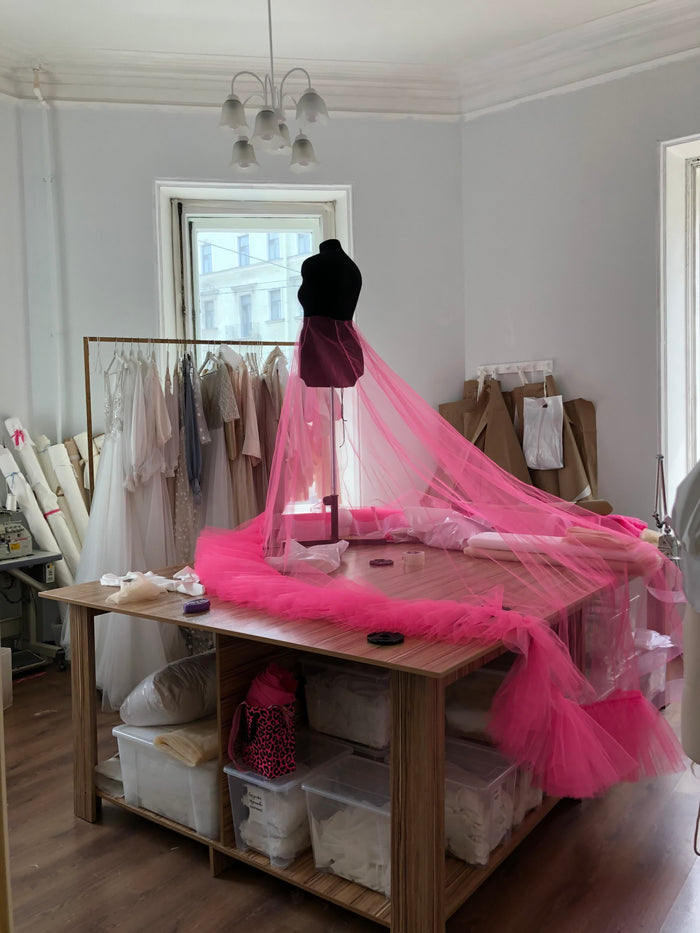
Once production begins, you're not waiting in silence for 10 to 12 weeks. You receive photos at each production stage, not a single progress shot midway through, but documentation at the specific points where your input matters.
What the update sequence looks like:
Fabric arrival. You see the actual fabric before any cutting begins: the color under workroom lighting, the weight, the texture. If the fabric looks different from what we agreed to, this is the moment to address it, before anything is cut.
Pattern and cut. The pattern pieces are laid on the fabric and the cutting is done. At this point the structural logic of the dress is set. You see the pieces before assembly begins.
Construction. As the bodice takes shape, you receive photos showing the progress. For dresses with corset boning or structured underlining, you'll see the internal construction, not just the exterior. The architecture of the dress, not just its surface.
Embellishment. If your dress includes hand embroidery, beading, or lace application, you see this work in progress and after it's completed. Embellishment placement is confirmed against the design agreement at this stage.
Each update is a real checkpoint. If something doesn't match what we agreed to, it gets addressed before we move forward, not apologized for after the dress has shipped. This is the functional equivalent of the mid-construction fitting appointments brides have at traditional ateliers, adapted for a remote process.
Step 5: Final Approval Before Shipping
Before the dress is packaged, we photograph the completed gown in full.
This isn't a quick snapshot to confirm it exists. It's a complete documentation of the finished dress: front view, back view, detail shots of construction quality, close-ups of embellishments, and the full length on the dress form. You see the dress exactly as it will arrive.
What you're reviewing:
The overall silhouette and proportions as a finished garment, how the bodice sits, where the skirt breaks, how the back closes. The quality of every construction detail agreed to in the design document. Embellishment placement and finish. The condition of the fabric, no marks, no handling damage, everything clean.
What happens next:
You approve before we ship. If the photos show anything that doesn't match what we agreed to, it gets resolved before the package closes. We don't ship a dress that the client hasn't signed off on.
Once approved: the dress is packaged in branded bridal packaging, handed to UPS, and tracked from our workroom in Ansignan, France to your door. You receive the tracking number at dispatch. Delivery to the US takes 3 to 5 days.
All customs documentation is handled on our end. There's nothing waiting for you at the door except the dress. No duties, no brokerage fees, no additional charges of any kind.
Remote vs. Traditional: What Actually Changes
At a traditional boutique, a fitting is a correction session. A dress made to standard sizing gets adjusted to your body with pins, chalk, and alterations. The fitting is how the dress gets to fit you after it's been made.
With a remote custom atelier, the dress doesn't need correcting. It was built to your measurements. The fit isn't added later, it's in the pattern from the first cut.
What you don't have with a remote atelier:
You can't touch the fabric before it's ordered. You can't try on the dress at any point during production to evaluate how it feels on your body. For brides who've always tried on clothes before buying, this can feel like a gap.
What you have instead:
Your measurements in the pattern, not approximated to a standard size. Every construction decision documented and confirmed in writing before it's executed. Production photos before each stage advances. A final approval before shipping. And a dress built for your body specifically, not fitted to a sample, not adjusted from a block.
For brides who've ordered from boutiques that offered little communication and then presented them with an alteration bill, the structured checkpoint approach tends to feel like the opposite of what they expected, more documented, not less.
Questions to ask any atelier before you place an order →
FAQ
Do I need to visit the atelier in person at any point?
No. The entire process, measurements, consultation, sketch review, production updates, and final approval, happens remotely via email and WhatsApp. Video calls are available on request at any stage. The atelier is based in Ansignan, France; we ship to the US.
What if I want to change something after approving the sketch?
Changes before production starts, before fabric is ordered, are made at no cost. After production begins, design changes may require additional charges and extend the timeline. The sketch checkpoint exists specifically so you can make changes while they're still free.
How long does the entire process take?
From first contact to delivery: approximately 3 to 4 months total. Production alone takes 10 to 12 weeks from payment to a completed dress. Shipping to the US via UPS takes 3 to 5 days. We recommend reaching out at least 6 months before your wedding date, and we don't take rush orders.
What language does communication happen in?
English only, via email or WhatsApp. Response time is fast, same-day during business hours. Video calls available on request.
What if the dress doesn't match what we agreed to?
We don't ship a dress that hasn't been approved by the client. If the final photos show any discrepancy from the design agreement, it's resolved before shipping. The design agreement and production photo process exist to prevent this, and have, across 1,000+ completed orders.
Can I request a video before the dress ships?
Yes. If still photos aren't enough for a confident final approval, a short video of the completed dress can be arranged before packaging.
Related guides:
- How to Measure Yourself for a Wedding Dress at Home
- The Complete Guide to Ordering a Custom Wedding Dress Online
- Custom Wedding Dress Timeline: How Long Does It Really Take?
- 12 Questions to Ask Before Ordering a Custom Wedding Dress Online
About the author: Alena Amros is the lead designer at Lutien Bridal Atelier in Ansignan, France, where she has designed and produced over 1,000 custom wedding gowns for brides across the US and Europe.