Atelier · France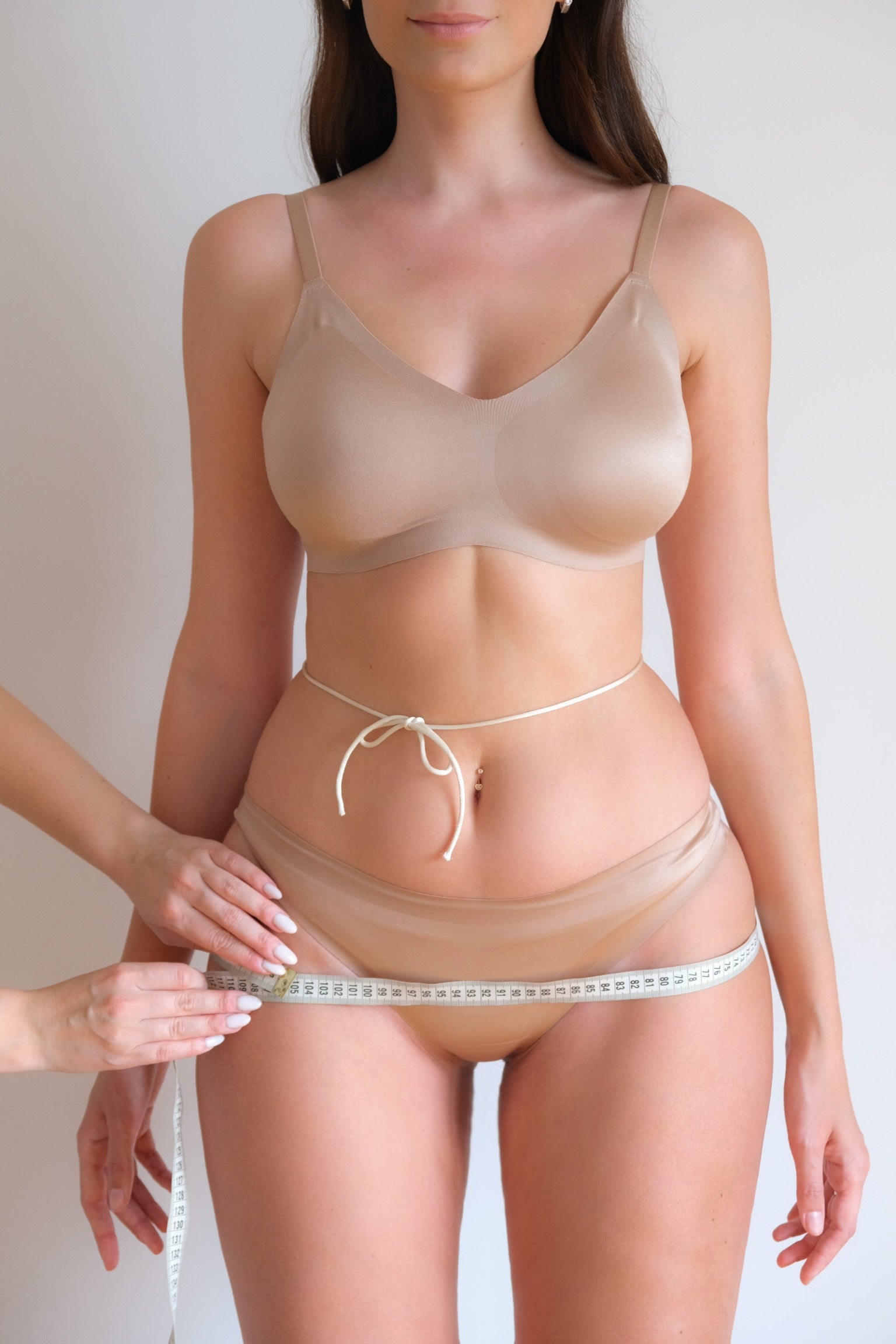

Key Takeaways
- Many bridal boutiques stock sample gowns only in a limited size range, so brides beyond it often cannot try on the actual dress before ordering.
- Larger sizes are usually special-ordered or altered from that same narrow sample, not built from a pattern designed for your actual proportions.
- A pattern drafted from your own measurements does not scale a single block pattern up or down. Each measurement point, bust, waist, hips, is drafted individually.
- At Lutien Bridal, pricing is set by construction complexity, fabric, and embellishment, the same factors for every order, not by size.
- The production timeline, 10 to 12 weeks, is identical regardless of size, because the process is the same: sketch, pattern, construction, finishing.
Table of Contents
- What Plus-Size Shopping Actually Looks Like
- Why Boutique Sample Sizing Works This Way
- What to Ask Before You Order
- How a Measurement-Based Pattern Is Different
- What This Means for Silhouette Choice
- FAQ
Plus-size bridal shopping gets described as harder, and it usually is, but the reasons are rarely explained clearly. Most of what makes it difficult traces back to one structural fact about how bridal boutiques stock inventory, not to any silhouette or fabric being unavailable to larger bodies.
What Plus-Size Shopping Actually Looks Like {#reality}
A typical bridal boutique carries physical sample gowns for brides to try on. Those samples are expensive to produce and display, so a boutique stocks a limited size run. According to The Knot, bridal sample sizes generally range from a bridal size 6 to 10, which usually translates to a street size 2 to 6.
A bride outside that range often can't try on the actual dress she's considering. She sees it on a smaller model or a smaller sample, clipped and pinned to suggest the fit, then orders in her real size sight unseen. When the dress arrives, it's frequently not a size built for her measurements. It's the existing pattern graded up, meaning the same shape scaled larger, not redrawn for a different proportion.
This is also where plus-size upcharges can appear: some makers add an extended-size surcharge above a certain size, framed as a fee for cutting more fabric or grading the pattern further from its base size. Lutien Bridal does not. Pricing is set by construction, fabric, and embellishment, never by size.
Why Boutique Sample Sizing Works This Way {#why}
None of this is a conspiracy against larger bodies. It's a byproduct of how ready-to-wear bridal is produced.
A pattern is developed once, at a base size, then graded, meaning proportionally scaled, up and down to produce the full size range. Grading assumes that a body simply gets larger or smaller uniformly at every point, which isn't how most bodies actually work. Bust, waist, and hip proportions don't move in fixed lockstep as size increases, so a graded pattern fits the base size well and fits sizes further from that base progressively less well.
Boutiques then stock physical samples only at the sizes most commonly tried on in-store, usually clustered near that base size, because stocking a full range of physical samples in every size is not commercially practical for a walk-in showroom model.

What to Ask Before You Order {#what-to-ask}
Whether you're ordering from us or anywhere else, these questions reveal how a specific order will actually be built:
Is the pattern drafted from my individual measurements, or graded from an existing block pattern? A drafted pattern starts from your numbers. A graded pattern starts from someone else's.
Is there a size surcharge, and at what size does it start? Ask this directly and in writing before you commit to a price.
Can bust, waist, and hip be drafted independently if they don't correspond to the same size? This is the normal case for most brides, not an unusual one, and a maker who treats it as routine is telling you something about their process.
For the broader list of questions worth asking any atelier before you commit to an order, see 12 questions to ask before ordering a custom wedding dress online.
How a Measurement-Based Pattern Is Different {#measurement-based}
At Lutien Bridal, every pattern starts from your own measurements: bust, waist, hips, height, and hollow to hem, plus high bust, arm circumference, and shoulder width for a fully custom gown. Nothing is graded from a base size, because there is no base size. See what measurements we need and how they are taken for the full list and method.

This also applies directly to structure. A corset bodice, for a strapless or fitted silhouette, is built around your waist and bust measurements specifically, not adjusted from someone else's boning placement. See corset construction in custom bridal for how that structure is actually built.
Pricing at Lutien Bridal is set by construction complexity, fabric choice, and embellishment level, the same factors that apply to every order regardless of size. See the full price breakdown for exact starting prices by category, which are quoted individually. The production timeline is also unchanged: 10 to 12 weeks from payment to completed dress, because the sequence, sketch, fabric sourcing, pattern, construction, finishing, is identical no matter your measurements. It runs the same way as every Lutien Bridal order. If you are new to ordering a gown remotely, our complete guide to ordering a custom wedding dress online walks through every stage.
What This Means for Silhouette Choice {#silhouette}
Silhouette recommendations for different body types are often vague, and worth understanding in more specific terms than "this shape is flattering." For how A-line specifically adjusts its flare and bodice structure for a fuller figure, an athletic frame, or a petite or tall bride, see A-line wedding dress: why it works for every body type. For how each shape is constructed and where its volume sits, see our guide to wedding dress silhouettes. The structural principle carries across silhouettes: the bodice and flare are planned around your actual measurements at the design consultation, not adjusted afterward from a standard block.
Start with a free sketch consultation
FAQ {#faq}
Do you charge more for larger sizes?
No. Pricing is set by construction complexity, fabric, and embellishment level, the same factors for every order. There is no separate size surcharge.
What if my bust, waist, and hips correspond to different sizes on a standard chart?
That's the normal case for most brides, not an exception. Each measurement point is drafted into the pattern independently, so there's no need to compromise or choose a single size to fit around.
Will the timeline take longer for a plus-size order?
No. Production takes 10 to 12 weeks from payment to completed dress regardless of size, because the process, sketch, fabric sourcing, pattern making, construction, and finishing, is the same sequence for every order.
Can any silhouette be built for any body type?
Yes, with the fit adjustments planned at the design consultation. See our silhouette guides for specifics on how each shape's construction adapts, but no silhouette is off-limits based on size alone.
How is a custom pattern actually different from an altered sample?
An altered sample starts from a pattern built for a different body and modifies the existing seams and darts to approximate your shape. A custom pattern is drafted directly from your own measurements from the start, so there's no approximation step.
Guidance based on Lutien Bridal's experience completing 1,000+ custom orders from our atelier in France.