Atelier · France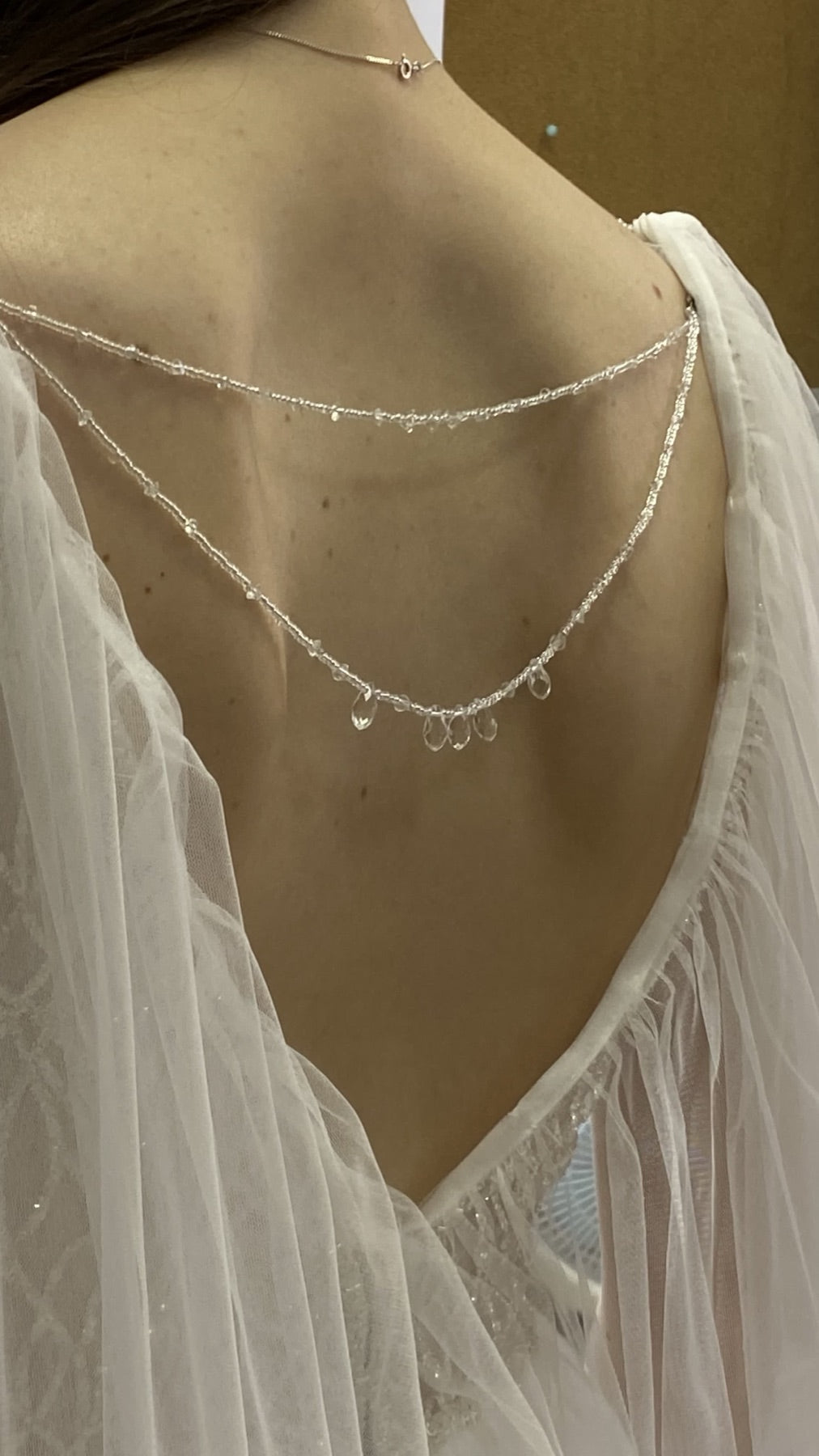

Bridal accessories should complete the dress, not compete with it. The easiest way to achieve that balance is to plan the pieces that affect construction early. A veil, belt, cape, or back necklace may need to match the gown's color, fabric, fastening points, or proportions.
You don't need to choose every earring or hairpin before production begins. Start with the accessories that physically meet the dress. Leave independent pieces until the gown's main design is settled.
Key Takeaways
- Decide the gown's silhouette, neckline, back, fabric, and embellishment level before buying accessories.
- Plan veils, belts, detachable sleeves, capes, and back jewelry early when they affect construction or need matching material.
- Keep one visual focal point. A detailed gown usually needs quieter accessories, while a clean gown can carry a stronger accessory.
- Match ivory by comparing real materials. Color names alone don't show undertone, sheen, or transparency.
- Shoes, comfort items, and most earrings can wait until the dress design is approved.
Begin With the Dress
Accessories make sense only in relation to the gown. Confirm your wedding dress silhouette, neckline, back, train, and sleeve treatment first. Those choices determine where an accessory can sit and how much visual weight the look can carry.
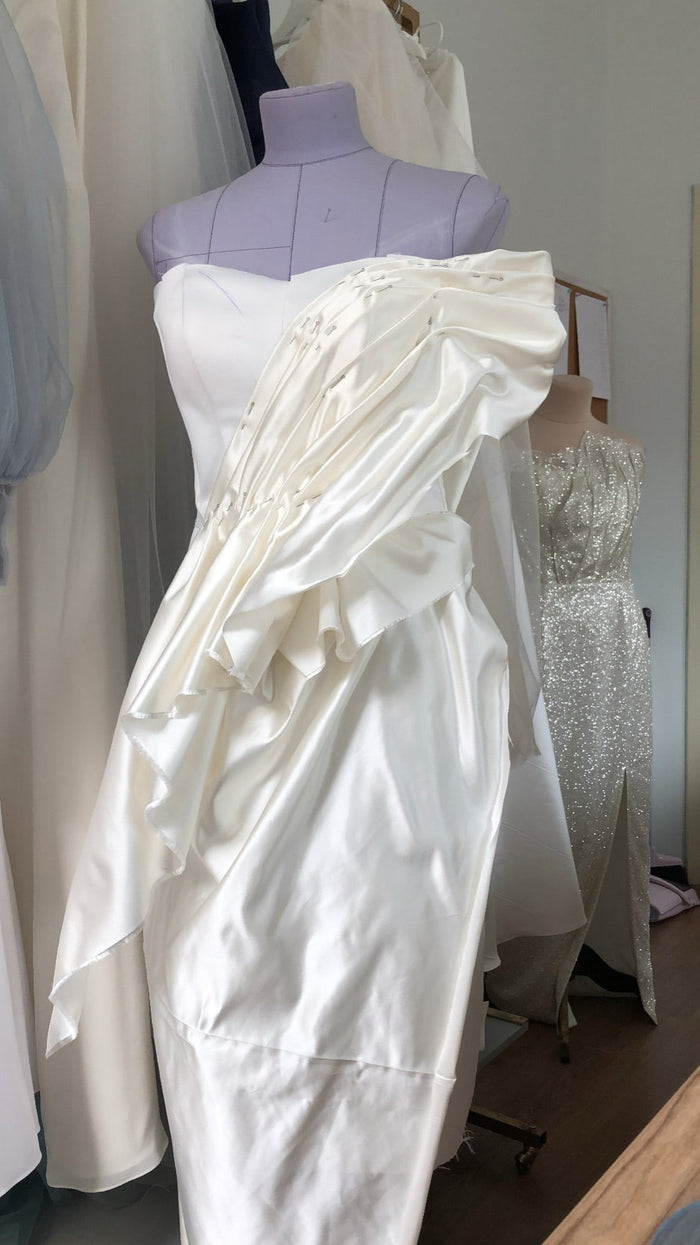
A cathedral veil may extend the line of a long train. The same veil can overwhelm a short, clean dress. A wide belt can define an unbroken waist seam, but interrupt a softly draped bodice. A back necklace needs enough open skin to be seen and secure attachment points that don't distort the neckline.
Fabric matters just as much as shape. Our fabric guide explains how different materials reflect light and move. That behavior should guide any accessory that touches the gown.
The useful question isn't, "Do I like this accessory?" It is, "What job does this accessory do for this dress?" It may extend a line, repeat a detail, add ceremony coverage, or create a second look. If it has no clear role, the dress may not need it.
1. The Veil
A veil affects the complete silhouette more than any other bridal accessory. Choose its length and detail after you know the dress's back and train.

Match the length to the dress
A short veil ends near the face, shoulders, or waist, so it adds volume around the upper body. A floor-length veil continues the gown's vertical line. A longer veil becomes part of the train and needs enough space to open behind you.
Look at where the veil's edge lands. An edge that cuts across a key bodice detail can make the look feel divided. A length that ends beyond the dress's main design feature usually reads more deliberately.
Coordinate detail, not just color
If the gown has lace, embroidery, pearls, or crystals, the veil can repeat one element. It doesn't need to reproduce every motif. Repeating the scale or spacing is often enough.
For a heavily embellished dress, plain tulle can preserve the gown as the focal point. A clean satin or crepe gown can carry an embroidered border or scattered appliqué. Our comparison of simple and embellished dresses can help you decide where the detail should live.
Compare the actual materials
Ivory isn't one fixed color. A warm satin, matte crepe, and sheer tulle can all be called ivory while looking different together. Compare the veil against the dress fabric in daylight before approving it. The test should include color, sheen, transparency, and edge finish.
2. A Belt or Sash
A bridal belt should clarify the waist or carry a meaningful detail. It shouldn't be added automatically because the dress feels unfinished.
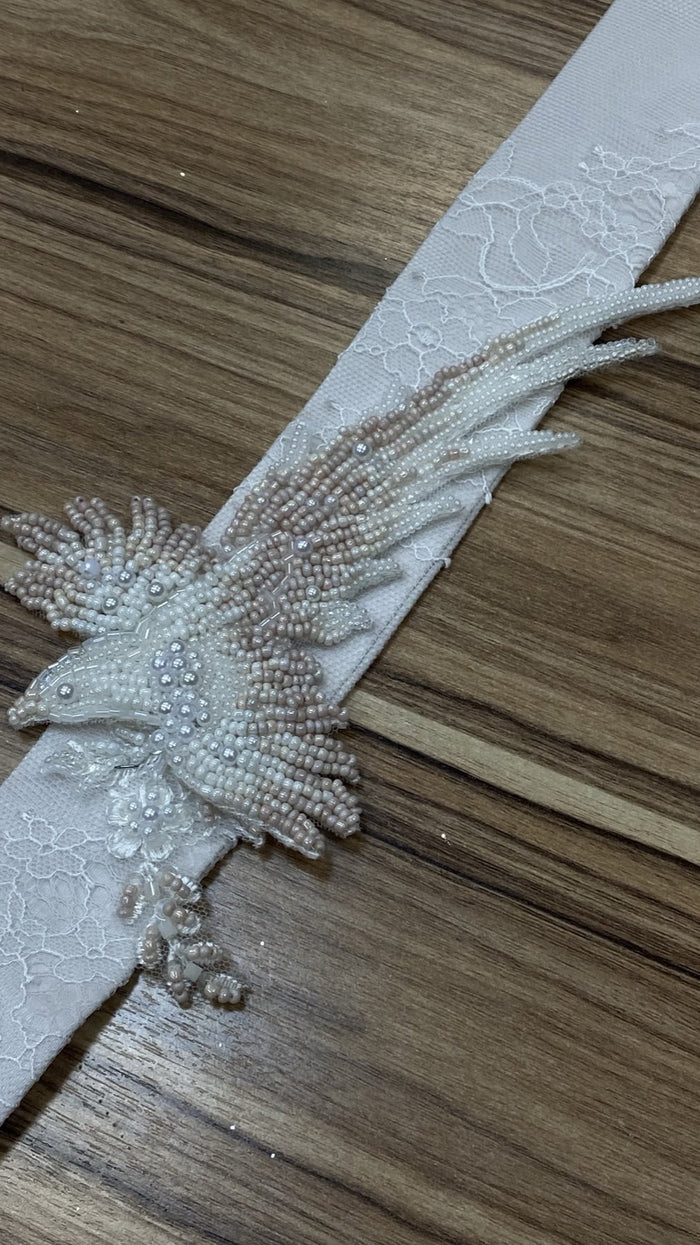
A narrow belt can mark the waist without breaking the gown's line. A wider sash creates a stronger division between bodice and skirt. Beaded or embroidered belts draw attention to the center of the body, so placement matters as much as decoration.
Belts are worth planning with the dress when they need matching fabric or handwork. This allows the designer to consider the waist seam, closure, and attachment method together. It also prevents a heavy embellishment from pulling against delicate fabric.

An integrated belt can be permanent. A removable sash gives you the option to change the look between ceremony and reception. Decide which function you want before the dress is cut. Custom construction and hand embellishment also affect the final price, as explained in our custom wedding dress pricing guide.
3. Hairpieces and Jewelry
Hairpieces and jewelry should respond to the neckline, hairstyle, and strongest dress detail. They don't all need to match as a set.
Start by choosing the focal area. If the gown has an open back, a draped back necklace can make that construction the center of the look. If the bodice has dense pearl work, quiet earrings may be enough. With a clean neckline, a more visible necklace or hairpiece has room to read.
Use repetition carefully. One pearl detail in the dress can be echoed in earrings or a comb. Repeating pearl trim on the veil, belt, necklace, earrings, and hairpiece can flatten the hierarchy. The eye no longer knows where to rest.
Bring jewelry references to the design consultation even if you haven't purchased them. Scale is more useful than brand. A designer needs to know whether you picture small studs, long drops, a collar necklace, or a back chain. Those choices affect how much open space the neckline and back should preserve.
4. Detachable Sleeves, Capes, and Overskirts
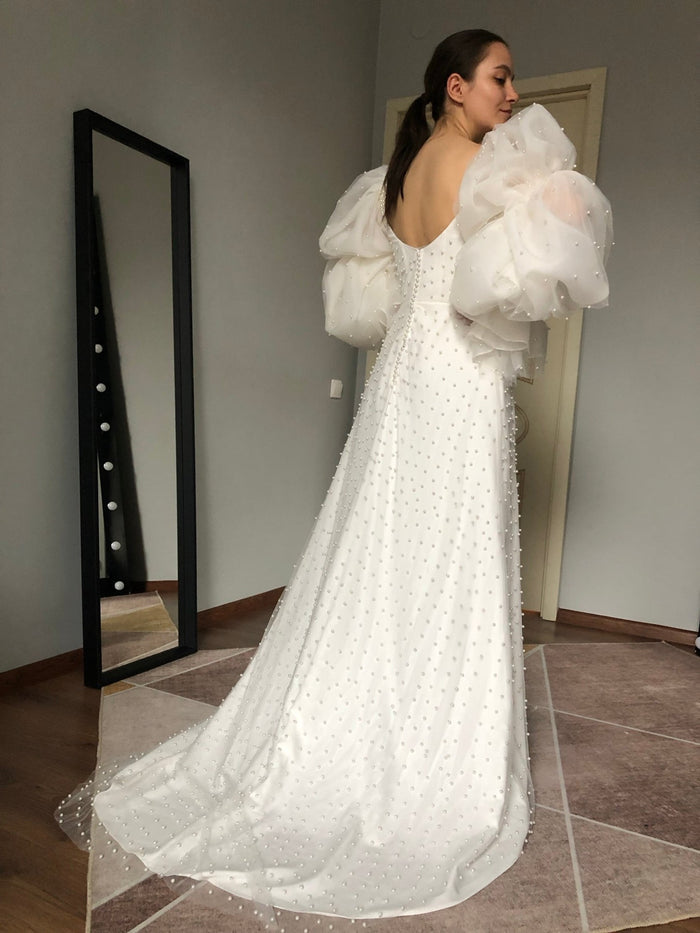
Detachable pieces must be designed as part of the dress. They need secure attachment points and a clean appearance both when worn and removed.
These pieces are useful when you want a more covered ceremony look and a lighter reception look. They can also change the silhouette without requiring a separate gown. However, every transformation needs a practical plan.
Before approving a detachable element, ask:
- Where does it fasten?
- Are the fastenings visible after removal?
- Can one person attach or remove it?
- Does it change the neckline, waist, or train balance?
- Where will it be stored after removal?
A cape attached at the shoulders affects neckline stability. An overskirt fastened at the waist adds weight and volume. Detachable sleeves need enough support to stay in position while you move. These aren't finishing touches to solve after production. They belong in the written design agreement within the custom ordering process.
5. Shoes and Practical Accessories
Shoes don't need to match the dress fabric, but their final heel height matters for the finished length. Choose the pair, or a pair with the same height, before final length decisions are confirmed.
Comfort pieces can stay visually quiet. A wrap, small bag, hair pins, garment-safe fashion tape, and spare earring backs don't need to become part of the design story. They need to work when you need them.
Consider movement rather than the product photo. Walk, sit, and turn in your shoes. Check whether a bracelet catches on tulle or lace. Make sure a ring doesn't snag a delicate veil edge. Test whether a hair comb stays secure with the hairstyle you will actually wear.
These details are small, but they can affect the fabric throughout a long day. An accessory that repeatedly catches the gown isn't serving the look.
What to Decide at the Consultation
You don't need a complete accessory wardrobe at the first conversation. You do need enough direction to identify anything that changes the dress.
Bring or describe:
- your preferred veil length and whether you want lace, embroidery, or a plain edge;
- any belt, sash, bow, or waist detail you want integrated;
- your likely hairstyle and the scale of your hairpiece;
- important jewelry, especially necklaces and back chains;
- any detachable sleeve, cape, topper, or overskirt;
- your likely heel height;
- which detail should be the visual focal point.
The designer can then show these elements on the sketch and resolve their proportions before production. This is the right moment to remove details, too. Editing is part of custom design. A disciplined look often comes from deciding what the dress doesn't need.
Start with a free sketch consultation at Lutien Bridal.
FAQ
Should my veil be the same shade as my wedding dress?
It should coordinate with the dress, but the labels don't need to be identical. Compare the real tulle and gown fabric together. Transparency and sheen can change how a color appears.
Do I need to buy my bridal accessories from the dress designer?
No. Independent jewelry and hairpieces can come from elsewhere. Involve the dress designer when an accessory needs matching fabric, integrated fastenings, coordinated handwork, or a construction change.
When should I choose my wedding shoes?
Choose the final shoes, or confirm their heel height, before the gown's finished length is set. You can change pairs later if the replacement keeps the same effective height.
Can a bridal belt be added after the dress is finished?
Sometimes, but early planning gives a cleaner result. The designer can align the belt with the waist seam and choose an attachment method suited to the gown's fabric.
Is a detachable cape or overskirt considered an accessory?
Visually, yes. Structurally, it is part of the gown system. It should be designed alongside the dress because its weight, fastenings, and removal affect construction.
Design guidance based on Lutien Bridal's custom dressmaking process at our atelier in France.
About the author: Vlad Ivanov is the Director of Business Development at Lutien Bridal Atelier in France, home to the design team behind more than 1,000 custom wedding gowns delivered to brides across the US and Europe.