Atelier · France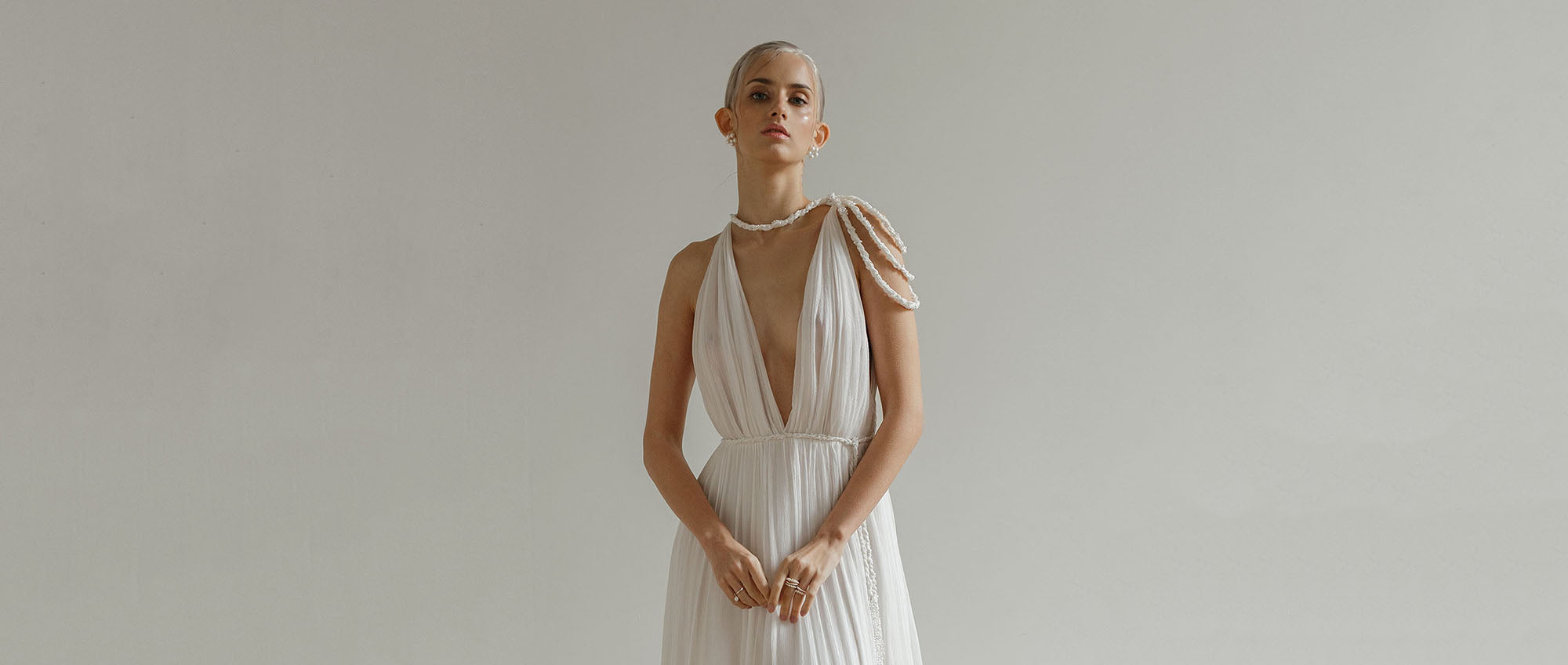
This is one of the most genuinely difficult choices in bridal design — not because one option is better than the other, but because the right answer depends entirely on factors that are specific to you: your venue, your silhouette, how you want to feel, and what kind of photographs you want from that day.
Minimal and embellished both have their case. A clean, unadorned dress in a beautiful fabric can be more striking than anything with decoration. A heavily beaded bodice can also be exactly right — transformative in ways that a simple gown can’t be. The question isn’t which is objectively better. It’s which is right for you.
We’ve built custom dresses across the full spectrum at our atelier in Ansignan, France — from completely plain column gowns to hand-embroidered gowns with thousands of individually applied beads. This guide is what we’ve learned about how to make this decision well.
Key Takeaways
- Simple dresses rely on silhouette and fabric — the dress lives or dies by its cut and material, with no decoration to distract
- Embellished dresses add visual complexity — they draw the eye to specific areas and add light and texture that reads beautifully in photography
- Venue and lighting matter: heavy embellishment needs space and light to read fully; minimal dresses suit intimate venues and natural light equally well
- Silhouette and embellishment work together — the more complex the construction, the less embellishment it typically needs
- Cost is directly tied to embellishment level — beading and embroidery are the primary cost drivers above the base price
- See how we approach your design brief →
What “Simple” and “Embellished” Actually Mean
Before deciding, it’s worth being precise about the terms.
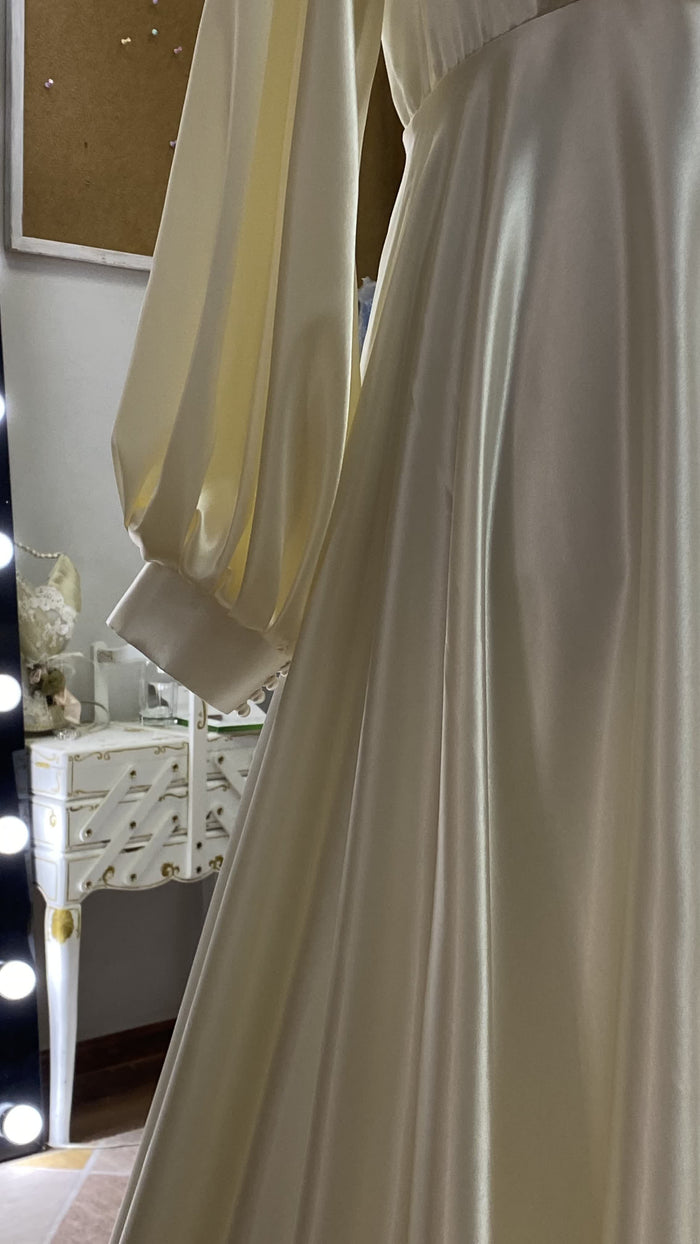
Simple doesn’t mean plain or cheap. A truly simple dress — no lace, no beading, no embroidery — puts everything on the quality of the fabric and the precision of the cut. The bias-cut satin column gown with no ornamentation at all is actually harder to make than most embellished dresses, because there’s nowhere to hide. Every seam, every dart, every line of construction is visible. The dress has to be perfect.
Embellished covers a wide range. A single delicate line of beading along the neckline is technically embellishment. So is a fully hand-embroidered bodice with two thousand individually placed crystals. When you’re working through this choice, be specific about what level of decoration you’re actually considering — “embellished” is a spectrum.
The most useful framing: simple dresses are about the dress itself. Embellished dresses are about specific moments of detail — a bodice that catches light, a back panel with intricate needlework, a hem that trails into a decorated train.

The Case for a Simple Wedding Dress
A minimal wedding dress is a commitment. You’re saying: the silhouette is enough. The fabric speaks for itself. Nothing should compete with the overall line of the dress.
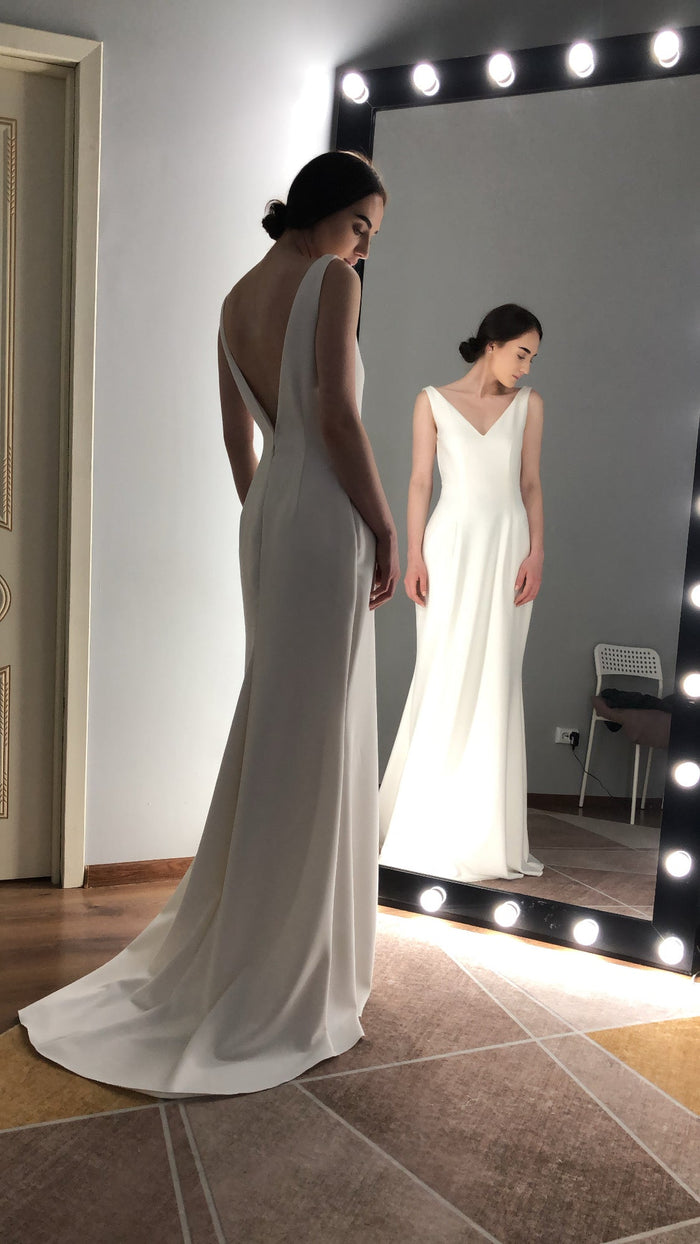
When this works, it works completely. Some of the most memorable dresses we’ve made were the simplest — a clean satin column with a low open back and nothing else. No lace, no bead, no embroidery. Just the silhouette and the fabric. Those dresses photograph with a severity and elegance that decorated gowns rarely achieve.
What makes a simple dress work:
Silhouette precision. Without decoration to draw the eye, the shape carries everything. An A-line with a perfectly constructed waist and a skirt that falls exactly right is more striking than the same silhouette with average construction and a beaded bodice. When you choose minimal, you’re investing in fit and cut above everything else.
Fabric quality. A simple satin dress lives or dies on the satin. If the fabric is mediocre, there’s nothing to compensate. If it’s exceptional — a heavy, lustrous, perfectly weighted satin — the dress becomes extraordinary. Minimal dresses demand the best materials.
Photography. Simple dresses look extraordinary in natural light and intimate photography. They’re also significantly easier to photograph across different environments — they don’t require a specific type of light or space to read well. A minimal dress looks beautiful in a candid outdoor photo in the same way it looks beautiful in a formal portrait.
Versatility. A very clean dress can be dramatically transformed by jewelry, veil, and accessories. If you’re planning to wear statement earrings or an elaborate veil, a simple dress is almost always the better base.
The risk: if the silhouette or fit is slightly off, there’s nowhere to redirect the eye. Minimal dresses are less forgiving of construction imprecision — which is exactly why custom matters more here than anywhere else.

The Case for an Embellished Wedding Dress
Embellishment changes the nature of the dress. It introduces light — the way beads and crystals catch and scatter it, the way embroidery creates shadow and texture. It introduces focus — drawing attention to exactly the areas you want noticed.
Done well, embellishment transforms a dress into something closer to a piece of wearable art. The craftsmanship involved in hand-applied beading or embroidery is significant — it’s one of the most labor-intensive processes in bespoke dressmaking, and the result has a quality that photography captures extremely well in the right light.
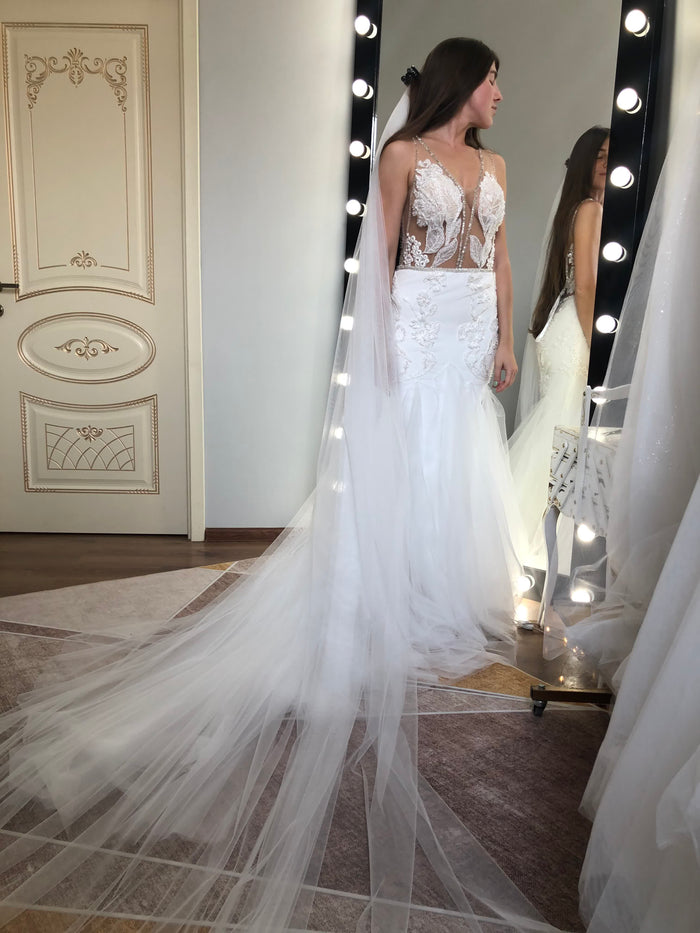
Some of the most intricate work we do at Lutien involves hand-applied floral embroidery on bodices — individual stitches placed by hand over dozens of hours. The finished result doesn’t look like decoration added on top of a dress. It looks like the dress grew that way. That level of integration between construction and embellishment is what separates genuine custom work from factory production.
What embellishment does well:
Draws attention to the bodice. The most common and most effective application of embellishment is the decorated bodice with a clean or minimally decorated skirt. This creates a natural focal point at the chest and waist — flattering for almost every body type, and creating a strong visual hierarchy that reads clearly in photographs.
Creates photographic moments. Beaded and embroidered dresses are designed to catch flash and directional light. In a darkened reception room with warm lighting, a beaded bodice creates a kind of luminosity that a plain fabric dress simply can’t replicate.
Works with formal venues. The grander the venue — a cathedral, a ballroom, a formal garden — the more the dress can carry in terms of decoration. Embellishment scales up to match the space. In a very grand setting, a minimal dress can read as understatement; an embellished dress reads as matching the occasion.
Adds meaning and intention. Custom embroidery can incorporate personal symbols — family florals, specific patterns, motifs that carry personal significance. This isn’t possible in ready-to-wear, and it’s one of the clearest arguments for going custom if you want your dress to carry personal meaning through its design.
How Venue and Lighting Should Guide Your Choice
Venue and lighting are arguably the most underestimated factors in this choice. Embellishment needs light to perform — specifically directional, moderately intense light that catches and scatters off beads, sequins, and crystals. In a darkened ballroom with candlelight or warm event lighting, embellishment creates an extraordinary effect. In flat midday outdoor light, the same embellishment can look flat or overwhelming.
Conversely, a minimal dress in excellent fabric photographs beautifully in almost any light. Natural light is its best environment — outdoor ceremonies, bright garden receptions, windows. In very dark reception rooms, a plain fabric can disappear; adding any light or reflective element to the design (even a subtle satin sheen) helps.
A useful test: picture your ceremony space and your primary wedding photos. Is it grand and formal, with strong artificial lighting? Embellishment will perform well. Is it intimate, outdoor, or naturally lit? A minimal or lightly embellished dress will likely look better both in person and in photographs.
How Silhouette Affects the Decision
The relationship between silhouette and embellishment is one of the clearest principles in custom bridal design: complex construction and heavy decoration compete. Simple construction and decoration complement.
A heavily constructed silhouette — a ballgown with internal boning and layers, a dramatic mermaid with complex paneling — already carries significant visual information. Adding heavy embellishment on top creates visual noise. The eye doesn’t know where to look. The best ballgowns and mermaids are often relatively restrained in decoration.
A clean, simple silhouette — a column, a slip dress, a minimal A-line — has space for embellishment to breathe. A beaded bodice on a clean column gown reads beautifully because the eye can move from the decorated area to the undecorated skirt and understand the contrast.
This is the rule we follow in design: as silhouette complexity increases, embellishment level should decrease. As silhouette simplicity increases, embellishment can increase. The total visual complexity of the dress stays roughly constant.
The exception: a very heavily embellished skirt on a structured silhouette — hand-sewn florals on a full ballgown skirt, for example. This works when the embellishment and the construction are designed together from the start, not when decoration is added to an existing construction.
How This Choice Affects Price
Embellishment level is the single biggest variable in the price of a custom dress above the base price.
The starting price at Lutien is €1,490, which covers a custom dress in a clean silhouette in quality fabric with no or minimal embellishment. The average order is €2,290 — the difference reflects primarily embellishment choices and fabric upgrades.
What drives embellishment cost:
Material cost. Quality beads, crystals, and embroidery thread are not inexpensive, and the quantities involved in a heavily decorated bodice are significant.
Labor. Hand-applied embellishment is one of the most labor-intensive processes in custom dressmaking. A fully hand-beaded bodice can take forty or more hours of work above what the dress itself requires. That labor is reflected in price.
Precision. Embellishment applied to a custom dress is designed specifically for that dress — the pattern follows the construction, the density changes at seams, the placement accounts for your specific body. This isn’t the same as mass-applying stock decoration to a stock pattern.
If you have a specific budget, knowing that embellishment is the primary variable helps you allocate: invest in silhouette and fabric first, then add embellishment where it serves you most.
See our complete guide to custom wedding dress pricing for a full breakdown with examples.
A Practical Way to Make This Decision
If you’re genuinely undecided, here’s the approach we use in consultation:
Start with your ceremony and your body. What silhouette do you want? (See our guide to wedding dress silhouettes if you’re still working through this.) A more constructed silhouette points toward less embellishment; a cleaner silhouette points toward more.
Then consider your venue. Grand and formal? Embellishment serves you. Intimate and naturally lit? Simple probably serves you better.
Then consider your photographs. Are you prioritizing candid, editorial-style photography in natural light? Minimal dresses photograph that way beautifully. Are you planning formal portraits in a grand interior? Embellishment performs there.
Finally, consider how you want to feel. Some brides want to feel transformed — to look in the mirror and see something extraordinary. Embellishment can do that. Some brides want to feel like themselves, in the most beautiful version of a dress that feels natural to them. A minimal dress often does that more successfully.
Neither feeling is right or wrong. But the choice of dress should serve whichever feeling is true for you.
When you bring this conversation to a consultation — even if you arrive with AI images, Pinterest boards, or vague descriptions — we’ll draw out what you’re actually going for. The sketch exists to resolve exactly this kind of ambiguity. Learn more about the custom ordering process at Lutien or start with a free sketch consultation.
Frequently Asked Questions
Is a simple wedding dress less expensive than an embellished one?
Generally, yes. Embellishment — particularly hand-applied beading and embroidery — is one of the primary cost drivers in a custom dress above the base price. A clean silhouette in quality fabric will be less expensive than the same silhouette with a heavily decorated bodice. The difference can be significant for very complex embellishment work.
Can I add embellishment to a minimal design later?
In a custom context, embellishment is designed into the dress from the beginning — the pattern, placement, and density are part of the original construction plan. Adding embellishment after the dress is finished is possible but results in decoration that sits on top of the dress rather than being integrated into it. For the best result, embellishment decisions should be made before construction begins.
Does an embellished dress photograph better than a simple one?
Not universally — it depends heavily on lighting and photography style. In formal, directional light, embellishment photographs with exceptional depth and luminosity. In flat or natural light, minimal dresses often photograph with more clarity and elegance. The best photography style for your wedding day should inform your dress choice as much as the dress itself.
What level of embellishment works for an outdoor wedding?
For outdoor weddings, lighter embellishment tends to work better than heavy all-over beading — a decorated neckline, beaded straps, or embroidery at the waist reads clearly without overwhelming in bright natural light. Heavy all-over beading can appear visually cluttered in outdoor photography and may retain heat, which is worth considering for warm-weather celebrations.
The Dress That Feels Right
The simple versus embellished question is ultimately a question about the kind of impression you want to make and the kind of experience you want to have. Both directions are completely valid. Both can result in extraordinary dresses.
What matters most is that the choice is intentional — that you’re choosing minimal because you want the clarity and precision it brings, or choosing embellishment because you want the light and the drama. Not because you defaulted one way or the other without thinking it through.
That’s what the sketch conversation is for. Tell us what you’re going for — how you want to feel, what your venue looks like, what your photographs should capture — and we’ll help you figure out which direction serves you. Start with a free consultation at Lutien Bridal. The sketch is free. The commitment comes later.
Custom gowns at Lutien Bridal are made to your exact measurements in Ansignan, France. Production: 10–12 weeks. Shipping to the US: 3–5 days via UPS. Starting at €1,490, average order €2,290. All costs — fabric, production, shipping, customs — included in your quoted price.